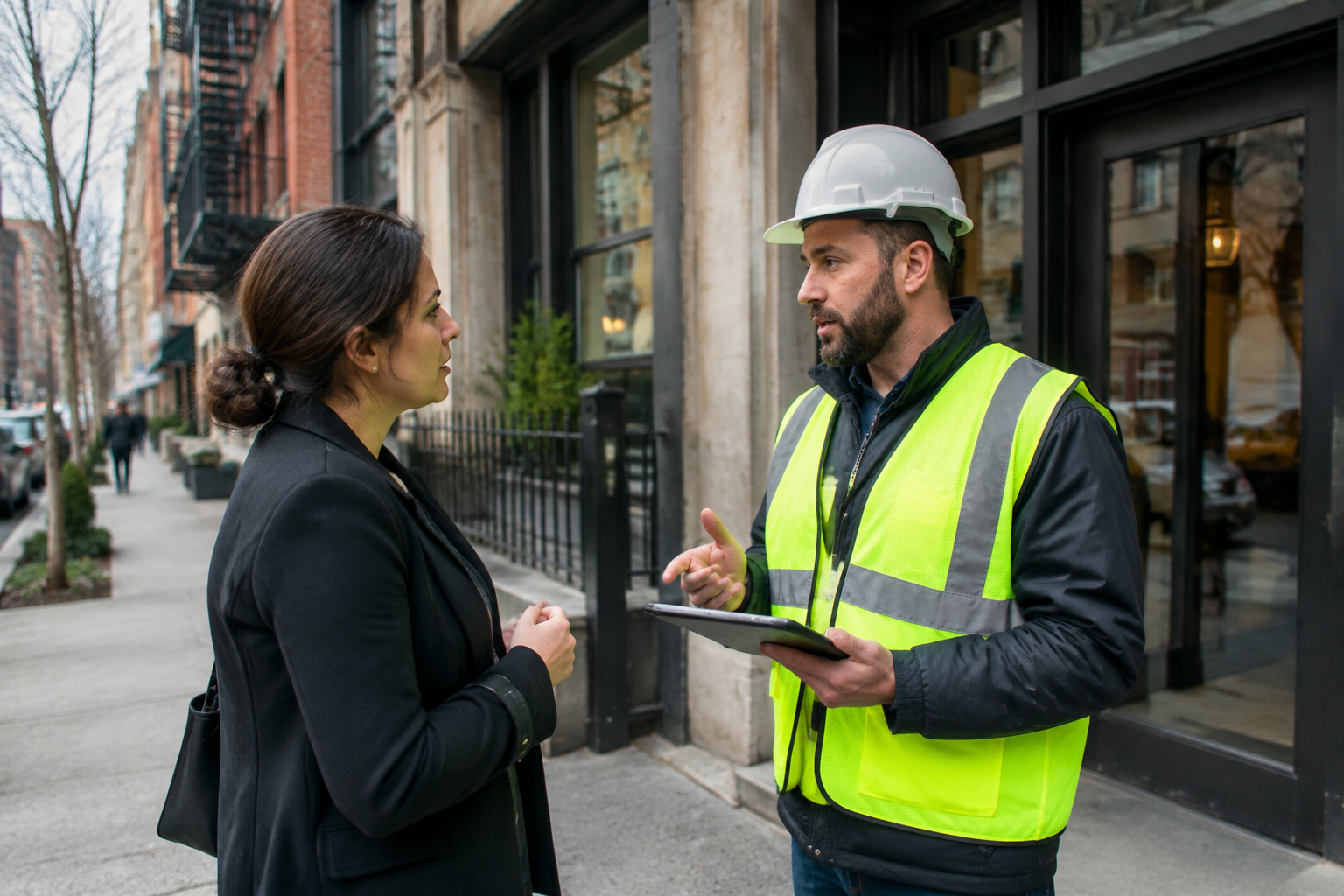
What You’ll Need
Gather this before you call a commercial property restoration company. It takes 15 to 20 minutes, and it cuts delays once crews arrive at your Brooklyn clinic.
- Insurance policy details: your policy number, the carrier’s claims line, and the name of your broker or adjuster if you have one. Coverage depends on your policy, so have the declarations page handy.
- Building access: keys, key fobs, or a super on standby for the lobby, utility rooms, and roof hatch. If the building is a shared multi-tenant site, loop in the landlord’s contact too.
- A floor plan: a printed or phone-ready layout marking exam rooms, records storage, supply closets, and exits. Mark which rooms must stay open.
- Shutoff locations: know where the main water valve, electrical panel, and gas shutoff are. Someone on your team should be able to find them in under two minutes.
- A phone with a working camera: you’ll shoot photos and short videos of the damage before anything is moved. Date-stamped is best.
- One decision-maker: a single person with authority to approve mitigation work and sign off on scope. Two voices slow everything down.
- Patient-flow notes: a quick list of appointment times, equipment that can’t be moved, and any areas needing steady access (for example, medication storage).
- Basic skills: no restoration training needed. You only have to shut off the source safely, take photos, and brief the crew.
Time required: prep takes about 20 minutes. Emergency crews typically arrive within 60 minutes or faster. Mitigation usually runs several days. Phased rebuilds can run longer, depending on the damage.
A pipe bursts above an exam room at 7 a.m. By 7:30, patients are in the lobby, and the ceiling is dripping. Brooklyn, NY clinic managers know this call. It doesn’t wait for a convenient day.
Closing the doors isn’t the only answer, though. A commercial property restoration company that’s on site fast can split the building into zones, dry out the wet areas, and keep the rest of the clinic seeing patients. That’s the difference between losing a day and losing a week. Speed matters. So does having one team in charge instead of five vendors who’ve never met.
Most property managers in Brooklyn’s older brick buildings (think Bay Ridge, Williamsburg, Crown Heights) deal with aging pipes and tight floor plans. Those details shape every decision in the first hour. And the insurance side? It’s easier when a single crew handles the adjuster for you.
What You’ll Get Done and What to Have Ready Before Calling a Commercial Property Restoration Company
A pipe bursts above a Park Slope dental clinic at 6:40 a.m., and the first patient is due at 8. The office manager has no policy number handy, no floor plan, and nobody who can unlock the mechanical room. The call gets made. The crew still waits.
Avoid that. A commercial property restoration company can mobilize in about 60 minutes, but only if you hand over the basics fast. By the end of this guide, you’ll have a loss contained, documented, and moving through your insurer.
Prerequisites: Policy Number, Building Access, and a Floor Plan
Keep these in one folder, printed and on your phone:
- Policy number and your adjuster’s or broker’s contact details.
- Building access: keys, lockbox codes, and a named person who can meet the crew.
- Floor plan marking shutoff valves, electrical panels, and plumbing runs.
- Tenant list if your building mixes clinics with other suites.
Managers with properties in several boroughs often keep the same folder for each building. A commercial restoration company Bronx crew and a Brooklyn crew then start from identical information.
What Keeping a Brooklyn Clinic Open Actually Means During Water, Fire, or Mold Loss
It rarely means business as usual. Realistically, it means zoning the building so damaged rooms get sealed off while exam rooms elsewhere keep running.
Crews stage equipment, run drying in the affected wing, and protect corridors. Your insurer gets photos and moisture logs from day one. Coverage depends on your policy, so ask your adjuster early.
Step 1: Call a 24/7 IICRC-Certified Commercial Restoration Company and Get Crews On Site Within the Hour
Speed decides how big the loss gets. A burst pipe above a Brooklyn exam room keeps soaking drywall, ceiling tile, and flooring every minute it runs. Call an IICRC certified commercial restoration contractor first, before you start phoning around for quotes. Dual Restoration states a typical response time of 60 minutes or faster, around the clock, and works directly with your insurance adjuster so you’re not stuck playing middleman.
Managing clinics across boroughs?
A commercial restoration company Staten Island managers already call works the same way in Brooklyn. One vendor, one point of contact.
Stop the Source First: Shut Off Water, Cut Power to Wet Zones, Board Up and Tarp Openings
Don’t wait for the crew to arrive. Do this while you’re on the phone:
- Close the main water valve or the nearest zone shutoff.
- Kill breakers for wet rooms, outlets, and any equipment near standing water.
- Tarp or board up broken windows, doors, or roof openings after fire or storms.
- Photograph everything before anything moves. Adjusters want it.
Brief the Crew on Patient Flow, Exam Rooms, and Which Areas Can’t Close
Tell the crew what has to stay open. Mark which exam rooms, waiting areas, and corridors carry patients, and which can shut down today. A good commercial property restoration company will stage equipment and containment around that map, not over it.
Step 2: Split the Building Into Zones So Patient Care Continues While Mitigation Runs
Can an exam wing stay open while the room next door is being dried out? Usually, yes, if the crew zones the building before the first fan runs. A commercial property restoration company in Brooklyn, NY, starts by marking three zones: affected, buffer, and clear. Patients and staff stay in the clear zone. That’s the whole idea.
Containment, Air Movement, and Equipment Placement Around Occupied Rooms
Poly sheeting and zipper doors seal the affected area. Negative air machines then pull dust and moisture out through exhaust ducts, not through the waiting room. Dehumidifiers and air movers stay inside the wet zone. Cords and hoses run along one marked path, away from corridors where wheelchairs and gurneys pass.
Clinics in older Brooklyn buildings, like brownstone conversions in Park Slope or prewar walk-ups in Flatbush, often share walls, pipe chases, and ductwork with other tenants. Crews should check each of those before setting up. Proper business water damage restoration services include moisture mapping of neighboring rooms, so hidden wet drywall doesn’t turn into mold later.
Handling Sewer Backups, Odor, and Biohazard Cleanup Without Shutting the Whole Clinic
Sewage is different. Treat it as contaminated from the start, and seal off the area at once.
- Isolate the affected restrooms or utility rooms and shut off airflow to them.
- Remove porous materials such as carpet and ceiling tile, then bag them inside containment.
- Treat odor at the source with air scrubbers, not cover-up sprays.
- Document everything with photos and moisture logs for the adjuster.
Smoke needs the same zoning. After an electrical fire in a mechanical room, commercial fire damage restoration can run behind barriers while treatment rooms keep working.
Step 3: Hand Insurance Coordination to One Point of Contact and Document Every Room
Sixty minutes. That’s the typical response time Dual Restoration states for emergency calls, and the clock matters for your claim too. Evidence disappears fast once demolition and drying start. A Brooklyn clinic with wet exam rooms can’t wait on paperwork.
So pick one contact. Your commercial property restoration company should talk to the adjuster directly, not through you.
Photos, moisture logs, and scope notes for the adjuster
Before anything gets torn out, the crew should capture:
- Time-stamped photos of every affected room, ceiling, and floor, including flooring and drywall.
- Moisture readings logged daily, so drying progress is on paper.
- Scope notes listing what’s removed, what’s dried in place, and why.
Missing one room can cost you a line item later. Don’t let that happen.
Why direct adjuster coordination saves hours
But here’s the thing. Every relay call between you, the vendor, and the carrier burns time you don’t have. When the restoration team sends documentation straight to the adjuster, you skip the middleman role entirely. For commercial water damage restoration, that can mean hours back each week during an active loss. Managers with buildings outside the tri-state area can also check the commercial fire damage restoration Texas page for service details.
Coverage depends on the policy: what to ask your carrier
No vendor can promise what your policy pays. Ask your carrier these questions (write down the answers):
- What’s my deductible for this loss?
- Does coverage include business interruption?
- Are there sublimits for water or mold?
- What documentation do you require before approving work?
Step 4: Rebuild in Phases, Verify the Result, and Avoid Common Mistakes
Common Mistakes Brooklyn Clinic Managers Make: Waiting on the Adjuster, Hiring Multiple Vendors, Skipping Hidden Smoke or Moisture Checks
Waiting for the adjuster before you act doesn’t protect your claim. It hurts it. A good commercial property restoration company documents everything on day one, so mitigation starts while the claim is still being opened.
Three mistakes show up again and again in Brooklyn clinics:
- Waiting on the adjuster. Wet drywall doesn’t pause for paperwork. Mold can start within 48 hours.
- Hiring separate vendors. One for water, one for flooring, one for painting. Nobody owns the schedule, and the adjuster gets three invoices that don’t match.
- Skipping hidden checks. Moisture sits behind walls and above ceilings. Smoke odor hides in ductwork.
Multi-state operators handle this routinely. A commercial restoration company Connecticut clinics already use works the same way: one point of contact, one record.
How to Confirm the Job Is Done: Dry Standards, Clearance Documentation, and Next Steps for Reopening Rooms
Done doesn’t mean it looks fine. It means the readings say so.
- Compare final moisture readings against the dry standard set on day one.
- Get written clearance records for mold or smoke work.
- Send the full file to the adjuster.
- Reopen rooms in phases, starting with patient-critical spaces.
Scale matters here, too. A provider offering commercial water damage restoration Florida properties rely on follows the same documented process. Ask for it in Brooklyn.
How-To FAQ
How fast can a commercial property restoration company get on site at a Brooklyn clinic?
Dual Restoration states a typical response time of 60 minutes or faster, 24 hours a day. Traffic on the BQE or the Gowanus Expressway can stretch that, so give the dispatcher your cross street and the nearest loading access when you call. Ask for an arrival window, not just a promise.
Can a clinic stay open during water, fire, or mold cleanup?
Often, yes, if the building is split into zones. Crews can contain the damaged area, run air movement away from occupied rooms, and keep exam rooms outside the loss zone in use. The call is yours and your clinical staff’s. Tell the crew up front which rooms can’t close, and they’ll plan equipment placement around them.
Who deals with the insurance adjuster?
Your restoration company can coordinate directly with your insurance company and the adjuster, so you aren’t the middleman. You still hold the policy, so have the policy number ready. Keep in mind that coverage depends on your policy. No vendor can guarantee what your carrier will pay.
What should I document before the crew arrives?
Take wide and close-up photos of every affected room, and note the time you found the damage. Don’t throw out wet materials until the adjuster has seen them or your restoration team has logged them. Once crews start, moisture readings and scope notes get added to the record.
How long does a typical clinic restoration take?
It depends on the loss. Water mitigation and drying usually run for days. Fire, smoke, or mold work can run longer, and rebuilds are done in phases so rooms reopen one at a time. Ask for a room-by-room schedule after the first walkthrough, then check it against what you see on site.
How do I know the job is actually finished?
Look for written proof, not just a visual check. You want final moisture readings that meet drying standards, clearance documentation where mold or contamination was involved, and a sign-off before you put patients back in a room. Hidden moisture behind walls is the usual culprit when a “finished” job fails, so ask how it was checked.
A clinic in Brooklyn can’t pause when a pipe bursts or smoke seeps into the walls. Patients still have appointments. Staff still need working exam rooms. The managers who get through a loss with the least disruption make three moves early.
They get a crew on site within the hour, and they tell that crew which rooms can’t go dark. They split the building into zones so mitigation runs beside patient care instead of in front of it. And they put one team in charge of the insurance side, so the adjuster gets photos, moisture logs, and scope notes without the property manager playing middleman. Coverage still depends on the policy, but the paperwork gets built from the first hour.
Choosing the right commercial property restoration company comes down to speed, coordination, and proof that the job is finished. Dry standards and clearance documentation settle that last point.
Next step: before any loss happens, pull each clinic’s policy number, floor plan, and building access details into one shared folder. Then save the contact for a 24/7 IICRC-certified restoration team in your phone. When the call comes, you’ll make it in minutes.