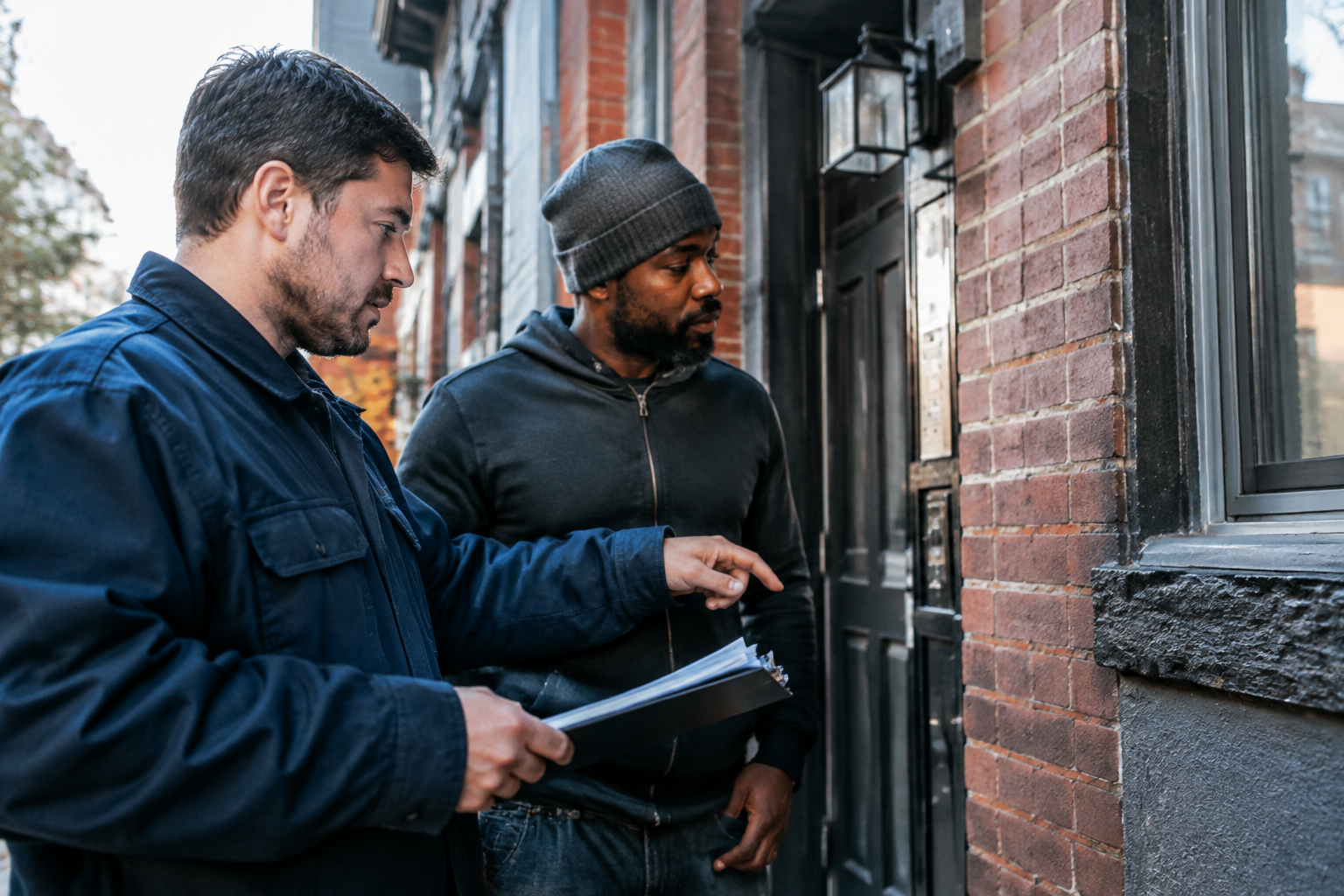
The mold isn’t what costs Brooklyn landlords money. The date on the notice is. Once that correction deadline passes, an HPD violation stays open, civil penalties can start stacking up, and the city can send its own crew to do the repair and bill the owner for it. A Housing Court case can follow.
If you own a small rental building in Bushwick, Flatbush, Crown Heights, or Bed-Stuy and just opened an HPD mold notice, you need to clear HPD mold violation paperwork before that date, not after it. That means finding the water source, getting the mold out of the walls or ceiling, and certifying the correction with HPD. A wipe-down with bleach won’t hold up. Neither will a promise to deal with it next week.
So what actually has to happen, and in what order? Start with the date printed on the notice. Everything else hangs on it.
A Crown Heights owner opens an envelope on a Tuesday. Inside is an HPD notice: mold on a second-floor bathroom ceiling, with a correction date 30 days out. He sets it aside. Six weeks later, the violation is still open, and the cost is already climbing.
That’s how it goes for small-building owners in Bushwick, Flatbush, Crown Heights, and Bed-Stuy. Miss the correction date and the Class B or Class C violation stays open. Civil penalties start piling up. HPD can send its own contractors and bill the owner for the work, plus fees. A Housing Court case may follow.
Here’s what most owners miss. The mold isn’t the real problem. The deadline is.
To clear HPD mold violation notices, an owner has to fix the cause (a leaking shower, a bad faucet line, soaked drywall) and certify the correction with HPD. Understanding landlord responsibility after water leak matters here, because HPD expects the source stopped, not just the black patches wiped off. Keep photos, invoices, and water damage claim adjuster documentation in one folder. Tedious? Sure. It’s also what gets a case dismissed.
How Do I Clear an HPD Mold Violation in Brooklyn?
A wiped-down wall won’t clear an HPD violation.
To clear an HPD mold violation, fix the moisture source, remove the mold, and certify the correction before the notice date. Brooklyn owners follow this order:
- Read the notice and note the class and dates.
- Find the leak, bad flashing, or condensation feeding the mold.
- Have the mold removed from drywall, ceilings, walls, and wood.
- Photograph and record every step.
- Certify the correction with HPD.
- Check HPD’s inspection result.
The Housing Maintenance Code sets the standard, and HPD enforces it. The Department of Buildings gets involved when repairs need permits. Owners who want an insurance approved restoration company should hire one early, since the paperwork matters as much as the work. Tenant-side damage counts too, and tenant water damage restoration NYC teams handle the wet materials behind the mold.
What Do the Violation Class and Defect Letter Mean for My Deadline?
Check the date on the notice first. Class A (non-hazardous) allows 90 days, Class B (hazardous) 30 days, and Class C (immediately hazardous) just 24 hours. A defect letter is the mailed notice of the violation. The violation itself is the recorded condition in HPD’s system.
How Do I Certify the Correction With HPD?
File the certification by the date on the notice, and keep the repair records. HPD may reinspect. A dismissal shows the violation as closed. Keep the building’s registration current, or the process can stall.
What Causes the Mold HPD Is Citing, and What Does It Look Like?
Why does the same stain keep coming back on a Brooklyn ceiling? Moisture. Every time. HPD cites mold that grows from leaks, poor ventilation, or a damp basement, and inspectors usually write up black, green, white, or yellow patches on walls and ceilings.
Common Brooklyn sources:
- Leaks around the shower, toilet base, and faucet
- Failed grout and caulk in the bathroom
- A leaking dishwasher line behind the kitchen wall
- Window condensation and humidifiers in sealed units
- Wet basements, plus roof or pipe leaks soaking the ceiling
Tenants report musty smells, coughing, itchy eyes, and worse asthma. Mildew is the flat, powdery surface growth, while mold digs into drywall and wood. The notice may use either word. Bleach or citric acid might hide the stain (it won’t fix the leak), so the violation stays open. And mold growth after a flood can show up fast, as this guide on mold growth after flood how long explains.
Can I Clean the Mold Myself, or Do I Need a Professional?
Small patches, yes. Large areas, no.
Under Local Law 55, the Asthma-Free Housing Act, anything over roughly 10 square feet needs a licensed mold assessor and a licensed remediator. Wiping it yourself won’t count. A visual inspection tells you where the growth is, but an assessor’s testing and written protocol are what HPD expects on bigger jobs. For a job that size, a hassle free insurance restoration company can handle the work and coordinate with your insurer directly.
How Long Do I Have to Fix an HPD Mold Violation, and What Happens If I Miss It?
Penalties on a Class C hazardous violation can run $50 to $150 per day per violation, and the meter keeps going until HPD closes it. The deadline is printed on the notice. Miss it, and the violation stays open while civil penalties pile up.
Brooklyn owners get hit in four ways. HPD can send its own crews for emergency repairs and add the bill to your tax account. Tenants can file an HP action in Housing Court. Open violations also surface during a refinance or sale, and lenders don’t like them.
Tenants have every right to report mold through 311. A fresh complaint can bring a fresh inspector, who may find damp drywall, a leaking faucet line, or black growth on the bathroom ceiling that the first visit missed.
Your first 48 hours:
- Read the notice and note the violation class and correction date.
- Find the moisture source, such as a roof leak or a bad shower seal, and stop it.
- Call a restoration company that works with insurance adjusters so the paperwork starts early.
- Photograph every affected wall and ceiling before work begins.
- Ask about antimicrobial treatment after water damage if a leak caused the growth.
Waiting a week feels harmless. It isn’t.
Can I Get an Extension, or Do I Have to Prove the Work Was Done?
Here’s the myth: a Brooklyn landlord can just ask for more time, and HPD will grant it. Don’t bank on it. Plan to certify on time and keep proof of every step, because a late certification invites a reinspection and possible penalties. If a leaking bathroom, damp basement, or wet drywall caused the mold, a multi-family building water damage restoration job may be needed to fix the source before anything else counts.
Build a file as you go:
- Dated photos of walls, ceiling, and grout before and after
- Contractor invoices showing the scope of work
- The assessor report and post-remediation clearance
- Tenant access notices, with dates and delivery method
What if a tenant won’t let anyone in? Record every attempt: date, time, who was contacted — how. Keep copies of written notices and any replies. That record shows good faith.
HPD may still send an inspector to verify, even after you certify. Paperwork doesn’t replace a dry, clean apartment.
Some owners also ask about “payment in satisfaction.” Treat it only as an option to raise with your attorney, since eligibility isn’t promised. Insurance questions, like does homeowners insurance cover mold, depend on your specific policy.
Who Can Handle the Mold Removal and the Paperwork Trail for a Brooklyn Rental Building?
A Crown Heights owner of a four-unit walk-up gets an HPD notice on a Monday. Black mold on a bathroom ceiling, a soft wall behind the tub, and a correction date that’s already ticking. He has no crew, no assessor, and no idea who files what.
The direct answer: a licensed, IICRC-certified restoration company that handles HPD mold violation remediation. That firm removes the mold, fixes the moisture damage feeding it, and documents the work so you can clear HPD mold violation notices with proof in hand.
Dual Restoration does exactly that. The team is available 24/7, with a typical response time of 60 minutes or faster. It’s IICRC certified, licensed, and insured in New York, and works in all five boroughs. A burst pipe behind drywall? Dual Restoration coordinates directly with your insurance company when a covered water loss caused the mold (coverage depends on your policy, so nothing’s promised up front).
Bigger buildings need more muscle. A restoration company for multi-family properties can handle several units at once. Fire in the building, too? Look for fire damage restoration services under the same roof.
Don’t wait until the deadline is tight. Call now, and check the Dual Restoration site for current contact details.
A Brooklyn landlord with an open HPD mold notice has one clock to watch. The mold matters, but the date printed on the notice decides what happens next. Miss it, and the violation stays open, penalties pile up, and a Housing Court case or an HPD repair bill can follow.
The owners who clear an HPD mold violation on time tend to do the same few things. They find the moisture source first, because mold returns wherever the leak stays. They hire a licensed professional to remove the growth from drywall, ceilings, and wood rather than wiping the surface. And they keep dated photos, invoices, and reports so the certification holds up if an inspector comes back.
Extensions aren’t something to plan around. Proof is.
For a small building in Bushwick, Flatbush, Crown Heights, or Bed-Stuy, the next step is simple: pull out the notice, circle the correction date — count the days left. Then call Dual Restoration, an IICRC-certified company licensed and insured in New York, that handles HPD mold violation remediation and works directly with your insurance company where a covered water loss caused the problem. Check the Dual Restoration website for current contact details and call today while there’s still room in the schedule.