Surprising fact: recent industry figures show that every hour of standing water raises the risk of irreversible damage by up to 25%.
You need fast action when water invades your home. The IICRC S500 sets the standards professionals use to classify water damage and plan work.
Emergency teams, like American Response Team, offer 24/7 services that focus on quick extraction, drying, and cleanup. Their use of specialized equipment helps prevent mold and structural problems in basements and other materials.
Restoration is a step-by-step process. You will coordinate with your insurance company, decide on restoration services, and monitor progress in hours, days, and sometimes weeks.
Takeaway: timely contact with a trained company limits loss, speeds recovery, and makes claims smoother.
Key Takeaways
- Every hour matters—early response cuts further damage and mold risk.
- Standards like IICRC S500 guide the water damage restoration process.
- Professional crews use targeted equipment for faster drying and safe cleanup.
- Insurance coordination and documentation speed claim resolution.
- Most repairs finish within weeks, but the exact time depends on type and extent of flood damage.
Understanding the Timeline for Water Damage Restoration
The path from initial extraction to full restoration depends on the scale and source of the water. A quick assessment shapes the work plan and your expectations.
Oak & Iron Construction Group in Charlotte, NC, guides homeowners through each stage of the water damage restoration journey. They explain which areas need priority and which repairs can wait.
Professional crews follow a clear process: inspect, extract standing water, set up drying equipment, monitor moisture, and complete repairs. This staged approach reduces hidden damage and limits mold risk.
Your insurance provider usually asks for a detailed assessment before approving the full scope of work. Clear documentation and communication between you, the insurer, and the crew speed approvals and reduce surprises.
Tip: Expect faster action on severe damage and slower timelines when porous materials or contaminated water are involved. A well-managed damage restoration plan aims to return your home to pre-loss condition as quickly and safely as possible.
Factors That Influence How Long Does It Take to Dry Out a House After Flooding
What controls the pace of recovery are the water type, indoor humidity, and airflow strategy. Each factor changes the timeline and the steps restoration teams use.
Impact of Water Categories
The IICRC S500 Standard divides water into three categories based on contamination. Category and contamination level shape the cleaning process and can add days to the overall timeline.
Environmental Conditions
High humidity slows progress. In many cases, professionals bring industrial dehumidifiers and fans to cut drying time and limit risks like mold.
FEMA guidance notes that well-ventilated rooms often need about 2–4 weeks after major flooding for thorough drying.
The Role of Airflow
Proper airflow moves moisture from wet walls, drywall, and floors into the air where dehumidifiers remove it. Restoration crews monitor moisture levels to avoid hidden problems.
When you know these factors, you can plan timelines, choose the right equipment, and coordinate with your insurance carrier. For guidance on immediate steps, see our immediate water damage response.
Immediate Steps to Take After Water Intrusion
A swift, organized response in the first hours reduces risks and lowers repair costs. Start by checking safety before touching anything. If you smell gas or see structural damage, leave and call emergency services.
Safety and Documentation
Safety comes first: avoid flooded rooms with electrical outlets or damaged floors. Wear boots and gloves if you must enter, and wait for pros when conditions feel unstable.
Document the damage with photos and video from multiple angles. Clear records help your insurance claim and speed restoration approvals.
Quick action matters. Contact American Response Team for 24/7 emergency response so pros can begin extraction and initial cleanup fast. They can reduce property loss and the chance of mold.
- Report the event to your insurance carrier immediately and ask about emergency mitigation steps.
- Keep a list of damaged items and receipts for any urgent purchases.
- If you’re unsure about safety, wait for professional help rather than attempting risky cleanup.
The Professional Drying and Dehumidification Process
Industrial gear and careful monitoring form the backbone of professional drying after serious water events.
Within the first few hours, crews assess the damage and pick the right mix of dehumidifiers and fans.
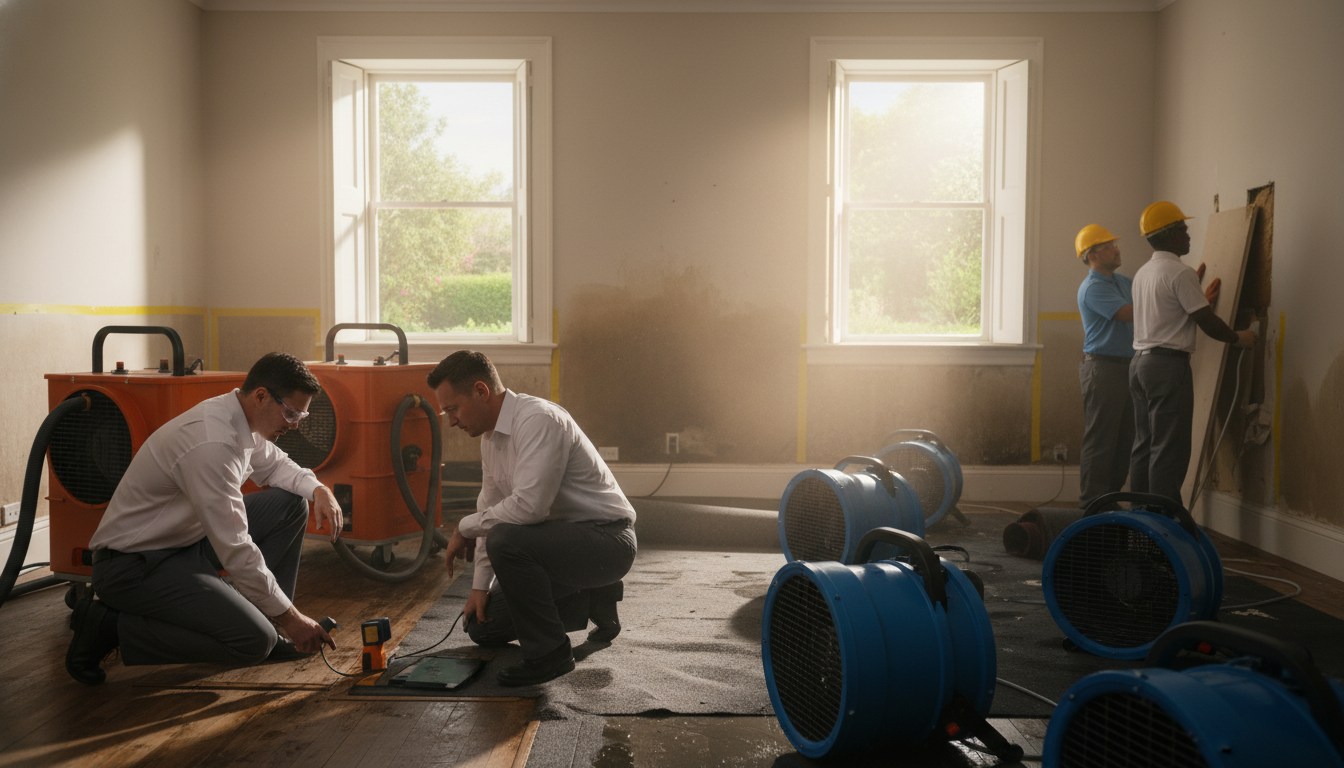
The main goal is to pull moisture from walls, drywall, floors, and upholstery. Technicians place equipment for optimal airflow and control humidity so mold won’t take hold.
For most homes the active drying stage runs about 3–5 days. Severe water damage or contaminated water can extend the timeline to several weeks.
Professionals use moisture meters and thermal cameras to confirm all materials are dry before finishing restoration work. That testing helps your insurance claim and reduces rework.
- Priority: safety and correct equipment setup.
- Control: manage humidity to prevent hidden moisture.
- Verification: monitor until readings show dryness.
Why Material Types Change Your Recovery Schedule
What your walls and floors are made from changes the recovery timeline more than you might expect. Different materials hold moisture in different ways. That affects drying, the restoration plan, and final costs.
Porous Materials and Drywall
Porous items like drywall, carpet padding, and insulation soak up water fast. That trapped moisture can extend the process and raise the risk of mold.
EPA guidance recommends removing wet carpet and padding within 24 to 48 hours. Saturated drywall often must be replaced rather than dried.
Hard Surfaces and Flooring
Tile and concrete shed water faster, but they still need professional equipment and monitoring. Hardwood may take 5–10 days to stabilize and can warp if not handled right.
Restoration teams use dehumidifiers and fans, plus moisture meters, to tailor drying by material and keep the schedule on track.
| Material | Drying Time (typical) | Common Action | Impact on Restoration |
|---|---|---|---|
| Drywall / Insulation | 48 hours to assess | Remove or replace if saturated | Can add days and increase costs |
| Carpet & Padding | 24–48 hours (remove advised) | Remove, sanitize, replace | Prevents mold, speeds recovery |
| Hard Floors (tile/concrete) | 2–5 days | Dry with equipment, check subfloor | Lower risk, but needs monitoring |
| Hardwood | 5–10 days | Controlled drying, possible repair | Risk of warping; careful plan required |
Your restoration timeline changes with materials affected. For clear expectations, ask your crew for a material-by-material plan and document everything for insurance.
Managing Insurance Claims and Documentation
Clear evidence makes the claim process simpler and helps justify restoration work.
Start a damage file the moment you spot issues. Take time-stamped photos and video of every wet room, ruined item, and torn material. Save receipts for emergency repairs and any equipment rentals used during drying.
Keep notes of calls with your insurance company and the adjuster’s visit. Professional restoration teams often document their work and send reports directly to your insurer. That record speeds review and supports repair estimates.
- Document everything: photos, videos, receipts, and technician reports.
- Communicate clearly: update your insurer and ask questions about coverage for flood and water damage.
- Seek help: The Law Offices of Anidjar & Levine can assist if you need legal support or negotiation for a fair settlement.
When you manage your insurance claim well, you reduce delays and focus on restoration. If you want a step-by-step guide for emergency repair and mitigation, see our 24/7 water damage repair guide.
Risks of Leaving Moisture Untreated
Unchecked dampness can quietly wreck framing, finishes, and indoor air quality in just days.
When moisture lingers, mold takes hold fast. The CDC recommends cleaning and drying wet areas within 24–48 hours to limit mold growth.
If you delay, water damage will soak into drywall, walls, and floors. That trapped moisture can mean full material replacement rather than repair.
Preventing Mold Growth
Quick action matters: use professional equipment and testing rather than guessing. Restoration teams use moisture meters and targeted drying gear to find hidden damp spots.
- High humidity creates ideal conditions for mold to spread.
- Untreated moisture raises health risks and structural problems.
- Visible dryness does not equal true dryness—testing confirms results.
| Risk | Timeline | Common Outcome | Prevention |
|---|---|---|---|
| Mold growth | 24–48 hours | Allergic reactions, spread | Fast drying, testing |
| Material decay | Days to weeks | Warped floors, ruined drywall | Remove saturated materials |
| Hidden moisture | Weeks | Recurrent problems, mold pockets | Moisture meters, professional monitoring |
When to Call in Professional Restoration Services
If your property shows widespread moisture or visible mold, arrange professional help right away.
Call immediately when multiple rooms or structural elements show signs of water damage. Professionals bring advanced water extraction and commercial equipment that speeds drying and limits further damage.
For basement floods, contaminated water, or saturated drywall, you need a full assessment. Restoration teams check framing, walls, and floors and design a plan that uses industrial dehumidifiers and fans for optimal airflow.
Tip: if damage lasts more than 24 hours or mold appears, a company with emergency response services can handle extraction, cleanup, and insurance documentation.
“Professional crews reduce repair time and lower risk of hidden moisture problems.”
| Situation | Why Call Pros | Typical Actions |
|---|---|---|
| Widespread water damage | Complex damage, structural risk | Extraction, drying, assessment |
| Basement or contaminated water | Hidden moisture, health concerns | Sanitizing, dehumidifiers, repairs |
| Visible mold or >24 hours | Mold spread and material loss | Removal, testing, insurance support |
- Professionals cut restoration time and protect safety.
- They handle claims and deliver full-service cleanup and repairs.
Conclusion
Acting quickly after water enters your property can cut risks and speed recovery. Take steps today: document damage, call a trusted company, and set up emergency services. This helps your insurance and supports a clear claim.
Professional water damage restoration teams bring the right equipment for fast drying and safe removal of wet drywall, walls, and other materials. That process reduces mold and limits long‑term loss.
Remember: whether you face a minor leak or major flood, prompt action and proven restoration services give homeowners the best chance to protect their home and get life back to normal.