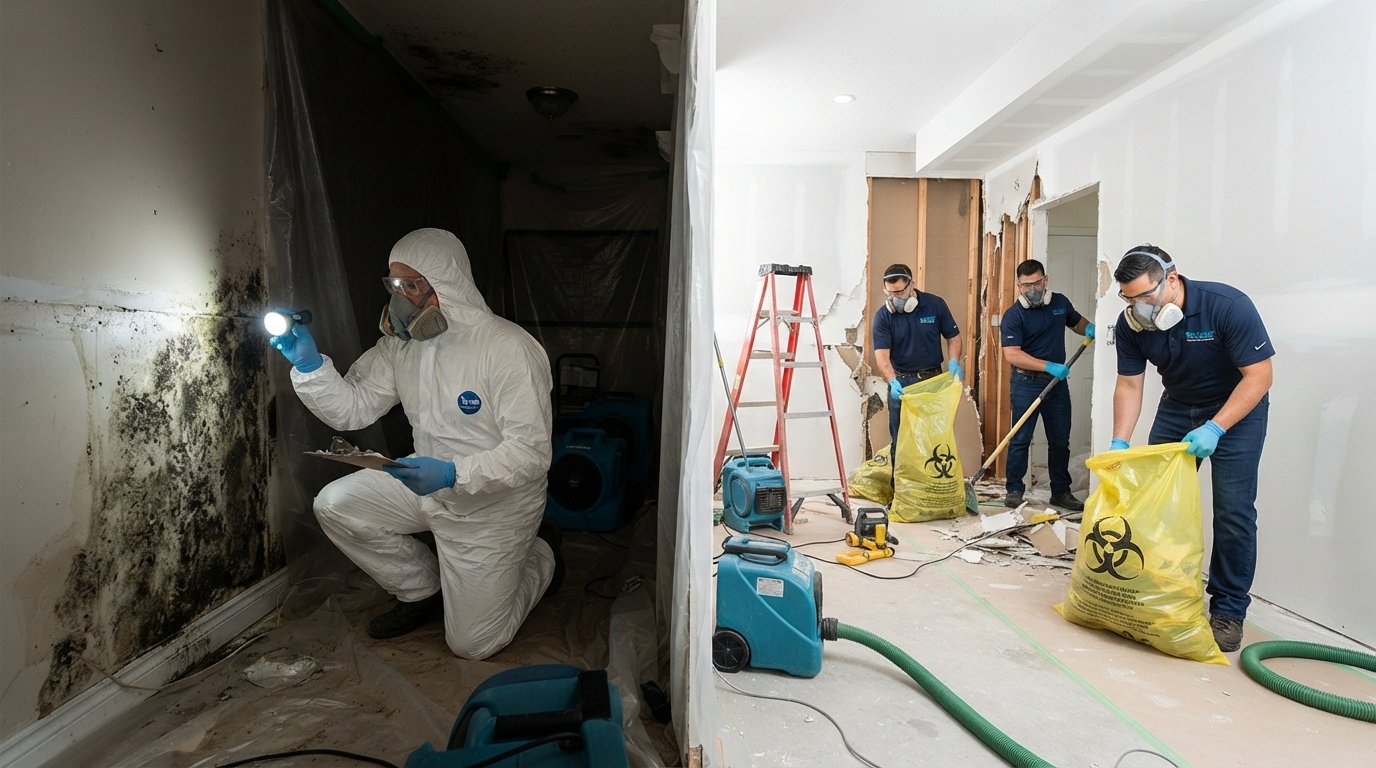
Understanding the difference between mold remediation and mold removal is crucial for maintaining a healthy home. Spores exist naturally both indoors and outdoors, often entering your space through windows, doors, or even your pets. While it’s impossible to eliminate all spores, you can manage their impact.
When moisture is present, growth can start within just 48 hours. This timeline emphasizes the importance of acting quickly after water events, as delays can lead to larger issues. This article will guide you through the essential aspects of dealing with visible contamination versus addressing the source and preventing future growth.
By following the U.S. EPA’s recommendations, you’ll learn that controlling moisture is more effective than aiming for zero spores. Whether you need a simple cleaning, an inspection, or a comprehensive professional process, this guide will help you make informed decisions for your home.
Key Takeaways
- Complete removal of spores is not feasible; focus on control.
- Visible contamination requires different strategies than addressing underlying issues.
- Acting quickly after water intrusion is vital to prevent larger problems.
- Moisture management is key to a healthier living environment.
- Consult professionals for extensive or recurring issues.
What Mold Removal and Mold Remediation Mean
Knowing the specifics of mold removal and remediation can make a significant difference. Mold removal typically refers to the process of cleaning or eliminating visible mold from surfaces. This is often a focused effort, especially when the contamination is limited to areas that can be safely cleaned.
On the other hand, mold remediation is a more comprehensive approach. It involves inspection, moisture control, containment, air filtration, and cleaning. The aim is to return indoor mold levels to their natural background, rather than trying to remove every single spore.
Despite thorough cleaning, mold spores can still find their way into your home through various means. These include HVAC systems, open doors, windows, and even clothing. Understanding this helps you grasp why simply removing visible mold may not be enough to prevent future issues.
Moisture plays a crucial role in mold growth. When conditions are warm and damp, mold can develop rapidly, leading to potential damage. Thus, the goal of professionals is not to promise a spore-free environment but to restore healthy indoor levels.
Mold Remediation vs Removal: The Key Differences
Recognizing the distinctions between various approaches to handling mold can be essential for effective home care. The scope of work in mold removal is often limited to visible areas. In contrast, remediation aims for long-term solutions, following the IICRC S520 standard.
While surface cleaning may address visible mold, it often fails to tackle hidden contamination. Areas behind walls, under flooring, or within HVAC systems can harbor unseen growth. Without addressing moisture, these hidden problems can lead to recurring issues.
Professionals typically recommend remediation when contamination exceeds approximately 10 square feet. This threshold helps determine when a detailed inspection and comprehensive process become necessary. The focus on moisture control, air filtration, and the removal of contaminated materials ensures that unaffected areas of your property remain protected.
What Happens During Professional Mold Remediation
The process of professional intervention involves several critical steps. First, experts conduct a thorough inspection to identify moisture sources and map out visible and hidden contamination. They utilize tools like moisture meters and thermal imaging to ensure nothing is overlooked.
Next, containment measures are put in place. This includes using plastic barriers and maintaining negative air pressure to limit airborne spores. Such controls protect unaffected areas during the cleanup process.
Professionals then focus on removing contaminated materials that cannot be cleaned effectively. They employ HEPA air scrubbers to capture airborne particles while ensuring the remaining surfaces are thoroughly cleaned.
After cleaning, commercial air movers and dehumidifiers are used to dry the area. This step is crucial, as the U.S. EPA recommends drying wet materials within 24 to 48 hours to prevent further growth. Finally, a final inspection is conducted, often involving independent verification to ensure safety and compliance.
When Mold Removal May Be Enough
In some cases, you may find that tackling small patches of growth is manageable. The U.S. EPA suggests that homeowners can handle cleanup when the affected area is less than 10 square feet. This is especially true for nonporous surfaces like tile, glass, and metal.
These materials are easier to clean compared to porous ones such as drywall or carpet. Here’s why addressing moisture is crucial:
- Fix any leaks or condensation issues before cleaning to prevent rapid regrowth.
- Complete drying is essential to protect your home from repeat damage after a small water event.
- Even small cleanups may require professional advice if you notice odors, recurrence, or hidden growth.
| Surface Type | Cleanup Feasibility | Notes |
|---|---|---|
| Tile | Easy | Nonporous and can be wiped clean |
| Glass | Easy | Surface cleaning is effective |
| Metal | Easy | Nonporous, typically does not absorb moisture |
| Drywall | Difficult | Porous, often needs replacement |
| Carpet | Difficult | Porous, may require professional cleaning |
When You Need Professional Mold Remediation
When it comes to addressing mold issues, knowing when to call in the experts is crucial. Certain situations demand professional intervention to ensure safety and effectiveness.
Here are key indicators that you should consider:
- Large areas of growth: If mold covers more than about 10 square feet, it’s best to seek help.
- Recurring problems: If you notice mold returning after cleaning, it indicates deeper issues.
- Hidden contamination: Mold lurking inside walls, insulation, or HVAC systems can spread contamination.
- Post-flood conditions: After flooding or significant water damage, professional services are essential.
Porous materials like drywall and carpeting may need removal and replacement to effectively tackle the problem. For more information on how to handle water-related mold issues, check out this step-by-step guide.
How Moisture Control Helps Prevent Mold from Returning
Moisture control is essential in keeping your home safe from unwanted growth. By understanding common sources of indoor moisture, you can take steps to mitigate the risks.
Common sources of indoor moisture
- Plumbing leaks
- Roof leaks
- Flooding
- Condensation
- Poor ventilation
- Wet basements and crawl spaces
- HVAC moisture
- High humidity levels
Why wet building materials should be dried within 24 to 48 hours
The U.S. EPA recommends drying wet materials promptly. This quick action can prevent secondary growth, which is crucial after water intrusion.
Ways to reduce excess humidity and prevent future growth
Keeping indoor humidity below 45 percent is vital. Here are some practical steps:
- Repair leaks immediately.
- Improve ventilation in bathrooms and kitchens.
- Use dehumidifiers in damp areas.
- Check materials after storms or plumbing failures.
By focusing on moisture control, you can significantly reduce the chances of growth returning, even after professional cleaning or material removal.
Health Risks and Property Damage from Mold
The impact of airborne spores on your home can be more serious than you think. Poor indoor air quality can lead to various health problems and damage your property over time. Mold spores thrive in damp conditions, and when they become airborne, they can affect your indoor environment significantly.
Exposure to these spores may cause symptoms such as nasal congestion, throat irritation, coughing, and even skin irritation. If you have allergies, asthma, or a weakened immune system, the risks can be even greater. You should take these symptoms seriously and consider seeking professional help if you notice them.
Moreover, persistent moisture can lead to damage in your home. It can ruin drywall, insulation, flooring, and other materials. Even when visible growth seems limited, the underlying moisture problem can cause significant damage.
To mitigate these risks, it’s crucial to isolate affected areas, address moisture sources, and arrange for proper cleanup. By taking proactive measures, you can protect both your health and your property.
DIY Cleanup or Professional Mold Services?
Deciding between a DIY approach and hiring professionals can significantly impact your home’s safety. For small areas under 10 square feet, if the moisture source is fixed, you might manage the cleanup yourself. Just remember to use protective gear like a NIOSH-approved N95 respirator, sealed goggles, and gloves that extend to your mid-forearm.
However, if you encounter recurring issues, hidden contamination, or extensive growth, it’s best to call in the experts. Professional services can effectively address these problems, ensuring thorough inspection and cleanup.
When a small cleanup may be manageable
- For isolated areas under 10 square feet.
- When the moisture source has been corrected.
- No sensitive occupants are at risk of exposure.
When to call a professional remediation company
- For widespread contamination or flood-related issues.
- If you notice recurring growth after cleaning.
- For hidden mold in HVAC systems or behind walls.
What to look for when choosing a mold professional
- Documented experience and clear scopes of work.
- Moisture correction and containment measures.
- HEPA filtration and independent verification options.
| State | Licensing Requirements | Notes |
|---|---|---|
| Florida | Separate licenses for assessors and remediators | Regulated under Chapter 468, Part XVI |
| North Carolina | No specific state program | General guidelines apply |
| South Carolina | Proposed certification framework (H.5109) | Expected implementation in February 2026 |
Mold Remediation Costs and Project Timelines
When tackling mold issues, understanding the costs and timelines involved can help you prepare better. Most residential projects typically range from $1,200 to $3,750. Factors such as the extent of contamination and the type of materials affected can influence your estimate.
For example, small bathroom projects might only cost between $500 and $1,000, while HVAC remediation can reach $3,000 to $10,000. If the contamination is extensive, whole-house remediation may be necessary, costing around $10,000 to $30,000.
Project timelines can vary significantly. Most cleanup processes can take anywhere from one day to over a week. Drying and moisture correction often take the longest, as technicians must ensure that all structural materials have reached safe moisture levels before proceeding.
As you navigate this process, remember: “The cost of prevention is always less than the cost of failure.” Being proactive can save you time and money in the long run.
Conclusion
Choose the right response based on what you find and what caused it. Mold removal can address visible spots, while mold remediation looks deeper at moisture, hidden damage, air quality, and the chance of new growth. No responsible professional can promise to clear every naturally present spore or keep indoor levels at zero.
For a small patch on a nonporous surface, careful cleaning may be enough. But recurring or hidden areas, flood damage, and HVAC concerns call for an inspection. Fix the water source and dry wet materials within 24 to 48 hours. These steps help control conditions that support growth.
If you’re unsure, ask a qualified professional to assess the affected area. A clear process can help protect your home, property, and health, while reducing future damage. Act early to make cleanup safer and protect your investment.