When you notice unusual odors or bubbling paint in your home, it might signal a hidden issue. James Klein discovered this after a heavy rainstorm in his Manhattan apartment. Such signs can indicate moisture problems that require immediate attention.
A professional assessment goes beyond just visible stains. It evaluates moisture levels, building conditions, and indoor air quality throughout your space. Homeowners need to understand that symptoms like coughing, sneezing, and itchy eyes can be linked to these hidden problems.
During an inspection, a trained expert follows a structured process to identify both obvious concerns and underlying conditions affecting your indoor air. This thorough approach ensures that any potential issues are addressed, especially in porous materials like carpets and drywall that can harbor problems over time.
Key Takeaways
- Unusual odors and paint bubbling can indicate hidden moisture issues.
- Professional assessments evaluate moisture, building conditions, and air quality.
- Common symptoms include coughing, sneezing, and itchy eyes.
- Inspectors use a structured process to identify concerns.
- Porous materials may require special attention to prevent long-term damage.
What to Expect During a Mold Inspection
Uncovering hidden moisture problems in your home often starts with a simple conversation. During your visit, the assessor will ask about any symptoms you’ve noticed, such as musty odors or leaks. They will also inquire about the history of water issues in your home, including heavy rain or snowfall events.
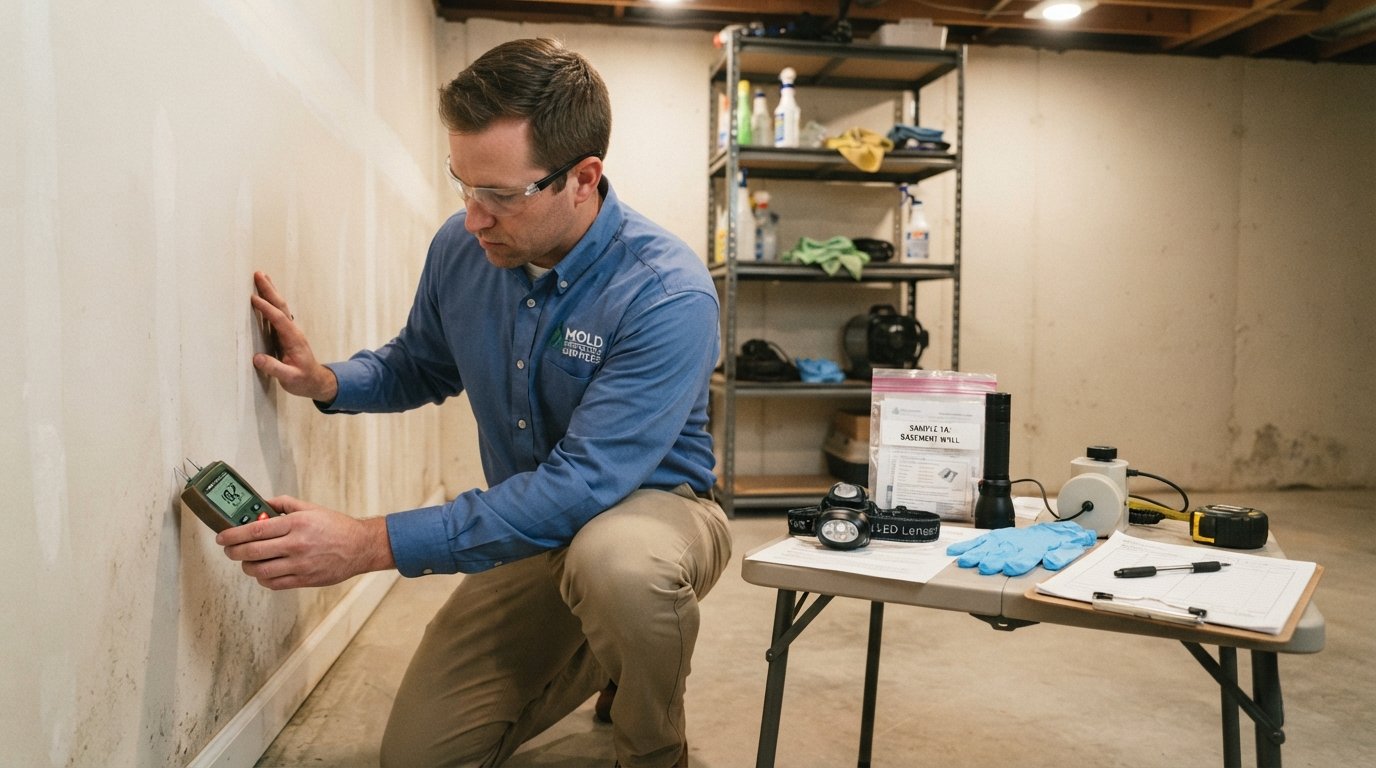
Inspectors typically check visible and hidden areas where moisture can thrive. This includes examining basement structures, areas under sinks, and the backsides of doors. Remember, mold can often hide in places you might not think to look.
To enhance their findings, assessors use advanced tools like moisture meters and thermal imaging cameras. These devices help identify current dampness and past water damage, ensuring a thorough evaluation. As Ryan Taite, a licensed inspector, notes, “The key to preventing mold growth is early detection.”
By employing moisture mapping techniques, inspectors can locate wet wall cavities before spores take hold. This proactive approach is crucial, especially after heavy rain or flooding, as it helps prevent future issues.
How Mold Testing and Sampling Fit Into the Visit
Understanding the role of testing during your visit can clarify your concerns. Assessors often use air and surface sampling to gather more information about potential issues. This targeted approach helps answer specific questions after the visual and moisture assessment.
However, it’s essential to know that sampling results can vary. Factors like ventilation, sample location, and the extent of the perceived issue can influence outcomes. For instance, air sampling can sometimes produce a false negative, meaning that it might not always detect hidden problems.
MI&T sends collected air and visible-mold samples to an independent laboratory for unbiased evaluation. This process supports accurate assessments and helps identify broader indoor concerns, including allergens like fiberglass and pollen.
When necessary, HBH incorporates lab-verified air or surface sampling to enhance the findings. This ensures that you receive the most comprehensive evaluation possible.
| Sampling Type | Purpose | Considerations |
|---|---|---|
| Air Sampling | Detect airborne spores | Can yield false negatives |
| Surface Sampling | Identify visible growth | Dependent on sample location |
| Particle Analysis | Assess broader allergens | Includes fiberglass, pollen |
What Happens After the On-Site Assessment
After the on-site evaluation, you will receive detailed insights into your home’s condition. This includes a written report that connects observed conditions, photographs, and moisture evidence.
The report will also outline laboratory findings and recommended next steps. This comprehensive document ensures you understand the issues at hand and the actions needed to resolve them.
Recommended corrective measures may include:
- Probing a wall cavity to assess hidden moisture
- Installing dehumidification systems
- Cleaning HVAC systems to improve air quality
- Repairing gutters to prevent water intrusion
- Waterproofing crawl spaces for added protection
It’s crucial to address the underlying moisture source. If not, growth may return, leading to further complications.
After remediation, clearance testing may be appropriate. This could involve visual inspections or repeat sampling to ensure the effectiveness of the remediation efforts.
| Assessment Component | Description | Importance |
|---|---|---|
| Written Report | Details findings and recommendations | Guides remediation efforts |
| Photographs | Visual evidence of conditions | Supports understanding of issues |
| Clearance Testing | Post-remediation evaluation | Ensures safety and effectiveness |
Why Suffolk County and Long Island Homes May Need a Closer Look
In Suffolk County and Long Island, environmental factors can lead to hidden moisture concerns in homes. Coastal conditions, such as salt air and high water tables, can create an environment where moisture thrives. This is especially true in areas near the Great South Bay, where heavy rain and nor’easter flooding are common.
Homes in North Babylon, including post-war ranches and raised-ranches, may conceal moisture behind newer finishes. Additionally, original asbestos-paper ductwork in some mid-century homes can trap condensation, leading to potential issues. Inspectors should pay close attention to:
- Crawl spaces
- Rim joists
- Bathroom subfloors
- HVAC systems
- Areas behind drywall
HBH — Healthy Buildings & Homes, led by a Certified Indoor Environmentalist, offers thorough inspections in North Babylon, ZIP code 11703, and nearby South Shore communities. Their approach includes thermal imaging, moisture mapping, and lab-verified sampling when necessary. This comprehensive evaluation helps identify and address any hidden moisture problems effectively.
When to Schedule a Mold Inspection for Your Home or Business
Knowing when to seek a professional evaluation is crucial for maintaining a healthy environment. Timing can make a significant difference in addressing hidden issues effectively.
Consider scheduling an inspection if you’ve experienced any recent water damage. For instance, James Klein discovered hidden wall problems after a heavy rain caused odors and bubbling paint. Such situations warrant immediate attention.
A persistent musty smell, unexplained health symptoms, or visible stains are also strong indicators that you should call an expert. Even small affected areas can harbor significant issues.
Real estate transactions are another key time for an inspection. Buyers, sellers, landlords, and property managers can benefit from a thorough evaluation to clarify moisture conditions before finalizing a deal.
According to HBH, most North Babylon addresses can be scheduled for an inspection within 24-48 hours. This quick response helps property owners address concerns promptly.
MI&T identifies several triggers for inspections, including:
- Recent water damage
- Visible growth
- Strange odors
- Health complications
- Post-remediation clearance
- Litigation needs
- Peace of mind
Conclusion
A useful home assessment should leave you with clear answers, not more guesswork. It starts with your concerns and water history, then checks visible areas and uses moisture meters, thermal imaging, or moisture mapping to find hidden damp spots.
Testing can add helpful evidence, but results depend on airflow, sample location, and collection methods. Your written report should connect the results with photos, likely moisture sources, and practical repair steps.
After cleanup, a clearance review can help confirm that the work addressed both visible growth and its cause. For guidance, read these mold remediation steps. Choose a qualified local professional who explains the findings and next steps in plain language.