Surprising fact: nearly 1 in 4 U.S. homeowners face unseen moisture that weakens structure before they notice a single stain.
You might walk past a dull patch on the ceiling and shrug, but that small mark can signal a much larger problem under the surface.
Early detection saves you time and money. Peeling paint, discolored drywall, or a faint musty smell can point to a remote leak, not just the spot you see.
If you suspect an unseen leak, check nearby pipes, appliances, and roof lines. Acting fast helps prevent rot, mold, and costly repairs to your home.
Key Takeaways
- Small stains or peeling paint may mean a distant leak is affecting drywall.
- Hidden moisture often spreads before visible evidence appears.
- Check plumbing and appliances when you find suspicious marks.
- Early action reduces the risk of mold and structural loss.
- Professional inspection can locate the true source quickly.
Understanding the Risks of Hidden Water Damage
A slow leak can quietly eat away at joists and studs long before you spot a single stain. That quiet pace makes unseen problems harder to catch.
Small plumbing problems often start inside walls, where moisture pools without obvious signs. Over weeks and months, saturated materials lose strength and warp.
Why this matters: you can face major repair bills when moisture weakens structure or feeds mold. Many homeowners treat tiny drips as minor, but repeated use of your plumbing can make those drips worse.
- Slow leaks create unseen rot that spreads with each use.
- Accumulated moisture shortens the life of framing and drywall.
- Professional restoration is often needed once internal materials fail.
| Risk | How it starts | What it affects |
|---|---|---|
| Structural loss | Persistent plumbing leak | Joists, studs, drywall |
| Mold growth | Trapped moisture over time | Air quality, finishes |
| Costly repairs | Delayed detection | Restoration, replacement |
Subtle Signs of Hidden Water Damage Behind Walls and Ceilings
A soft spot under your feet or a faint musty scent can be the first clues homeowners miss.
Visual Clues
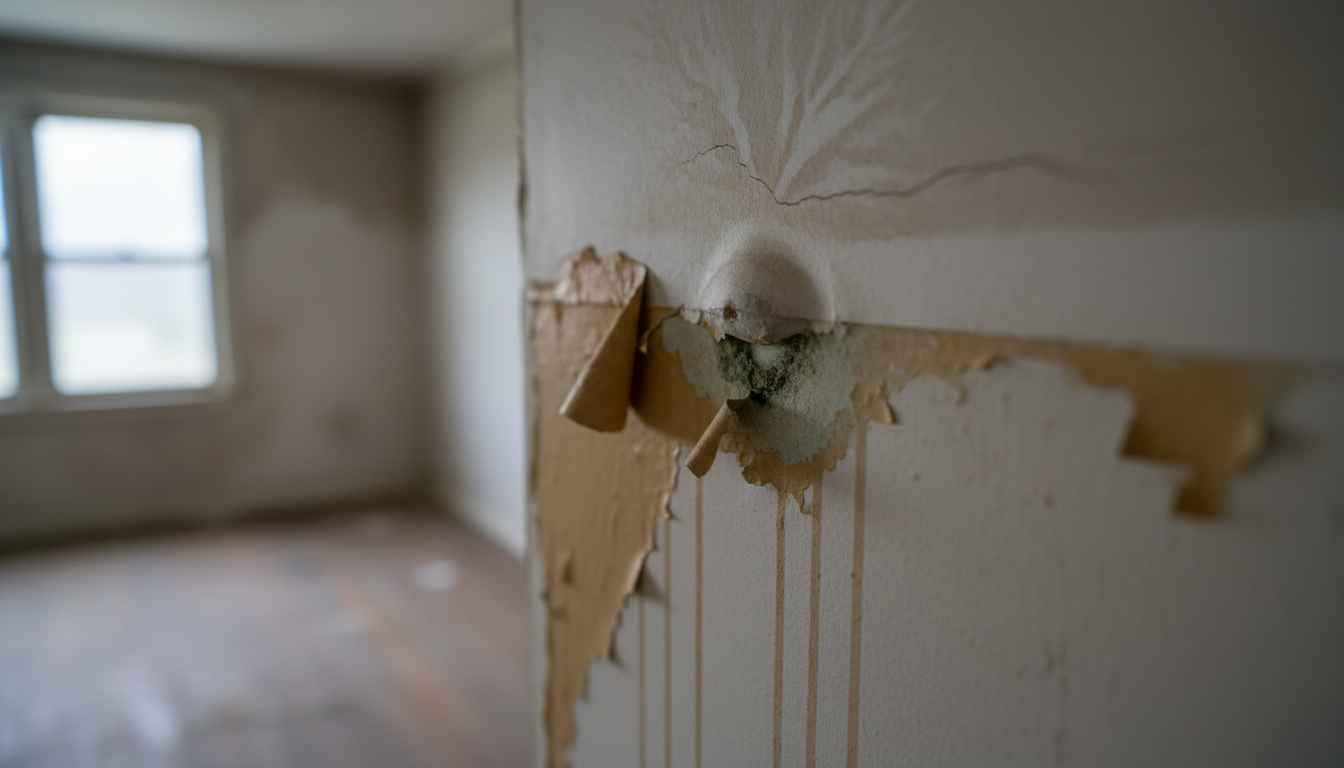
Look for bubbling, flaking, or peeling paint on drywall. These changes often mean moisture is migrating through the wall cavity.
Discoloration or dark spots on a ceiling can show that water is traveling from a distant leak. Small, spreading marks usually point to a longer-standing problem.
Odor Indicators
A persistent musty smell is often the earliest indicator that mold growth is happening inside an area where moisture is trapped.
If you notice that odor near carpets, baseboards, or behind cabinets, treat it as a signal to inspect further.
Physical Texture Changes
Soft or spongy flooring and warped trim mean materials have absorbed water and lost strength. That change can move from wall to floor over time.
- Peeling paint or bubbling surfaces usually mean active water damage to drywall.
- Mold growth in corner joins often points to trapped moisture at the wall-ceiling junction.
- Professional restoration teams check these subtle clues to decide if the issue is local or widespread.
Common Areas Where Moisture Accumulates
Moisture often gathers where daily plumbing meets cabinets and appliances. These pockets of damp can quietly cause serious water damage if you don’t check them.
High Risk Zones in Kitchens and Bathrooms
Under kitchen cabinets and behind the refrigerator are top problem spots. A slow plumbing leak under a sink can rot subflooring over time.
Bathroom vanities, shower surrounds, and washer hookups also trap moisture. You may see peeling paint or small discoloration before anything else appears.
- RAMM Water Restoration uses thermal imaging and moisture meters to find wet areas that look normal to the eye.
- Check near dishwashers, washing machines, and fridge supply lines for drips or higher water bills that hint at a plumbing leak.
- When moisture wicks through insulation, it can create large spots of unseen damage and speed mold growth.
Tip: If you suspect a leak in these areas, call a pro. Fast restoration limits structural loss and keeps mold from spreading.
Why Surface Inspections Can Be Deceptive
What looks fine on the surface can hide soaked materials just inches away. A painted finish may stay intact while the gypsum core of your drywall soaks through.
“You can’t know the full extent until demolition starts,” Jamar Hinton notes.
Pros use moisture meters to map wet spots inside wall cavities. They also rely on thermal imaging to reveal cooler areas that point to trapped moisture.
- Insulation can hold moisture long after the surface feels dry.
- Moisture spreads unpredictably across materials, so a visual check often misses real loss.
- A pro inspection shows whether water has reached structural studs or floor framing.
| Tool | Purpose | Limit |
|---|---|---|
| Moisture meter | Measure moisture content in drywall and framing | Needs access points; reads locally |
| Thermal imaging | Spot temperature differences that indicate hidden water | Can suggest, not confirm, exact extent |
| Pro inspection & probe | Verify damage and expose inside wall materials | May require selective demolition |
Takeaway: Relying only on a quick surface check risks underestimating water damage. Call a restoration pro to measure the extent and protect your home before materials fail.
Long Term Consequences of Ignoring Moisture
Letting trapped moisture sit can turn a small leak into a long-term expense that drains your property’s value.
Mold is the fastest threat. The EPA warns mold can begin developing within 24 to 48 hours when moisture is present. If you ignore a persistent musty smell, that odor can mean spores are taking hold and affecting your family’s health.
Mold Growth Risks
Left unchecked, mold growth spreads across drywall, insulation, and other materials. That increases remediation complexity and cost.
Health problems can follow. Chronic coughing, asthma flare-ups, or allergic reactions may start if you let growth continue.
Structural Integrity Issues
Over time, water weakens framing and finishes. Small stains and warped paint can become failing studs and collapsed sections that need full restoration.
- The EPA timeline shows how fast the problem can escalate.
- Professionals often find rot in wood studs after long exposure.
- Delaying action lowers resale value and raises repair bills.
Act quickly when you notice any signs of moisture. For step-by-step fixes to drywall and related repairs, see our drywall water damage repair guide.
Deciding When to Open Your Walls
Before you grab a hammer, use data to confirm where the moisture really lives. Making that call on a guess can spread contaminants and cost you more.
Trust measurable readings: professionals rely on moisture meters and thermal imaging to map wet areas. Those tools show the true extent and source so demolition targets only damaged materials.
SERVPRO has about 2,000 franchises across the United States and Canada. Their teams are trained to judge when a wall must be opened and when it can stay intact.
- Moisture readings prevent unnecessary removal and limit mold growth during work.
- A plumbing leak under drywall often needs a focused probe, not full cavity removal.
- Soft spots in flooring or sagging ceiling panels are clear triggers to call experts.
“Open walls based on data, not just what you can see.”
| Step | What pros check | Why it matters |
|---|---|---|
| Noninvasive scan | Thermal imaging, moisture meter | Finds wet areas without demo |
| Targeted probe | Small access holes, humidity test | Confirms source and extent |
| Controlled demolition | Remove only saturated materials | Limits mold spread and cosmetic loss |
| Full restoration plan | Repair, dry, replace materials | Restores safety and property value |
Conclusion
Spotting moisture early protects your home’s structure and your family’s health. Watch for any subtle signs and act quickly when you suspect hidden water. Early attention keeps problems small and costs lower.
If you notice persistent leaks or mold, call Reyes Restoration at 410-762-4085 for a professional assessment in Maryland. Our team offers trusted restoration services across Baltimore, Annapolis, and Washington DC.
Don’t wait for a minor issue to become a major loss. Timely action by Reyes Restoration ensures every corner of your home is checked, treated, and returned safely — saving you stress and future repair bills.