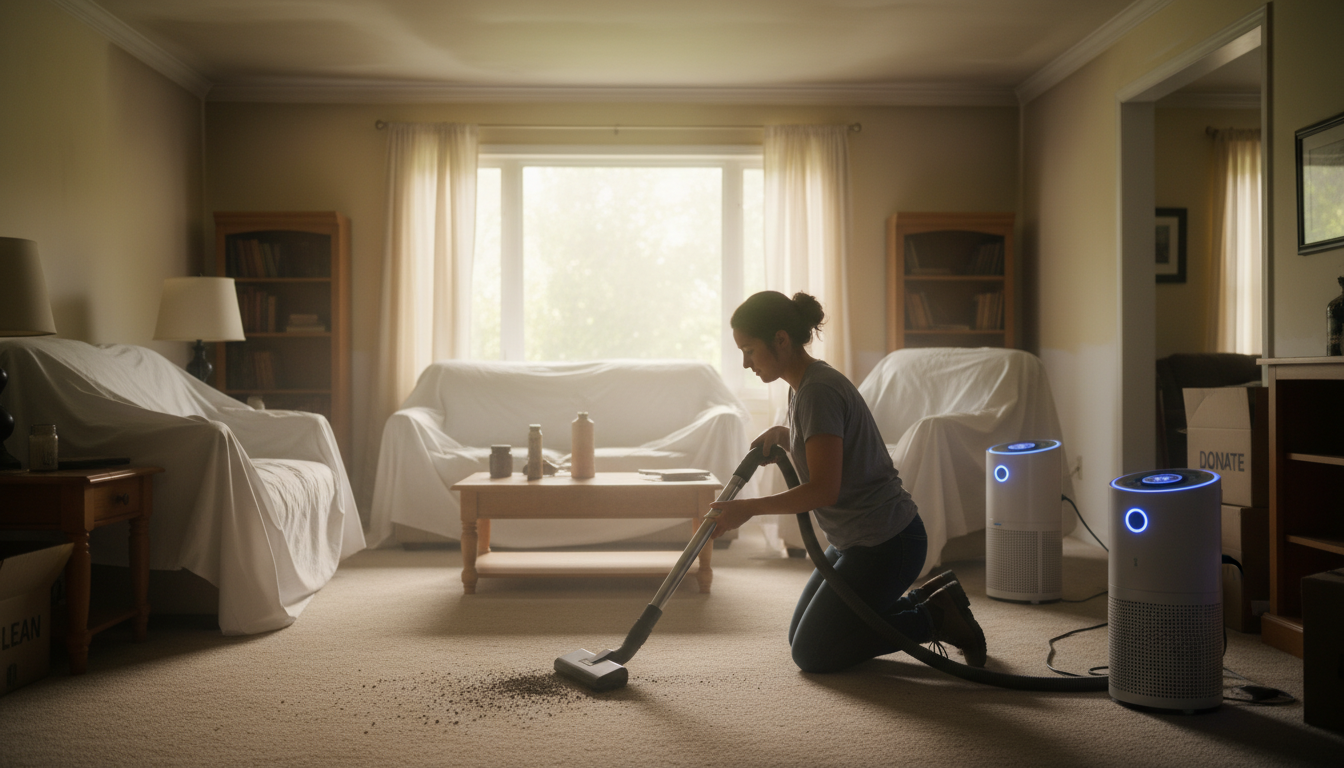
353,100 home structure fires happen in the U.S. each year — a number that makes the aftermath feel overwhelming for many families.
You need clear, practical steps so you can get rid of lingering smoke particles and restore indoor air. This short guide lays out essential cleaning moves and professional removal options. Follow small actions that protect your health and limit long-term damage.
Start by airing rooms and opening windows. Then target surfaces, walls, and furniture with proven cleaners. Simple agents like baking soda and vinegar can help with odor removal, while an air purifier and fresh filters speed recovery of air quality.
Don’t wait. Quick attention lowers the time that soot and smoke particles sit on materials. With the right products and a plan, you can bring your home back to a livable condition and feel safe again.
Key Takeaways
- Act soon to limit long-term damage and improve indoor air quality.
- Ventilate rooms first, then clean surfaces, walls, and fabrics.
- Use baking soda, vinegar, and an air purifier for basic odor removal.
- Replace filters and vacuum with HEPA if possible to catch particles.
- Consider professional cleaning for severe damage or persistent smoke odor.
Understanding the Persistence of Smoke Odors
Fire leaves behind tiny contaminants that embed in surfaces and slow your home’s recovery. These particles are not just dusty residues; they are chemical compounds that affect air quality and your family’s health.
The danger comes from smoke particles that carry acids and toxic byproducts. When PVC or wire coatings burn at low temperatures, they can make the odor far more corrosive and persistent.
Materials like plaster, wood, brick, and textiles are porous. That means odors soak in and hide in pores and fibers. Over time, trapped particles can release smells back into the room.
- Smoke particles can pose a serious health risk for occupants.
- Porous materials trap odor deep inside building surfaces.
- Toxic compounds from burned PVC make some smoke odor especially stubborn.
- Without proper cleaning, particles can linger for months or years.
Health Risks of Smoke Particles
Poor indoor air caused by these particles can trigger breathing issues and other serious problems. Quick airing is helpful, but cleaning contaminated materials is often required.
Why Smoke Lingers in Porous Materials
Because pores and fibers hold the chemicals, simple ventilation rarely neutralizes odors fully. You may need deep cleaning, sealing, or replacement of affected materials to clear the smell and restore safe air.
Immediate Steps to Ventilate Your Home
Start by creating strong cross-ventilation so contaminated air moves out and fresher air moves in. Open all windows and exterior doors to set up a steady draught that pushes air through rooms.
Turn on box fans or window fans and aim them outward in the rooms that smell most of smoke. This helps force smoke particles and odors outside rather than letting them settle on fabrics and walls.
If there is standing water or mud left by hoses, remove it quickly. Wet debris can lock in an unpleasant odor and make the situation worse with time.
- Open doors and windows for rapid air exchange.
- Use fans to direct contaminated air outdoors.
- Clear standing water so odors do not intensify.
Act within the first few hours after the event. Proper ventilation is a critical first step in a multi-step plan that helps you get rid of lingering smoke odor and protect your indoor air quality. For more detailed guidance on property recovery, see property smoke damage in NYC.
How to Remove Smoke Smell from House After Fire Fast
Natural odor absorbers give you an easy first line of defense after a minor blaze. Use them while you run ventilation and set up filtration.
Using Natural Odor Absorbers
Vinegar and coffee powder can bind unpleasant odors, though they work best in small incidents. Place shallow bowls of vinegar or fresh coffee grounds in affected rooms to help neutralize airborne odor.
Sprinkle baking soda on upholstered seats and carpets, leave for several hours, then vacuum with a HEPA unit if available. Baking soda is a proven, low-cost option for the common smoke smell house occupants notice after a minor event.
- Vinegar: neutralizes some volatile compounds.
- Baking soda: absorbs odors from fabrics and air.
- Air purifier: captures smoke particles that vents miss.
| Product | Best use | Notes |
|---|---|---|
| White vinegar | Room bowls | Good for light smoke odor, non-toxic |
| Baking soda | Fabrics and carpets | Leave 4–12 hours, then vacuum |
| HEPA air purifier | Continuous filtration | Pairs well with natural absorbers for better air |
These methods suit minor damage. For stronger, embedded odor you will need deeper cleaning or professional removal. Combining pantry solutions with a high-quality air purifier gives the best short-term results in your home.
Deep Cleaning Fabric and Upholstery
When textiles meet smoke, they act like sponges that hold onto tiny particles and odor. You must treat fabrics with focused cleaning so those particles stop cycling through your air.
Start with every washable item. Remove curtains, slipcovers, and pillowcases and run them on the hottest safe cycle with a heavy-duty detergent. Add a cup of white vinegar or a commercial odor eliminator if labels allow.
For upholstery and bulky furniture, vacuum first with a HEPA unit. Then use a fabric-safe shampoo or steam cleaning. If the smell persists, consider professional upholstery cleaning; furniture often traps particles deep in cushions.
- Deep clean curtains and sofas to improve indoor air quality.
- Store cleaned fabrics in sealed bags away from affected rooms until odors are gone.
- Repeat cleaning on a schedule until the home air clears.
“Cleaning fabrics thoroughly is one of the best steps you can take to stop lingering odors and protect your home’s air.”
Neutralizing Odors on Hard Surfaces
Tackling flat surfaces early helps prevent odors from cycling back into your living spaces. Clean floors, counters, trim, and baseboards so particles cannot re-enter the air and settle on fabrics.
Vinegar Solutions for Floors
Mix equal parts white vinegar and warm water for a gentle cleaning agent. Wipe sealed wood, tile, and vinyl with a microfiber mop or cloth.
Vinegar helps break down smoke compounds on surfaces and leaves less residue than heavy cleaners. For smooth areas, a professional oxidizer like Odox will neutralize lingering fire odor where simple cleaners fall short.
Baking Soda for Carpets
Sprinkle baking soda across carpets and rugs. Let it rest several hours so it can absorb trapped odor.
Vacuum thoroughly with a HEPA-filter unit afterward to capture particles. Repeat on high-traffic areas until the room air improves.
- Clean all hard surfaces in every room.
- Use vinegar solutions for routine cleaning.
- Apply Odox on smooth surfaces when professional-grade treatment is needed.
- Finish with a HEPA vacuum after baking soda treatment.
“Addressing surfaces first reduces the workload for fabrics and helps restore fresh air faster.”
Managing HVAC Systems and Air Quality
Your ducts and filters can hold soot and tiny particles that keep indoor air stale after a fire.
Change your HVAC filter immediately. A clogged filter will recirculate odor and contaminants through your home. Replace the filter with a high-efficiency model as the first step in cleaning your ventilation.
Have ducts inspected and cleaned if smoke damage reached the system. Trapped residue in vents will keep releasing odors until it is removed.
Use an air purifier with an activated carbon filter. That extra layer binds volatile compounds and makes particle capture more effective. Run the purifier continuously while you work on surfaces and fabrics.
- Swap filters right away to stop circulation of smoke particles.
- Schedule duct cleaning when odors persist after basic cleaning.
- Pair HEPA filtration with activated carbon for best results.
| Component | Best Practice | Why it matters |
|---|---|---|
| HVAC filter | Replace immediately with high-efficiency unit | Prevents recirculation of smoke and soot |
| Air ducts | Inspect and clean professionally | Removes trapped residues that cause ongoing odor |
| Air purifier | Use HEPA + activated carbon filter | Captures particles and binds volatile odors |
“Cleaning the HVAC protects the air quality of your home and stops odors from returning.”
Addressing Smoke Particles in Walls and Ceilings
Walls and ceilings often hide lingering particles that keep odors alive long after the flames are out.
Start with a careful surface cleaning. Wipe down all walls and ceiling areas with a mild detergent first to clear loose soot and dust. For porous materials such as plaster, wood, brick, and concrete, spray a disinfectant like Penetrox to neutralize embedded odor-causing compounds.
Repainting and Priming Strategies
Applying a stain-blocking primer is one of the most important steps. Primer locks in remaining odor and creates a secure base for new paint.
Make sure surfaces are fully dry before priming. Moisture trapped beneath paint can trap particles and let odors return.
- Clean walls and ceilings thoroughly; both trap particles.
- Use Penetrox on porous materials to neutralize odor agents.
- Prime before repainting to improve home air quality and seal surfaces.
| Surface | Recommended agent | Key step |
|---|---|---|
| Plaster/brick | Penetrox spray | Apply, wait drying, then prime |
| Wood trim | Mild detergent + Penetrox | Clean, sand if needed, prime |
| Ceilings | Odor-neutralizing primer | Ensure complete dryness before paint |
“Treat ceilings as carefully as walls; both hold particles that affect indoor air.”
When to Call Professional Restoration Services
When ordinary cleaning can’t clear persistent odor, professional restoration offers targeted solutions you likely can’t replicate at home. If the smoke smell keeps returning or spreads through vents, bring in trained technicians for a full assessment.
Companies like COIT Cleaning and Restoration have the experience and equipment required to rid your home of stubborn odors. They use industrial-grade products and machines that reach deep into materials, walls, and furniture.
Call a pro if your efforts fail, if damage is extensive, or if health symptoms persist. Professionals remove embedded particles from hidden areas and treat surfaces that regular cleaners miss.
- Specialized equipment cleans ducts, cushions, and tight spaces.
- Advanced agents neutralize odors trapped in plaster, wood, and fabrics.
- Work done by pros helps restore indoor air quality and protect your health.
“Hiring experts is a smart solution when you need assurance that all particles are gone and air quality is safe.”
Conclusion
Swift, steady action helps you get rid of lingering smoke and improves indoor air quickly. Start with ventilation, targeted cleaning, and running a purifier.
If odors persist, pair deep cleaning with professional removal. This combination protects health and reduces long-term damage to surfaces and fabrics.
Prioritize trapped particles in ducts, walls, and textiles so the smell house occupants notice fades. Spending a little time now saves hours later and keeps your home comfortable.
Follow these steps and reach out for expert help when needed—your air and peace of mind matter.