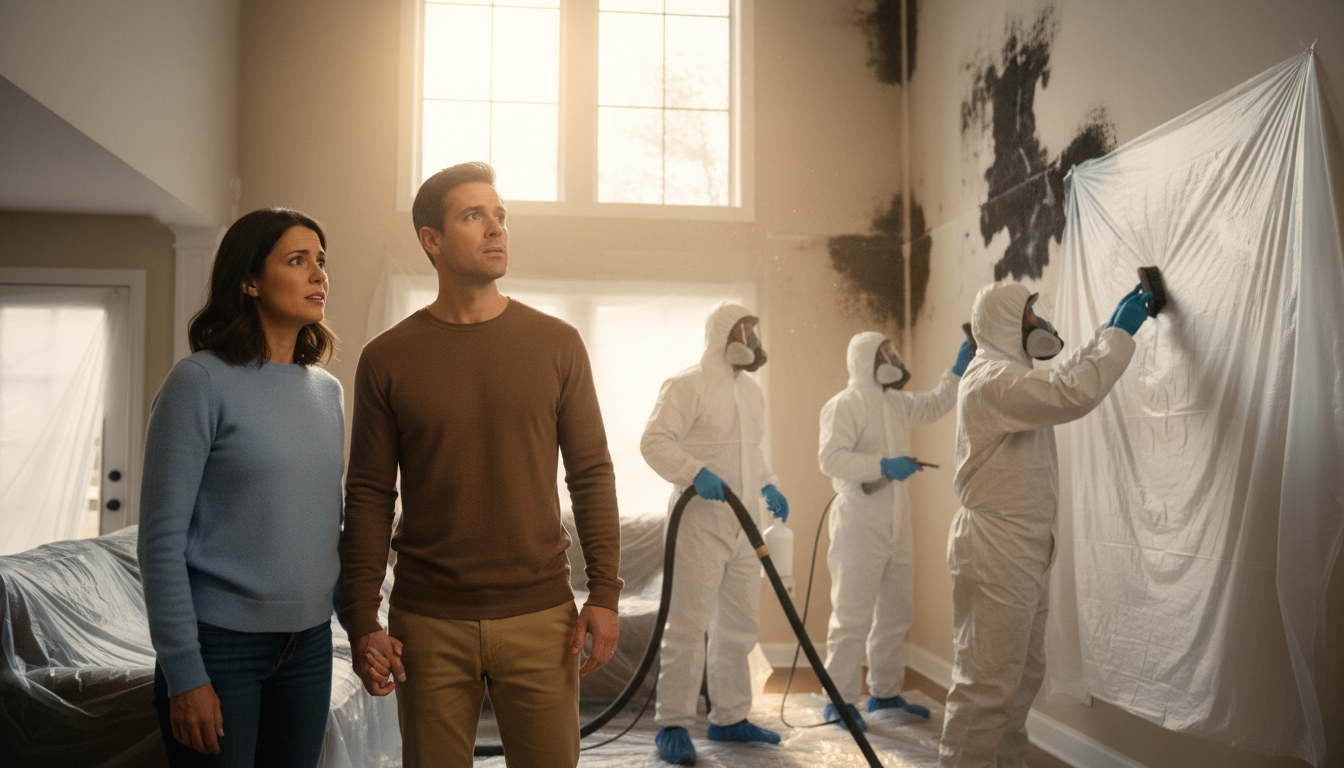
Surprising fact: an estimated 50% of U.S. homes show hidden microbial growth after water damage, often without noticeable odors or stains.
If a visible problem appears, quick choices matter for health and comfort. American Response Team offers professional home mold remediation services to guide families through cleanup and repair. Our crew evaluates whether the issue is contained or requires temporary relocation based on severity and resident health issues.
We focus on addressing root causes, like moisture control, and on safe mold removal to prevent recurrence. Clear steps and honest advice help you decide the best path for your household.
Key Takeaways
- Severity and health issues determine if relocation is needed.
- American Response Team prioritizes family health during the cleanup process.
- Root-cause fixes, such as moisture control, prevent future growth.
- Safe removal uses isolation, proper gear, and HEPA filtration.
- Find practical remediation steps at mold remediation essential steps for a safe.
Understanding the Mold Remediation Process
A clear remediation plan reduces airborne contaminants and limits spread to other rooms.
Containment and Air Filtration
Containment begins by sealing the affected area with plastic barriers and negative air systems. This prevents spores from migrating to clean rooms and protects your living space.
High-efficiency particulate air filters and industrial air scrubbers capture microscopic particles. Technicians make sure the work zone keeps lower air pressure than surrounding rooms to limit contamination.
The Role of Professional Equipment
Professional mold remediation teams use HEPA vacuums, air scrubbers, and containment frames. They locate moisture sources, apply antimicrobial solutions, and follow a structured way of mold removal.
- Sealing off areas to stop spores spreading.
- Using negative air and controlled air pressure to protect the rest of the home.
- Running industrial-grade air filtration to maintain safe air quality.
| Equipment | Purpose | When Used |
|---|---|---|
| HEPA Air Scrubber | Captures microscopic spores and dust | Throughout cleanup and clearance testing |
| Negative Air Machine | Creates lower air pressure in work area | During demolition and removal |
| HEPA Vacuum | Removes settled spores from surfaces | After removal and before treatment |
| Moisture Meter | Finds hidden wet spots that fuel growth | Initial assessment and follow-up |
Can You Stay in a House During Mold Remediation Safely
The decision depends on containment, scope of work, and resident health. A clear assessment of the work zone helps determine if the mold remediation process will affect daily life or air quality.
If the growth is small and fully isolated, a safe stay may be possible. Technicians seal the area, run HEPA filtration, and keep negative pressure so the rest of your home stays protected.
We evaluate noise, dust, and disruption before recommending whether to remain on site. Many homeowners prefer a short hotel stay during the loudest phases to avoid exposure to spores and to make home safe for sensitive family members.
Protecting health is the top priority. If air testing suggests compromised conditions, we will advise relocation. Our team walks through the specific things you should weigh so the final choice fits your household needs.
- Scope of the cleanup and containment level
- Household health risks and allergies
- Noise, dust, and timeline of the remediation
Factors That Influence Your Decision to Relocate
Deciding whether to relocate depends on how widespread the infestation and disruption will be. Scope and timeline drive the recommendation. Small, contained spots often need only local work. Large projects may force a move for several days.
Assessing the scope of infestation
If the problem is extensive, removal of drywall, carpet, and insulation may be necessary. That work can last multiple days and create dust and noise that affect daily life.
If spores have reached the HVAC system, the team treats vents and ducts. An affected hvac system can spread particles through the entire home, making temporary housing more practical.
- Major demolition across living spaces often means relocating for several days.
- Work near your only kitchen or bathroom usually requires off-site lodging.
- Your health is the top priority; technicians will guide choices based on risk.
Health Risks for Vulnerable Household Members
People with asthma, young children, and older adults face higher risks when spores circulate during cleanup. The EPA warns that those with weakened immune systems are especially vulnerable to mold exposure.
Prioritize health safety: if children or seniors live on the property, relocation is often the best option. Even small contamination can trigger severe reactions for those with immune systems that are compromised.
Our team monitors air quality closely while work proceeds. We use testing and HEPA filtration to limit spread and reduce risks to everyone remaining on site.
We will never suggest you remain if there is any risk to your loved ones. Protecting your family’s health is the top priority, and we make recommendations based on specific health issues and test results.
Managing Noise and Disruption During Cleanup
Work zones with industrial filtration can make normal home routines noisy for several days.
Expect loud equipment. Air scrubbers and dehumidifiers run for long stretches and produce a steady hum. That sound may disrupt sleep or focus if you work at home.
We try to limit the impact on daily life and health. Crews schedule the noisiest tasks during daytime hours and finish jobs quickly to reduce overall disruption.
- Technicians use phased work so noisy steps happen in short blocks.
- We give a clear daily schedule so residents know which hours will be loud.
- If work affects your workspace or sleep, consider short-term off-site options for the loudest days.
| Issue | Typical Duration | Mitigation |
|---|---|---|
| Air scrubbers and fans | Several days | Run during business hours; provide schedule |
| Demolition noise | Hours per room | Phase work; use quieter tools when possible |
| Continuous hum | Days while filtration runs | Offer temporary quiet space or lodging suggestions |
Essential Safety Tips for Staying Home
Clear boundaries and active filtration protect rooms that are not part of the work zone. Follow straightforward steps to reduce risk while remediation crews work on your property.
Protecting Pets and Children
Keep kids and pets out of the work area at all times. Their immune systems are more sensitive to tiny particles that become airborne during mold removal.
- Set a safe play or pet area far from the containment zone.
- Limit access until clearance testing confirms air quality is normal.
Avoiding Contaminated Zones
Do not enter the work area. Disturbing drywall or insulation may release spores spreading through the home.
“Safety first: containment barriers and negative air pressure stop most spores from moving to clean rooms.”
Managing HVAC Usage
Turn off the hvac system if work nears ductwork. Running vents can push particles throughout rooms and create new mold problems.
Make sure technicians run negative air pressure, use HEPA air filtration, and deploy air scrubbers. Those controls help provide a safe stay while crews complete the remediation process.
Working with Insurance for Temporary Housing
Sorting insurance coverage early makes temporary lodging less stressful and faster to secure. American Response Team uses Xactimate to create clear, industry-standard estimates for mold remediation. This helps get fair pricing on claims and speeds conversations with adjusters.
If the issue follows a covered event, like a burst pipe, your policy may cover short-term lodging. We document damage, gather receipts, and prepare line-item estimates so your claim reflects real costs.
Our team talks the insurer’s language and files paperwork that supports requests to stay home or relocate. We also note when work affects air quality or risks spreading spores to other rooms.
- Accurate estimates: Xactimate pricing to back your claim.
- Thorough documentation: Photos, reports, and receipts for adjusters.
- Health first: Guidance on housing if household health is at risk.
“We prioritize both financial recovery and family health throughout the cleanup process.”
Conclusion
Prompt assessment and targeted work keep airborne particles from spreading. This helps protect health and shortens disruption for families facing a mold problem. Follow containment and negative air pressure steps to limit mold spores and reduce risk to immune systems.
Safety first: professional mold removal services focus on clear tests, honest guidance, and practical solutions. Decide about a temporary stay home plan based on scope, health issues, and air results.
If unsure, call Jenkins Environmental Services at 3750 Centerview Drive, Suite B, Chantilly, VA. Our 24/7 team will assess the area, explain the remediation process, and help make sure your home is restored to a healthy condition.