Surprising fact: the national range for remediation runs from about $1,362 to $6,286, with an average near $3,824 — a gap that can change your budget fast.
If your home faces a burst pipe or flooding, you need clear numbers and quick action. This short guide gives a plain look at the factors that shape the final repair price. You’ll learn what affects the estimate, from the type of water — clean, gray, or black — to the materials that need drying, cleaning, or replacement.
Professional companies use specialized equipment to remove moisture and stop mold growth. Knowing the national averages helps you plan for inspections, drying, mold remediation, and final repairs to walls and flooring.
Key Takeaways
- National averages range roughly $1,362–$6,286, with $3,824 typical.
- Response speed matters to limit mold growth and structural loss.
- Type of water and materials drive final repair and remediation needs.
- Professional drying and sanitation reduce long-term replacement costs.
- Use the average price to prepare realistic estimates and budget for inspections, repairs, and possible insurance steps.
Understanding the Scope of Water Damage Restoration
A clear plan after an intrusion maps out extraction, drying, and targeted repairs to protect your home. You want a straightforward checklist that shows what professionals will do and why each step matters.
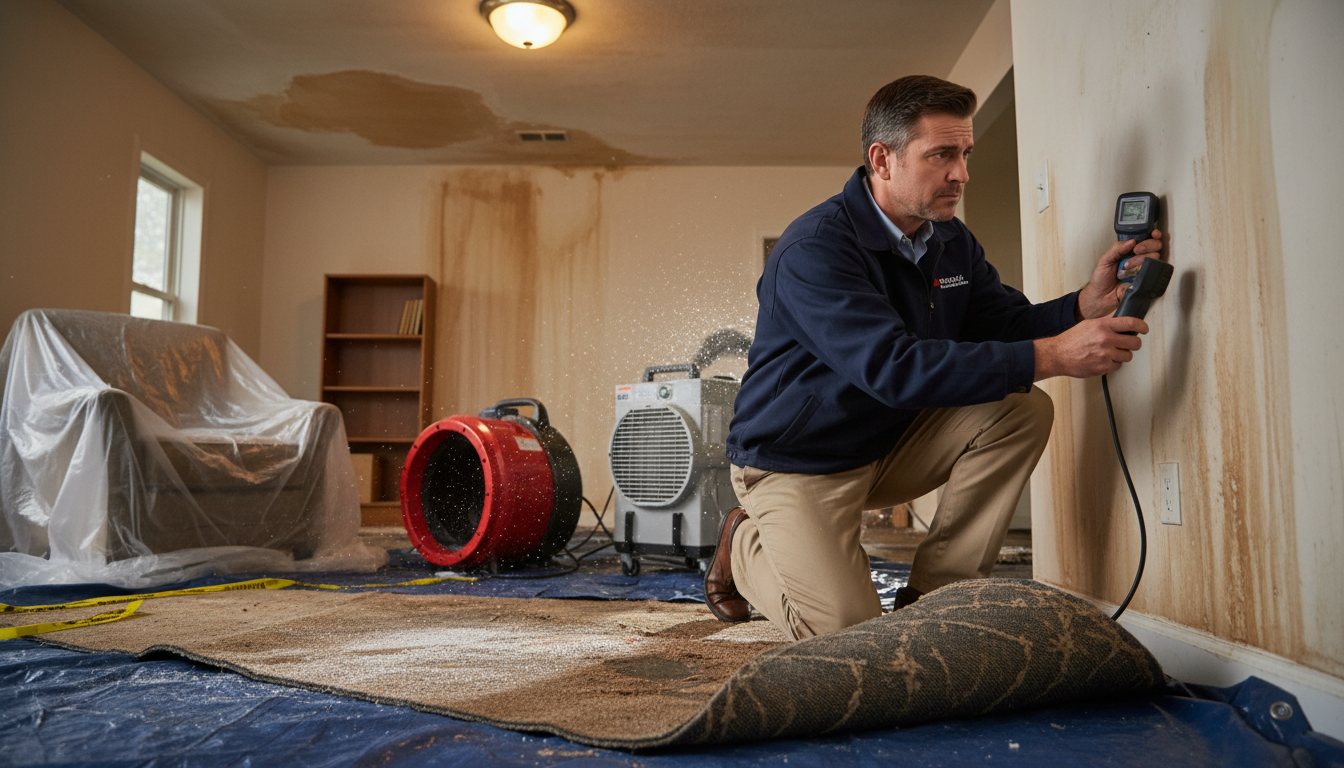
First, crews remove standing water and start drying with pumps and air movers. They measure moisture in walls and floors to find hidden wet spots.
Next comes dehumidifying and cleaning. Technicians sanitize surfaces and remove materials that cannot be saved. This prevents long-term issues like mold and rot.
Assessment drives the equipment and labor your job needs. Teams estimate the scope so you can talk clearly with your insurance agent and plan a realistic budget.
“A fast, thorough response limits secondary problems and protects your home’s value.”
Because exposure time, volume, and affected materials change the final cost, professionals with training and proper tools give the best chance to restore your living space safely and quickly.
- Extraction and drying
- Moisture assessment
- Cleaning, sanitizing, and repairs
How Much Does Water Damage Restoration Cost Per Square Foot Today
Prices shift dramatically depending on whether the spill is clean or contaminated. You’ll see a clear gap in rates once the category of exposure is known. That difference guides equipment, safety gear, and the level of sanitization needed.
Clean Water Extraction
Category 1 events — like a burst pipe or a roof leak — are the least hazardous. Extraction and drying typically run about $4 to $6 per square foot.
Teams use pumps, air movers, and dehumidifiers to remove moisture. Your final estimate will reflect the affected area and the materials that need drying or replacement.
Black Water Remediation
Category 3 incidents involve sewage or severe flooding and carry health risks. Remediation rates generally fall between $9 and $12 per square foot.
This work requires extra personal protection, disposal procedures, and more intensive sanitization. Mold remediation is often needed if exposure exceeds 48 hours.
| Category | Typical Rate (per sq ft) | Common Sources | Notes |
|---|---|---|---|
| Category 1 (Clean) | $4–$6 | Burst pipe, rain intrusion | Fast drying limits replacement; lower safety gear needs |
| Category 3 (Black) | $9–$12 | Sewage backup, major flood | Requires PPE, waste handling, and thorough sanitization |
| Additional Factors | Varies | Flooring, drywall, mold | Materials, area size, and equipment affect final estimate |
“Always get a professional company estimate to match the category and scope of your project.”
Categorizing Water Damage by Severity
Start by sorting the incident into one of three categories. That classification sets the cleanup plan, the safety gear needed, and the likely total for your project.
Category 1 is clean water from appliances or rain. It poses the least risk but still needs prompt drying to avoid mold and material loss.
Category 2 (gray water) contains contaminants. Professionals will sanitize affected areas to protect your family and salvaged materials.
Category 3 is black water. This toxic exposure needs immediate intervention to prevent bacteria spread, serious mold, and structural harm.
- Categorizing helps estimate true scope and the likely price for damage restoration.
- Technicians use moisture meters to find hidden wet spots across the area and materials.
- Proper drying and targeted remediation reduce long‑term replacement and mold risks.
- Insurance approval often hinges on an accurate category and source report.
“A correct category speeds recovery and protects your claim.”
Impact of Material Types on Repair Expenses
Different building materials react to moisture in distinct ways, and that behavior drives what you’ll pay to make things right. Knowing which surfaces were hit helps you set a realistic restoration plan.
Drywall and Plaster
Saturation often means removal. Replacing soaked drywall usually runs between $1.50 and $3.50 per square foot. Plaster can hide moisture and require more labor, so expect higher labor time and a longer drying phase.
Hardwood Flooring
Solid or engineered wood can cup, warp, or delaminate. Replacement ranges from $7 to $25 per square foot depending on finish and board match. Refinishing may save some boards, but fast action is key.
Carpeting
Carpet and pad may be salvageable after drying, but removal and new installation typically cost $2 to $8 per square foot. If moisture led to mold growth, you’ll add mold remediation fees of about $15–$30 per square foot.
- Tip: A certified company will test moisture to decide repair versus replacement.
- Accurate estimates should list materials, area, and any needed replacement so your insurance review is clear.
Estimating Costs Based on Affected Rooms
Different rooms carry unique repair needs that shift your final estimate. Kitchens and bathrooms often have built-in cabinets, complex plumbing, and tile that raise the damage restoration cost compared with simple living spaces.
A flooded basement can become the priciest area to fix. Below‑grade work may need pumps, structural drying, and mold remediation if moisture sat for days.
Living rooms usually involve both flooring and drywall repairs. When framing or subflooring is wet, your overall estimate climbs because crews must remove materials and dry beneath surfaces.
- Kitchen/bath: higher labor for cabinetry and plumbing.
- Basement: potential structural and mold costs.
- Multiple rooms: raises total since containment and drying expand.
Get a room‑by‑room estimate so your budget matches the true scope of the project.
Labor and Emergency Service Pricing
When a loss hits, the timing of the response changes the bill. After-hours calls force crews to mobilize quickly and may add an extra fee to regular rates.
Expect a premium for night or weekend responses. Emergency after-hours fees typically range from $50 to $200 above standard rates. That markup covers overtime, travel, and readying specialized equipment.
Emergency After-Hours Fees
Professional companies keep 24/7 teams to start extraction, drying, and remediation fast. The labor of trained technicians and the use of industrial dehumidifiers and pumps are part of the total project price.
- After-hours fees usually add $50–$200 to a call.
- The EPA recommends acting within 48 hours to limit mold and higher restoration costs.
- Verify emergency rates with your chosen company before work begins to avoid surprises.
“Swift action reduces long-term repair needs and often lowers overall costs.”
Structural and Cosmetic Repair Considerations
Fixing the structure comes first: unseen rot, sagging joists, or soft studs threaten your home’s safety and value. You should never rush cosmetic fixes until a qualified pro signs off on framing and subfloor repairs.
Visible problems like stained walls or warped flooring are only part of the story. Hidden issues in studs, insulation, or underlayment can raise your final repair estimate and extend timelines.
When crews evaluate your property, they’ll look for structural weaknesses and trapped moisture. Proper structural repair prevents recurring problems and protects long‑term value.
- Plan for both: cosmetic touchups (paint, trim) come after structural repairs.
- Mold prevention: treatment during structural work avoids future infestations.
- Insurance tip: document both surface and hidden harm for claims.
“Make sure your contractor distinguishes cosmetic fixes from necessary repairs.”
The Professional Restoration Process
A licensed crew begins by mapping the spread and source of the intrusion to set a clear plan. This first step frames the work that follows and helps you understand the likely timeline.
Inspection and Assessment
Technicians inspect each room and document wet spots, stained materials, and structural risks. They test moisture levels and identify whether the event is clean water, gray, or black water.
Accurate assessment guides equipment needs, scope of services, and any insurance documentation you may require.
Sanitization and Drying
Crews extract standing water and run targeted drying using pumps, air movers, and dehumidifiers. Advanced equipment monitors moisture until readings show safe levels.
Sanitization follows, especially when contamination or mold growth is suspected. Teams remove unsalvageable drywall and flooring and plan replacement to restore your property.
“Choose a reputable company that follows a standardized 5-step process to protect your home and health.”
| Phase | Primary Action | Why it matters |
|---|---|---|
| Inspection | Scan, document, test moisture | Defines scope and safety; supports insurance |
| Extraction & Drying | Remove standing water; control humidity | Prevents mold and limits material loss |
| Sanitization | Disinfect surfaces; handle black water | Eliminates bacteria and reduces health risks |
| Repairs & Replacement | Replace drywall, flooring, and trim | Returns structure to pre-loss condition |
- Note: Proper drying and sanitization protect long-term value and reduce future remediation needs.
- Costs cover trained crews and specialized equipment required for safe, compliant services.
Proactive Measures to Prevent Future Damage
Early alerts from sensors let you act before moisture ruins floors and drywall. Small fixes today often stop a big repair job later.
Install leak detectors near appliances, behind sinks, and at the water main. These devices send alerts so you can shut off the supply fast and limit harm.
Keep gutters clean and inspect plumbing lines regularly. Replace old appliance hoses and seal gaps around exterior openings to prevent moisture from entering your home.
In flood‑prone areas, add a sump pump and test it each season. A simple sump reduces the odds of basement flooding and lowers the likely restoration bill.
Think in terms of prevention, not repair. The upfront expense for sensors, basic equipment, and routine checks is far lower than a full remediation project.
Finally, consult a reputable restoration company for tailored advice. A pro can recommend the right technologies and maintenance plan for your property and insurance needs.
“A small investment in prevention protects your home and saves money over time.”
Insurance Coverage and Financial Planning
Get your documentation in order fast. Snap photos, save receipts, and secure a professional estimate to kick off a smooth claim.
Navigating insurance claims can feel overwhelming, but clear records make the process easier. The average insurance payout for a water damage restoration claim is about $11,605. That sum often covers major repair work and related fees.
Navigating Insurance Claims
Call your insurer right after a burst pipe or visible harm to your property. Report the event, ask about covered perils, and request claim forms.
- Get an estimate: A licensed company can provide a tailored estimate to match your claim. For example, Americon is available at 1-833-4373487 for direct support.
- Track expenses: Save contractor invoices, receipts, and all communications with the restoration team and your agent.
- Know your limits: Check your deductible and any exclusions for gradual leaks or flooding so you can plan finances.
“Work closely with your restoration company and insurance agent to manage the financial impact effectively.”
Conclusion
Wrap up your plan with quick decisions and a trusted pro to limit long-term loss. Acting fast and hiring a qualified team protects your home and lowers the chance of recurring issues.
This guide gave practical steps to assess risk, choose services, and keep costs in check. Use the national averages and room‑by‑room estimates to set realistic expectations for any job.
Professional water damage restoration brings expert drying, sanitization, and repairs that preserve structure and indoor health. For extra reading and reliable restoration tips, see reliable restoration tips.
Understand the likely damage restoration cost, act quickly, and lean on licensed pros to restore your space safely and efficiently.