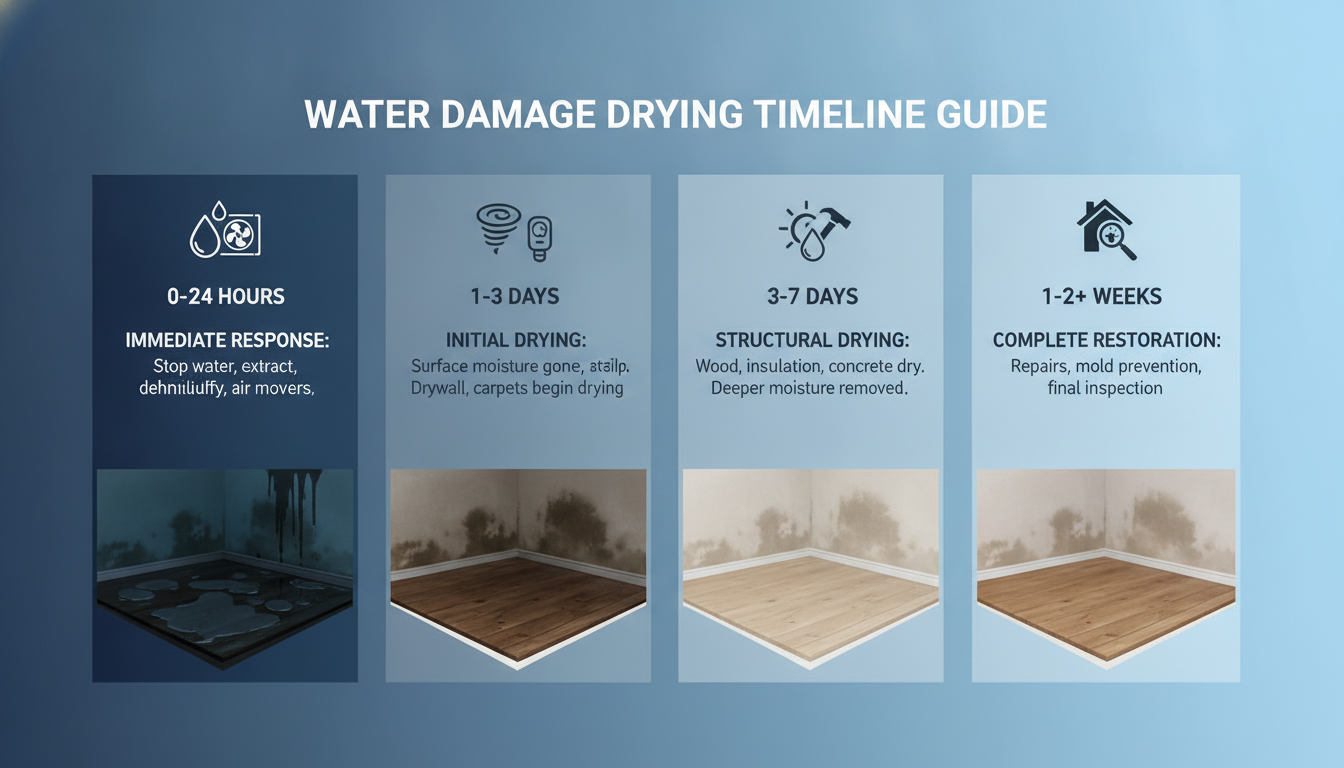
Experiencing water issues in your home can be overwhelming. Knowing the timeline for resolving moisture problems is crucial for protecting your property. Professional drying equipment can effectively address wet drywall within 24-72 hours. However, if you rely solely on household fans, the drying process may extend to 3-7 days or longer.
It’s important to act quickly. Mold can begin to develop within 24-48 hours if wet areas are not properly dehumidified. Understanding these timelines can help you avoid serious structural damage and health risks.
For urgent needs, you can reach out to Lightspeed Restoration of Austin at 512-428-8309. Their team is available 24/7 to assess moisture levels and provide expert assistance. We will guide you through the drying process, ensuring your home remains safe and free from hidden hazards.
Key Takeaways
- Professional help usually resolves issues within 24-72 hours.
- DIY methods can extend drying time to 3-7 days, increasing mold risk.
- Immediate action is essential to prevent mold growth.
- Contact experts for moisture assessments to protect your home.
- Understanding drying timelines is key to avoiding long-term damage.
Introduction to Water Damage Drying
Dealing with moisture issues in your residence can be a daunting experience. Research shows that 54% of property owners in Europe have faced similar challenges. Understanding the drying process is essential for effective water damage restoration.
The drying process is not just about letting things air out. Water often seeps deep into the structural layers of your home. Effective damage restoration requires a thorough assessment to locate where water has traveled, especially behind walls and under floors.
Water damage can stem from various sources, including plumbing failures or external flooding. Each scenario demands a unique mitigation strategy. Our guide will walk you through how the drying process works, aiming to restore your home to its pre-loss condition after significant water events.
Key Factors That Affect Drying Time
Water-related issues in your home can create significant stress. Several factors play a crucial role in determining how quickly your property can return to its normal state. Understanding these factors helps you take the right steps for effective restoration.
Water Source and Duration of Exposure
The source of moisture and how long it has been present are vital considerations. Water detected within hours is much easier to address than long-term leaks. Quick action can significantly reduce the drying time.
Extent of Saturation and Material Types
Materials absorb moisture at different rates. Porous materials, like drywall and insulation, can soak up water quickly, extending the overall drying time. If saturation is extensive, you may need to consider whether you can salvage the materials or if professional replacement is necessary.
Humidity levels also play a critical role. When humidity rises from 50% to 90% at 55°F, the drying time for materials can increase by up to four times. High humidity acts as a barrier to evaporation, making it challenging to remove moisture from deep within walls.
| Factor | Impact on Drying Time | Examples |
|---|---|---|
| Water Source | Duration of exposure affects ease of drying | Leaks vs. flooding |
| Material Type | Porous materials absorb moisture quickly | Drywall, insulation |
| Humidity | High humidity increases drying time | Indoor vs. outdoor conditions |
How Long Does Water Damage Take to Dry?
Facing moisture problems in your home can be quite stressful. The drying timeline often depends on the type of water involved in the leak. Understanding these categories is essential for effective restoration.
For instance, Category 1 water is clean and can be resolved quickly. Professional drying equipment can typically handle this type in just 24-48 hours. On the other hand, Category 2 is greywater, which may take longer to dry. If you’re dealing with Category 3 water from flooding, expect the drying process to take 3-7 days.
To avoid the long take associated with DIY methods, it’s wise to contact professionals. Lightspeed Restoration of Austin utilizes advanced equipment to manage these different categories effectively. This ensures that your specific type of water damage is addressed with the correct timeline. For more details, check out our step-by-step guide.
The Professional Drying Process Explained
Finding moisture issues in your home can feel like a daunting task. Understanding the professional drying process is essential for effective restoration. It begins with a thorough inspection, where technicians use moisture meters to map the extent of the water damage.
Before any drying starts, safety checks are a priority. Technicians from Lightspeed Restoration of Austin ensure that electrical hazards are identified and structural stability is confirmed. This step is crucial before removing any standing water.
During the active drying phase, professionals closely monitor moisture levels. They aim to achieve a target range of 10-12% moisture content in wood framing. This systematic monitoring allows for adjustments to equipment placement, maximizing drying efficiency.
In the end, professional restoration teams utilize data-driven methods to confirm that your home is completely dry before concluding the project. This meticulous approach helps prevent future issues and ensures a safe living environment.
Materials and Structural Impact on Drying Timelines
Moisture issues can severely affect your home and its materials. Understanding how different materials respond to moisture is crucial for effective restoration. The IICRC standards outline how various types of materials react to water, influencing the potential for structural damage.
Porous materials, like drywall and insulation, are especially vulnerable. If they remain damp for more than 24-48 hours, they can lead to significant mold growth. This growth poses health risks for anyone in the home.
Additionally, hidden moisture behind walls can create long-term structural damage. It’s essential to address this moisture to maintain the integrity of your home. The type of materials used, such as insulation, can trap water and prolong the drying process.
If you ignore signs of water issues, the resulting mold can lead to costly remediation efforts and health complications. Professional restoration experts can evaluate the risks of structural damage to determine whether materials can be salvaged or need replacement.
Drying Techniques and Equipment for Faster Restoration
Restoring your home after water exposure calls for advanced drying solutions. Utilizing the right equipment can dramatically speed up the restoration process. High-powered air movers and industrial dehumidifiers are essential for tackling moisture effectively.
These tools work together to ensure your home dries out quickly and thoroughly. Here are some key points about their roles:
- Professional drying equipment like air movers and dehumidifiers is the most effective way to speed up the restoration of your home.
- Advanced air movers circulate dry air across wet surfaces, significantly reducing total drying time.
- Industrial dehumidifiers are crucial for removing moisture from the air, preventing condensation on other surfaces.
- Pressure drying is a specialized technique that forces air into tight spaces, such as HVAC closets, ensuring complete moisture removal.
- Our restoration experts select the right drying equipment based on your property’s specific needs to ensure a fast recovery.
Special Considerations for Unique Areas
When it comes to moisture, certain areas of your home require special attention. Complex spaces like ceilings and walls behind cabinets can be particularly tricky to dry. These areas often harbor hidden moisture that can lead to further issues if not addressed promptly.
Water from plumbing failures can accumulate in ceilings, creating a risk of structural collapse. This situation demands immediate action to prevent extensive damage. Our team at Lightspeed Restoration of Austin specializes in these challenging areas, ensuring that your home remains safe and sound.
Here are some important considerations:
- Unique areas like ceilings and walls behind cabinets often require specialized drying techniques because they are difficult to access.
- If you have a leak in your HVAC closets, you need professional restoration to ensure that moisture does not linger in these tight rooms.
- You should be aware that water from plumbing failures can pool in ceilings, which poses a risk of structural collapse if not dried.
- Our team at Lightspeed Restoration of Austin has the expertise to handle water damage in complex areas of your home.
- We use targeted air circulation to reach hidden moisture in built-ins, ensuring that your property is thoroughly dried and restored.
| Area | Common Issues | Restoration Techniques |
|---|---|---|
| Ceilings | Pooling water from leaks | Specialized air circulation |
| Behind Cabinets | Hidden moisture accumulation | Targeted drying methods |
| HVAC Closets | Stagnant moisture | Professional assessment and drying |
Austin’s Climate and Its Impact on Drying Time
Austin’s environmental conditions can significantly influence how quickly your home dries after water exposure. The city’s high humidity levels, often exceeding 60-70% after storms, can greatly slow down the natural drying process.
In humid weather, it’s best to avoid opening windows. Doing so can introduce more moisture into your rooms, further delaying the drying time. Our team at Lightspeed Restoration of Austin understands how local weather impacts the drying process and uses professional equipment to compensate.
We utilize precise moisture meters to monitor the drying time in your home. This ensures that the local climate does not hinder progress. Effective restoration in Austin requires a controlled environment, which we achieve by using dehumidifiers to manage indoor humidity levels.
- Austin’s climate presents unique challenges, as high humidity can prevent moisture from evaporating effectively from your home.
- Our team understands how local weather impacts the drying process and uses professional equipment to compensate.
- We use precise moisture meters to monitor the drying time in your home, ensuring that the local climate does not hinder progress.
- Effective restoration in Austin requires a controlled environment, which we achieve by using dehumidifiers to manage indoor humidity levels.
Conclusion
Navigating the aftermath of moisture issues can feel overwhelming. Understanding that the duration for drying depends on the severity of the leak and the equipment used is crucial. Professional restoration is essential to prevent mold growth and structural damage that can occur when moisture is left untreated for more than 24-48 hours.
By choosing professional drying equipment over DIY fans, you ensure a faster and more reliable recovery for your home. Remember, taking immediate action minimizes the long take associated with repairs. Contacting experts like Lightspeed Restoration of Austin at 512-428-8309 provides peace of mind that your property is being handled correctly.
We hope this guide helps you navigate the drying process and restore your home to a safe and healthy condition.