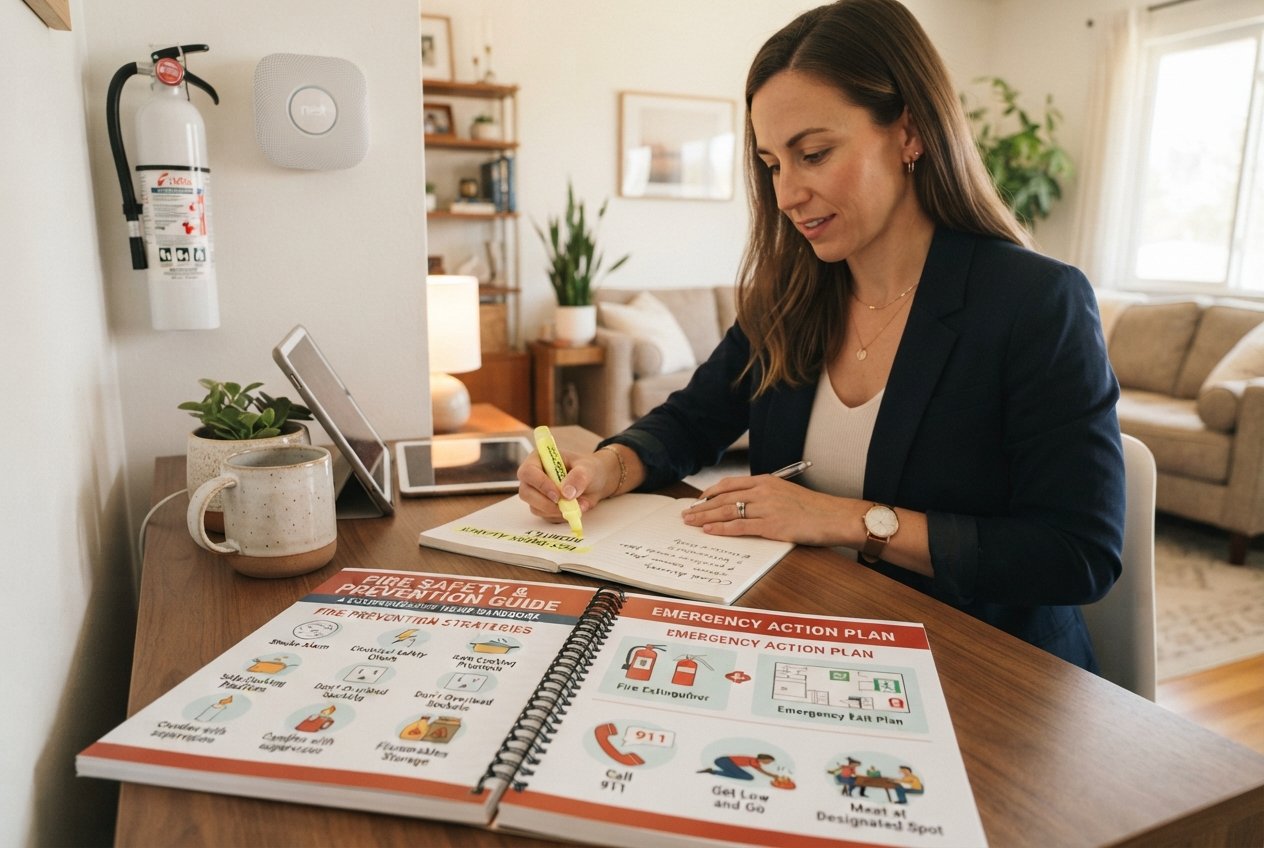
When it comes to home emergencies, time is of the essence. A person may have as little as two minutes to escape once a blaze ignites. This guide aims to equip you with essential knowledge to protect your family and property. Understanding how to respond quickly can be the difference between safety and tragedy.
Working smoke alarms and a practiced escape plan are crucial. They provide early warnings when every second counts. In this guide, I will cover practical tips on household hazards, electrical safety, and emergency response. You will learn about fire-safety equipment and how to prepare for wildfires.
Remember, the key response during a home emergency is simple: get out, stay out, and call for help. Re-entering a burning home can be deadly. This guide is tailored for United States households seeking clear, actionable steps to enhance their safety.
Key Takeaways
- Understand that you may have only two minutes to escape a fire.
- Ensure your smoke alarms are working and practice your escape plan regularly.
- Learn about common household hazards and how to mitigate them.
- Know the importance of emergency response and safety equipment.
- Always remember to get out, stay out, and call for help.
Understanding Fire Safety & Prevention
In critical moments at home, every second counts. Knowing how to react quickly can save lives. A household may have as little as two minutes to escape once a blaze ignites. This limited time emphasizes the need for effective planning and awareness.
Working smoke alarms play a vital role in early detection. They can alert sleeping occupants before conditions worsen. Early warning systems not only facilitate faster evacuations but also reduce the risks associated with inhaling harmful gases. Most burning materials emit carbon monoxide, which can be deadly.
It’s essential to distinguish between prevention and response. Daily choices can significantly reduce ignition risks. Meanwhile, functioning alarms help ensure that fires are discovered promptly. I encourage everyone in the household to understand alarm signals and to leave immediately when they hear them, rather than investigating the source of smoke.
Why Fire Safety Matters in My Home
The Impact of Early Warning Systems
Recognizing and Eliminating Home Fire Hazards
Understanding the risks in our homes is vital for protecting our loved ones. One of the most significant steps we can take is to identify and eliminate potential hazards. This includes recognizing combustible materials and managing flammable liquids effectively.
Many everyday items can intensify a fire’s impact. For instance, synthetic furnishings, rugs, drapes, and plastic wastebaskets can all contribute to more dangerous conditions. Therefore, it’s crucial to assess these materials regularly.
In addition, flammable liquids should always be handled with caution. Keeping them away from ignition sources is essential. Here are some key practices to follow:
- Store hazardous materials in designated areas to minimize risks.
- Ensure incompatible items are not stored together to prevent dangerous reactions.
- Conduct regular household inspections focusing on clutter and proper labeling.
| Hazardous Material | Safe Storage Practices | Disposal Recommendations |
|---|---|---|
| Paint | Keep in a cool, dry place away from heat sources. | Follow local guidelines for hazardous waste disposal. |
| Cleaning Supplies | Store in original containers with labels intact. | Dispose of according to manufacturer instructions. |
| Propane Tanks | Keep upright and in a well-ventilated area. | Return to supplier for proper disposal. |
For more detailed information on dealing with smoke damage, check out this helpful resource.
Developing a Personal Fire Escape Plan
Creating a solid escape plan is essential for every household. This plan should be discussed and practiced twice a year. It ensures that everyone knows what to do when an emergency arises. I will guide families through mapping exits and keeping corridors clear of obstructions.
When planning, it’s crucial to identify a safe outdoor gathering location. This will help everyone regroup after evacuating. During drills, I recommend that everyone walks rather than runs toward the exit. This approach reduces confusion and helps prevent falls.
In addition, each family member should check bedrooms and open doors safely. It’s important to leave immediately without collecting personal belongings. Remember, an escape plan is only effective when everyone understands the routes and meeting points.
| Key Steps | Description | Frequency |
|---|---|---|
| Discuss Plan | Review escape routes and procedures with all family members. | Twice a year |
| Clear Exits | Ensure all corridors and stairways are free of obstacles. | Ongoing |
| Practice Drills | Conduct evacuation drills to familiarize everyone with the plan. | Twice a year |
Installing and Testing Smoke Alarms and Safety Equipment
Ensuring that your home is equipped with reliable alarms is crucial for your family’s well-being. Smoke alarms should be installed on every level of the home, inside bedrooms, and outside sleeping areas. This strategic placement ensures that everyone receives early warnings when they are most vulnerable.
To maintain the effectiveness of these alarms, I recommend creating a monthly testing routine. Regular testing helps identify any issues before they become serious problems. If an alarm is not working, replace the batteries immediately instead of postponing it until the next inspection.
Here are some key points to remember:
- Install smoke alarms on every level of your home.
- Place alarms inside bedrooms and outside sleeping areas.
- Test alarms every month to ensure they are operational.
- Change batteries promptly when alarms are not working.
- Connect alarms with other safety equipment for comprehensive protection.
By following these guidelines, you can significantly enhance your home’s protective measures and ensure your family is prepared for emergencies.
| Alarm Location | Purpose | Maintenance Tip |
|---|---|---|
| Every Level | Ensures early detection throughout the home. | Test monthly for functionality. |
| Inside Bedrooms | Alerts sleeping occupants promptly. | Replace batteries if the alarm chirps. |
| Outside Sleeping Areas | Provides additional warning for family members. | Check connections to other safety devices. |
Daily Fire Prevention Best Practices at Home
A well-organized living space can significantly enhance your response during a crisis. Maintaining cleanliness is not just about aesthetics; it plays a critical role in reducing hazards at home. Poor housekeeping and carelessness can lead to devastating consequences.
Here are some effective practices to keep in mind:
- Regularly remove unnecessary trash and litter to prevent accumulation of materials that could feed a blaze.
- Keep rooms, storage areas, and passageways neat and accessible to facilitate quick evacuations.
- Clean household equipment regularly and use it properly, as carelessness can increase ignition risks.
- Ensure that corridors, doors, stairs, and exits are clear to support faster evacuation during emergencies.
- Transform these actions into a daily checklist, making safety a routine responsibility rather than an occasional project.
Maintaining Electrical Safety and Fire Prevention Measures
Ensuring a safe home environment involves more than just having an escape plan. Regularly checking your electrical systems is equally important. Sound electrical wire connections and proper grounding are essential for preventing hazards. Households should inspect visible wiring, connections, outlets, and devices for any signs of damage or unsafe conditions.
It’s crucial to stop using any damaged equipment immediately. Instead of attempting to fix electrical issues yourself, seek qualified assistance. This approach can prevent further complications and ensure your safety.
Heating devices and other high-use equipment should also be part of your inspection routine. Before they create heat, smoke, or ignition hazards, make sure they are in good working order. Additionally, be aware that most burning materials can emit carbon monoxide, a dangerous gas that can be lethal.
| Electrical Device | Inspection Tips | Action if Damaged |
|---|---|---|
| Wiring | Check for frays or exposed wires. | Stop use and consult an electrician. |
| Outlets | Look for discoloration or sparking. | Do not use; call a professional. |
| Heating Devices | Ensure they are clean and functioning. | Repair or replace as needed. |
Preparing for Wildfire Season at Home
As the seasons change, it’s crucial to recognize the growing threat of wildfires. Approximately 85% of wildfires in the United States are caused by human activity. This statistic underscores the importance of shared responsibility in reducing risks.
To prepare my property for wildfire season, I focus on creating a defensible space. This area reduces flammable materials around my home, which can help firefighters protect my community. It’s essential to remember that wildfire season can extend year-round in many regions, making preparedness a continuous effort.
Another critical aspect is addressing ember intrusion. Embers can ignite homes from a distance, entering through small openings. By hardening my home, I can significantly reduce the chances of ignition.
To support these efforts, I appreciate the collaboration between the Bureau of Land Management (BLM) and Maverik, which operates 382 locations across 12 western states. Their initiatives promote awareness and preparedness, especially during Wildfire Awareness Month in May.
| Preparation Step | Description | Importance |
|---|---|---|
| Defensible Space | Clear flammable materials around the home. | Reduces fire risk and aids firefighters. |
| Ember Hardening | Seal openings to prevent ember entry. | Minimizes chances of home ignition. |
| Community Awareness | Participate in local wildfire preparedness programs. | Enhances overall community safety. |
Emergency Response: What to Do When Fire Strikes
In moments of emergency, knowing how to react can save lives. If you discover smoke or flames, the first step is to contact 9-1-1 immediately. This ensures that help is on the way while you focus on getting your family to safety.
Next, activate the building alarm if available, or verbally alert others nearby. It’s crucial to warn everyone so they can evacuate promptly. Remember, do not stop to collect personal belongings; your safety is the priority.
Once outside, proceed to your designated gathering location. This keeps access routes clear for emergency responders. Additionally, provide first responders with vital information about any hazards, missing individuals, or chemicals present in the area.
If clothing catches fire, use the drop-and-roll technique, a fire blanket, or cold water to extinguish the flames. Seek medical attention if needed, even for minor burns.
Incorporating Fire Safety Equipment and Resources
Equipping your home with the right tools can significantly improve your readiness for emergencies. Understanding the different types of extinguishers and their uses is crucial. Each type is designed for specific situations, and knowing this can make a big difference.
It’s important to conduct periodic inspections of your extinguishers. This ensures they are charged, accessible, and clearly marked. Regular checks can prevent situations where equipment fails when needed most.
Only trained individuals should use portable extinguishers. They can assist in evacuation or control a small fire without delaying escape. It’s vital to distinguish between tools meant for immediate escape and those for managing a minor blaze.
Moreover, I encourage households to integrate extinguishers with smoke alarms and escape plans. Relying solely on one tool can be risky. A comprehensive approach to safety ensures better preparedness.
Fire Safety Practices Beyond the Home
Awareness of potential hazards extends beyond our homes to workplaces and public spaces. It is essential to adapt safety measures in these environments to protect ourselves and others.
In workplaces, having an emergency action plan is vital. This plan should clearly outline communication methods, evacuation routes, and gathering locations. It ensures everyone knows what to do when emergencies arise.
Open office designs can pose challenges, as they allow smoke to spread quickly. Therefore, it’s crucial to isolate areas effectively to minimize risks. Additionally, synthetic furnishings, like urethane upholstery, can emit toxic substances such as cyanide during a fire.
New employees should receive emergency-response orientation soon after starting work. This training is essential whenever responsibilities change, ensuring everyone is prepared.
Connecting household planning with community prevention efforts is also important. This includes promoting safe campfires, maintaining vehicles, using outdoor equipment responsibly, and utilizing public resources effectively.
| Safety Measure | Description | Importance |
|---|---|---|
| Emergency Action Plan | Identifies communication methods and evacuation routes. | Ensures everyone knows how to respond in emergencies. |
| Workplace Orientation | Provides training for new employees on emergency procedures. | Enhances preparedness and response effectiveness. |
| Community Engagement | Promotes responsible use of public resources and equipment. | Fosters a culture of safety within the community. |
My Personal Journey in Fire Safety & Prevention
The journey toward a safer home is ongoing and filled with valuable lessons. I regularly reflect on my personal safety review, which is a continuous process. This includes monthly tests of smoke alarms and practicing escape plans twice a year. These drills help my family understand the importance of quick action.
Statistics show that approximately 85% of wildfires in the United States are human-caused. This fact motivates me to consider how my outdoor decisions can impact not only my family but also neighbors and local firefighters. Each choice matters in reducing risks to our community and natural resources.
Additionally, I revisit household hazards whenever my equipment, storage, or family circumstances change. Using resources from the Bureau of Land Management (BLM), I work on improving defensible space and ember resistance. This knowledge also guides my responsible outdoor behavior.
To measure improvement, I document checks, update escape routes, ensure alarms are working, and maintain organized storage. Clear communication with my family about these practices is essential. By sharing my experiences, I hope to inspire others to take similar steps toward a safer home.
| Safety Practice | Description | Frequency |
|---|---|---|
| Alarm Testing | Test smoke alarms to ensure functionality. | Monthly |
| Escape Drills | Practice evacuation routes with family. | Twice a year |
| Hazard Review | Reassess potential risks in the home. | As needed |
Conclusion
I see a prepared home as a set of habits, not a one-time task. Working smoke alarms, tested each month and placed in and near bedrooms, give my family vital early warning.
I keep our escape plan current, practice it, and leave clear paths to every exit. If smoke or flames appear, we leave at once and do not return. Clean rooms, sound electrical choices, careful liquid storage, and marked areas for hazardous materials lower avoidable risks.
I also maintain defensible space, make ember-resistant upgrades, and choose responsible outdoor practices throughout the year. In an emergency, I follow one clear rule: get out, stay out, and call 9-1-1. I share accurate details about hazards with first responders. Preparedness starts with small actions repeated often.