Key Takeaways
- Expect the first 60 minutes to matter most — board-up, tarping, and soot assessment set the pace for the entire commercial fire damage restoration timeline that follows.
- Older Brooklyn buildings in areas like Dumbo, Bushwick, and Sunset Park often need extra structural drying and FDNY sign-off before tenants can move back in, so budget extra days into your reopening plan.
- Direct coordination with your insurance adjuster — not a middleman — is what actually cuts downtime for multi-tenant landlords and property managers.
- Not everything survives a fire: know which contents are rarely salvageable versus what a fire restoration company can professionally clean and pack out.
- Realistic reopening timelines differ sharply between a small office suite and a large-loss commercial building, so match your tenant communications to the actual scope of damage.
- Pick a restoration company with IICRC certification and multi-state licensing, especially if you manage healthcare facilities or multi-family properties where downtime isn’t an option.
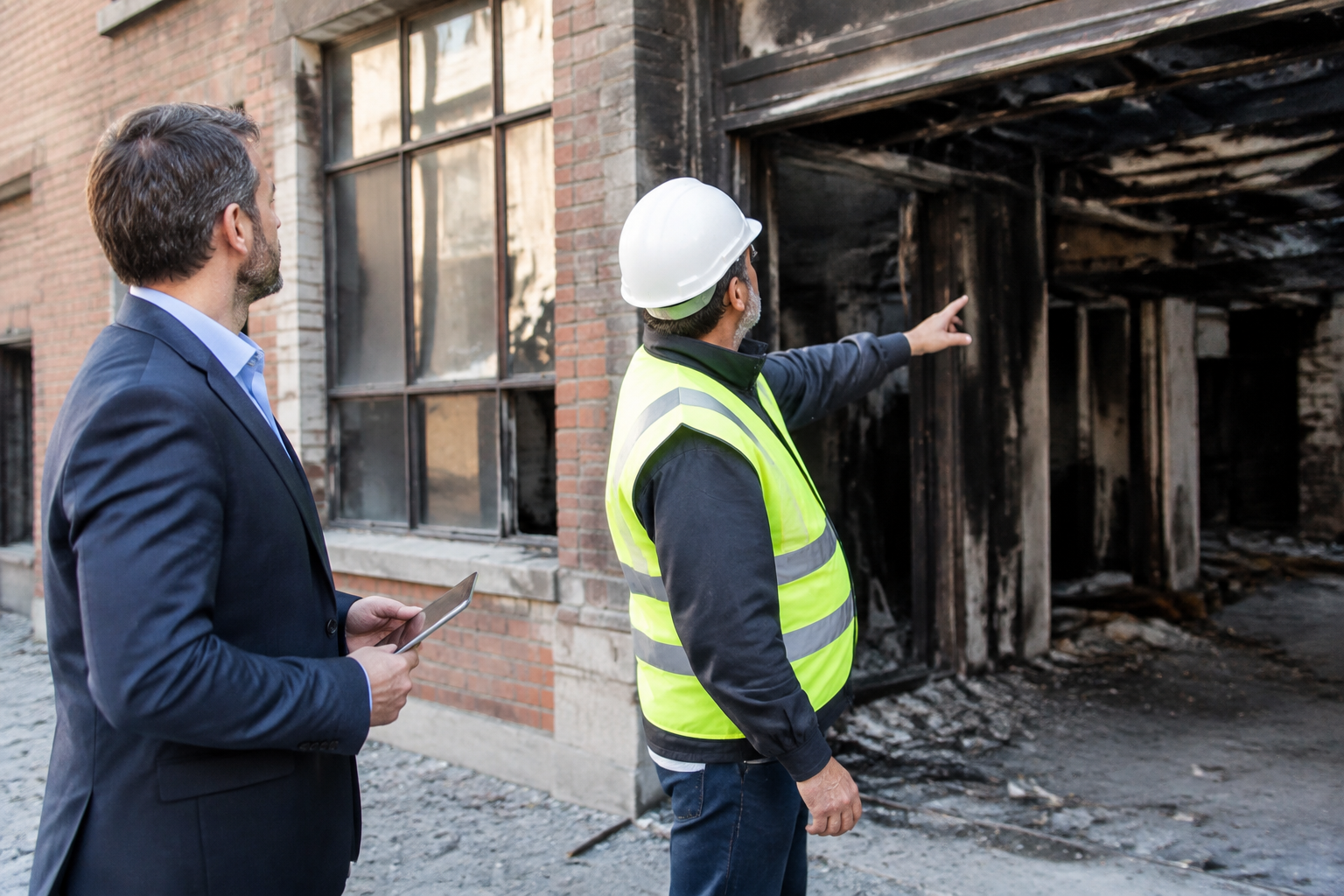
A three-alarm fire in a Sunset Park warehouse can shut down four tenants for a week — or four months. The difference usually comes down to how fast the right crew shows up and how the cleanup actually gets managed. For a property manager staring at soot-covered ceilings and a lobby full of anxious tenants, that gap between “quick reopen” and “prolonged nightmare” is everything.
Commercial fire damage restoration in Brooklyn isn’t the same job as fixing up a single-family house in Queens. You’re dealing with older brick buildings in Dumbo — Bushwick, FDNY inspection requirements, multiple tenants with separate leases, and insurance adjusters who need clean documentation before they’ll release funds. Get any one of those pieces wrong and reopening day slips further away.
Here’s the honest answer: yes, smoke-damaged offices can reopen fast — only when the restoration company handles structural drying, soot removal, and insurance coordination at the same time, not in sequence. What follows breaks down exactly how that process works, and what actually separates a two-week turnaround from a two-month one.
Why Brooklyn Commercial Properties Face Unique Fire Restoration Timelines
A grease fire breaks out in a ground-floor restaurant in a converted 1920s warehouse in Dumbo. Smoke pushes up through old shaft spaces into the offices on floors two and three. Nobody planned for that — but it’s exactly the kind of scenario that makes commercial fire damage restoration in Brooklyn more complicated than in newer suburban buildings.
Older Building Stock in Neighborhoods Like Dumbo, Bushwick, and Sunset Park
Buildings in Dumbo, Bushwick, and Sunset Park often have brick construction, timber joists, and shared ventilation systems built decades before modern fireproofing standards existed. Smoke and soot travel further through these older assemblies than they would in newer, compartmentalized construction. That means more surfaces to inspect, more hidden voids to check, and longer cleaning timelines.
How NYC Fire Code and FDNY Inspections Affect Reopening Dates
FDNY sign-off comes before tenants come back — no exceptions. Electrical, HVAC, and structural systems all need clearance under current fire code before an office can legally reopen. Calling a 24 hour emergency restoration company within the first hour keeps documentation moving alongside inspection scheduling, not after it.
What Happens in the First 60 Minutes After a Commercial Fire in Brooklyn
The clock starts the second the fire department clears the building. Every minute a Brooklyn office sits open to weather, soot migration, and looters is a minute that adds to the final claim. A crew trained in commercial fire damage restoration should be rolling within the hour — not the next morning.
Emergency Boardup, Tarping, and Securing the Building
First move is physical security. Broken storefront glass on a Bushwick retail strip or a punched-out roof section in Sunset Park gets boarded — tarped immediately. This isn’t optional — insurers expect documented mitigation, and it’s a baseline step in any office building fire restoration plan.
Initial Soot, Smoke, and Water Damage Assessment
Once secured, crews walk every floor logging soot patterns, smoke penetration into HVAC systems, and standing water from suppression efforts. Multi-tenant buildings need floor-by-floor scope, not a single blanket estimate. For larger portfolios spanning boroughs or reaching into large loss restoration New Jersey properties, this assessment sets the entire timeline — and the insurance conversation — from day one.
The Commercial Fire Damage Restoration Process Step by Step
What actually has to happen before you can hand tenants their keys back? Commercial fire damage restoration in Brooklyn isn’t one job — it’s a sequence, and skipping steps is how buildings sit empty for months instead of weeks. Every insurance-approved restoration company follows roughly the same order: assess, dry, deodorize, restore contents, rebuild. Here’s how each piece works.
Structural Drying and Water Removal After Fire Suppression
Sprinklers and hose lines put out the fire — then leave you with a flood. Crews pull standing water fast, then set industrial dehumidifiers and air movers across every affected floor. Brooklyn’s older brick buildings hold moisture in masonry longer than newer construction, so drying often runs 3-5 days with moisture meters tracking progress daily.
Soot and Smoke Odor Removal From Walls, Ceilings, and HVAC Systems
Soot isn’t just surface grime — it’s acidic, and it migrates. Walls, drop ceilings, and ductwork all need cleaning, or the smell comes right back once the AC kicks on. Thermal fogging and HVAC duct cleaning handle what wipe-downs can’t reach.
Packout and Contents Restoration for Offices and Retail Tenants
Furniture, files, and inventory get inventoried, boxed, and moved off-site for cleaning while repairs continue — the same approach used for restaurant fire damage cleanup, where equipment loss hits hardest.
How Fast Can a Multi-Tenant Building Actually Reopen for Business
Here’s a number that surprises most Brooklyn property managers: buildings using a coordinated commercial fire damage restoration plan reopen roughly 40% faster than those juggling separate contractors for board-up, cleaning, and rebuild. That gap usually comes down to one thing — who’s managing the whole job.
Factors That Speed Up or Slow Down Reopening
Speed depends on a few concrete variables: how quickly a fire damage assessment service gets on-site, how many floors sustained smoke versus structural damage, and whether the insurance side is handled in-house or bounced between adjusters and vendors. A building working with a hassle free insurance restoration company skips weeks of back-and-forth that stalls slower jobs. Permitting through NYC’s Department of Buildings adds time too, especially for structural or electrical repair.
Realistic Timelines for Small Offices vs Large Loss Commercial Buildings
A single-tenant office suite with light smoke damage can often reopen in 5-10 days. A 10-story mixed-use building with fire, water, and soot spread across multiple floors? Realistically 6-12 weeks. Scope, not square footage alone, drives the timeline.
Coordinating Directly With Your Insurance Adjuster During Restoration
Most property managers assume calling the adjuster first, and the restoration crew second, is the smart move. It’s backward. Waiting on adjuster approval before mitigation starts is exactly how a two-week closure turns into two months — soot keeps etching into surfaces, and smoke odor keeps working into HVAC systems while everyone waits on paperwork.
What Documentation Adjusters Need From Property Managers
Adjusters move faster with specifics, not vague damage descriptions. Property managers should have ready: pre-loss photos or floor plans, a tenant roster with lease terms, moisture readings — a room-by-room inventory of damaged fixtures. Building maintenance logs matter too — they show the fire wasn’t caused by deferred upkeep, which speeds claim approval.
Why Direct Insurer Coordination Cuts Downtime for Brooklyn Landlords
In practice, Brooklyn buildings with mixed retail and residential tenants can’t sit idle waiting for sign-off. Crews that work the phone with adjusters directly get emergency mitigation authorized within hours, not days. This same coordination model applies to storm damage restoration Brooklyn claims, where fast documentation and adjuster contact determine how quickly a building reopens for tenants and foot traffic.
What to Throw Away vs. What Can Be Professionally Cleaned After Smoke Damage
Picture a Sunset Park law office after a kitchenette fire: file boxes soaked with soot, a break room fridge full of spoiled food, and a conference table with a thin gray film. The team on-site has to make fast calls on what stays and what goes — and getting it wrong either wastes money or brings odor right back into the building.
Items and Materials That Are Rarely Salvageable
Some things just aren’t worth saving. Toss porous items that absorbed smoke directly: unsealed paper documents, ceiling tiles, carpet padding, upholstered chairs, and any open food or cosmetics. Plastic items near intense heat often warp or off-gas, so they go too.
Professional Cleaning Products and Methods for Salvageable Contents
Hard surfaces, metal fixtures, and sealed electronics usually clean up fine with the right approach — soda blasting, ozone treatment, or thermal fogging paired with enzyme-based cleaning agents. A commercial fire damage restoration crew documents every item before cleaning, which matters if you’re working with a restoration company that works with insurance adjusters on contents claims.
Choosing a Fire Restoration Company for Brooklyn Commercial and Healthcare Properties
Not every crew that shows up with a truck and a wet-vac can handle a multi-tenant building in Park Slope or a clinic in Sunset Park. Commercial fire damage restoration for occupied buildings takes different equipment, different documentation, and a different pace than a single-family job. Property managers need a contractor who’s done this before, on this scale, in this borough.
Credentials That Matter: IICRC Certification and Multi-State Licensing
Look for IICRC certification first — it’s the baseline for fire and smoke restoration standards. Beyond that, confirm licensing across the states your portfolio touches; a company licensed in NY, NJ, CT, and PA can manage regional properties without gaps. For larger losses, ask whether the contractor handles large loss insurance restoration services directly, coordinating with adjusters instead of leaving that work to you.
Why Healthcare Facilities and Multi-Family Buildings Need Specialized Response
A clinic can’t just close for three weeks. Neither can a 40-unit residential building. These properties need phased mitigation, containment barriers, and odor control that keep sections operational while crews work.
Frequently Asked Questions
What is fire damage restoration?
It’s the process of getting a fire-damaged building back to a safe, usable condition — structural repair, soot and smoke removal, odor treatment, and often water cleanup from the fire hoses that put the flames out in the first place. For a commercial building, that also means coordinating with your insurance adjuster and getting documentation right so the claim doesn’t stall. It’s more than a cleanup job. It’s a full property recovery, start to finish.
Can fire damage be repaired?
In most cases, yes. Structural framing, drywall, flooring, and mechanical systems can usually be repaired or replaced, and smoke odor can be fully removed with the right equipment and cleaning products. The exceptions are properties with severe structural compromise, where sections may need to be rebuilt rather than repaired. A proper inspection within the first 24-48 hours tells you which category your building falls into.
How long does fire damage restoration take?
A small, contained fire in one unit of a multi-tenant building might be done in 1-2 weeks. A large-loss commercial fire — think a full floor or a 10-story building with smoke traveling through HVAC systems — can run several months. Board-up and mitigation happen within hours; the full rebuild timeline depends on scope, permitting, and how fast your insurance company approves the estimate.
What’s the difference between remediation and restoration?
Remediation is the cleanup phase — removing soot, smoke residue, standing water, and hazardous materials so the building is safe to work in. Restoration is what comes after: rebuilding damaged structures, repainting, replacing flooring, and returning the property to pre-loss condition. Most commercial fire jobs need both, back to back, handled by the same team so nothing falls through the cracks between phases.
What does a commercial fire restoration company actually do?
A real fire restoration company handles the whole sequence — emergency board-up and tarping, water extraction, soot and smoke cleaning, structural drying, odor removal, contents pack-out, and rebuild. For a multi-tenant Brooklyn property, that also means keeping other units operational while one section gets worked on. You want one point of contact managing all of it, not five subcontractors you’re chasing down yourself.
What should I throw away after smoke damage?
Porous items that absorbed smoke — mattresses, upholstered furniture, carpeting, and some insulation — usually can’t be fully deodorized and should go. Non-porous items like metal, glass, and most hard flooring can typically be cleaned and kept. Food, medications, and cosmetics exposed to heat or smoke should be discarded regardless of appearance.
How much does fire restoration cost?
Cost per square foot varies widely based on how deep the smoke penetrated and whether there’s structural damage, but commercial jobs typically run higher than residential due to code requirements and building systems like HVAC and electrical. Soot removal alone can range from a few dollars to over $10 per square foot depending on severity. Your insurance adjuster and the restoration company should be working from the same estimate — that’s part of why direct insurance coordination matters.
Are there health risks from smoke damage left untreated?
Yes. Soot particles carry carcinogens and irritants that keep affecting indoor air quality long after the fire’s out, and lingering smoke odor is a sign those particles are still in your walls, ductwork, and furniture. For a healthcare facility or multi-family building in Brooklyn, that’s not a maintenance issue — it’s a tenant and patient safety issue that needs fast professional cleaning, not just an air freshener.
What should I avoid doing myself after a commercial fire?
Don’t run your HVAC system — it spreads soot through the entire building. Don’t attempt to wipe soot off walls or ceilings with household cleaners; wrong products can set the stain permanently. And don’t wait on calling your insurance company or a restoration crew — the longer smoke residue sits, the more it corrodes metal fixtures and etches into surfaces.
Why does response time matter so much for commercial properties?
Every hour a fire-damaged commercial building sits unsecured is another hour of exposure to weather, theft, and further structural loss — and every hour of tenant downtime costs you money and goodwill. A restoration team that responds within 60 minutes and starts board-up, tarping, and mitigation immediately is protecting your bottom line, not just your building. That’s the whole point of having one company manage the process instead of juggling separate vendors.
A fire doesn’t just close an office — it starts a clock.
Every hour spent deciding on a vendor is an hour tenants aren’t paying rent and a hospital wing or storefront stays dark. Brooklyn’s older buildings, from Dumbo lofts to Sunset Park walk-ups, add their own wrinkles: brittle wiring, shared HVAC systems, FDNY sign-off requirements that won’t budge for anyone’s timeline. That’s exactly why the first 60 minutes matter so much, and why the right commercial fire damage restoration partner treats board-up, drying, and odor removal as one continuous job instead of three separate phone calls.
Property managers who move fast on documentation and let a restoration crew coordinate directly with the adjuster consistently reopen weeks ahead of those who don’t. That’s not luck — it’s process.
If your building in Brooklyn has smoke, soot, or fire damage right now, don’t wait for a callback tomorrow. Call Dual Restoration today and get an IICRC-certified crew on-site fast, with a team that already knows how to work your insurance claim from day one.
For more on insurance approved restoration company, see insurance approved restoration company for additional detail.