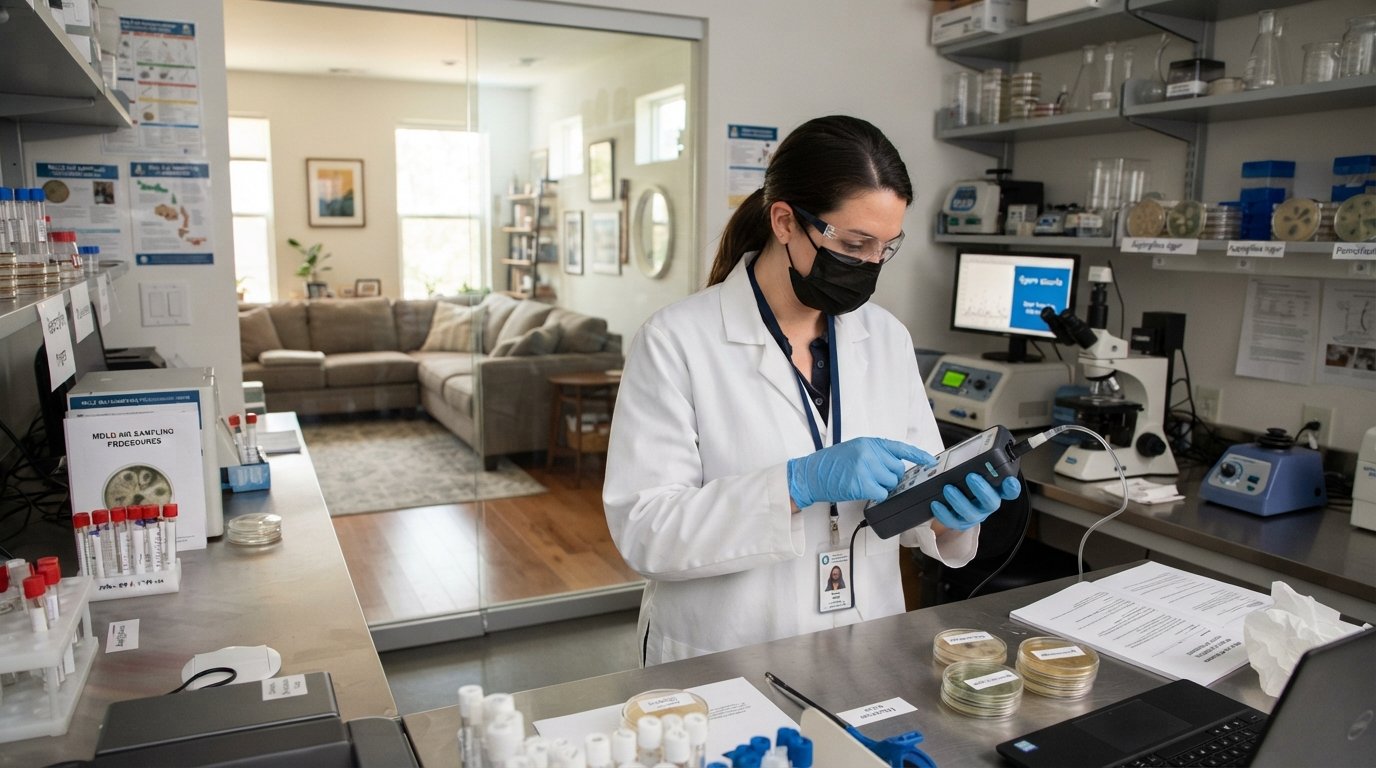
Understanding the presence of mold in your home can be crucial for your health and well-being. A mold air quality test can help you investigate any concerns. It’s important to note that the National Institute for Occupational Safety and Health (NIOSH) emphasizes the role of moisture evidence and visual inspections in assessing your indoor environment.
Mold spores exist both indoors and outdoors, meaning their presence alone doesn’t indicate a hazardous situation. However, if you notice musty odors, leaks, or damp materials, these could signal potential growth due to excess moisture. It’s essential to address these issues promptly.
This introduction will also highlight the differences between testing for biological spores and investigating chemical mycotoxins, as outlined in the updated NIOSH guidance from February 2025. While testing can provide valuable insights, remember that fixing water problems is the key to preventing future issues.
Key Takeaways
- A mold air quality test can identify potential concerns in your home.
- Moisture evidence and visual inspections are crucial for accurate assessments.
- Finding mold spores does not always indicate a dangerous condition.
- Musty odors and damp materials may suggest mold growth.
- Understanding mycotoxins is important for thorough investigations.
- Addressing moisture issues is essential for long-term solutions.
What a Mold Air Quality Test Can—and Can’t—Tell You
When it comes to understanding your indoor environment, it’s essential to know what a test can reveal. Many people confuse spores, species, and mycotoxins, but they each play a different role in the assessment of your home. Spores are the reproductive particles of mold, while species classify the types of mold present. Mycotoxins, on the other hand, are harmful compounds produced by certain molds under specific conditions.
It’s important to note that just because a laboratory can identify airborne spores, it doesn’t mean you’ll experience health effects like allergies or asthma. According to NIOSH, there are no health-based standards for indoor mold. This means that a numerical result from a test needs careful interpretation. A negative short-term sample might miss hidden growth or contamination.
For a thorough evaluation, combine test results with moisture records, visible conditions, and odors. Remember, “The numbers alone do not tell the whole story.” Relying solely on one test can lead to misunderstandings about your indoor environment.
Signs Your Home May Have Hidden Mold
Noticing signs of hidden growth in your home can be essential for maintaining a healthy living space. You should pay attention to persistent musty odors, water stains, and unexplained dampness. These clues often indicate potential issues that require further investigation.
Common moisture-prone areas include bathrooms, kitchens, and basements. These spaces are typically at higher risk for excess moisture, making them prime locations for hidden growth. Remember, the color of the growth—whether black, green, or white—does not necessarily indicate its danger level.
Look for warped or buckling floors, wet drywall, and discoloration, as these can point toward concealed water damage beneath visible surfaces. Documenting these signs is crucial before any testing. NIOSH emphasizes that a thorough visual assessment is often more reliable than routine air sampling.
Choose the Right Mold Air Quality Test
Selecting the right method for testing your indoor environment is crucial for accurate results. Understanding the differences between DIY kits and professional testing can save you time and money.
DIY settling-plate kits are often available for under $50. While they can show growth on a plate, they lack the ability to quantify airborne concentrations throughout your home. They sample passively and do not measure a specific air volume, making them less reliable.
On the other hand, professional spore-trap sampling uses a calibrated pump and collection cassette. This method provides precise results, reported as spores per cubic meter of air. Surface tape sampling can also be beneficial, especially for gathering data on settled material or visible growth.
In summary, matching the testing method to your specific concerns is essential. Don’t waste money on a kit that cannot answer your questions. As the saying goes, “You get what you pay for.”
How to Prepare for a Mold Test at Home
Taking the right steps before testing can ensure reliable findings in your indoor space. Start by gathering essential supplies like gloves, masks, and sealable containers. You’ll also need a mold test kit and written instructions to maintain a consistent collection procedure.
Next, inspect key areas such as walls, ceilings, and floors. Pay special attention to moisture-prone locations like basements, bathrooms, and kitchens. These spaces often harbor dampness that can affect your results.
Your preparation checklist should include recording the date, room, suspected moisture source, and any visible conditions. This documentation helps create a clear picture before you disturb the area.
It’s crucial to avoid unnecessary cleaning or moving of materials. Disturbing questionable surfaces can alter the results of your sampling. Remember, addressing leaks or condensation is vital for preventing further issues, often more so than identifying the types of growth present.
| Preparation Steps | Supplies Needed | Key Areas to Inspect |
|---|---|---|
| Gather test kit and supplies | Gloves, masks, containers | Basements, bathrooms |
| Inspect for dampness | Labels, instructions | Kitchens, vents |
| Document conditions | Notebook or app | Under sinks, appliances |
How to Collect Air Samples Correctly
Collecting accurate air samples is a key step in assessing your indoor environment. You should always follow the manufacturer’s instructions closely. Inconsistent collection can make useful results difficult to interpret.
For breathing-zone sampling, the AMEA procedure positions an IOM sampler about 5 feet above the floor. The pump operates at 2 liters per minute for one hour. This method ensures that the samples reflect the air people actually breathe.
When selecting locations for sampling, focus on rooms where people spend time. Areas near suspected moisture are also critical. Avoid placing samplers directly beside windows, vents, or any obvious disturbances.
Additionally, taking an outdoor comparison sample can provide essential context. This baseline helps interpret indoor spore levels accurately. Before sending samples for laboratory analysis, label them with the room, date, time, and sampler information.
How to Understand Your Mold Test Results
Interpreting your indoor test results is vital for a complete understanding of your environment. You should analyze spore counts alongside outdoor levels, room conditions, and the laboratory’s stated methods. This approach provides a clearer picture rather than relying on isolated cutoffs.
Species findings can identify organisms like Stachybotrys chartarum, but knowing the species alone doesn’t determine health risks or necessary treatments. A negative result from a short-term air sample might overlook hidden growth within walls or under flooring.
NIOSH warns that spore counts and culture results only capture part of possible exposure. Thus, negative findings should not overshadow evident moisture issues. Connecting laboratory results with factors like odors, stains, and leaks is essential for a comprehensive assessment.
| Factor | Importance | Action |
|---|---|---|
| Spore Counts | Reflects airborne particles | Compare with outdoor levels |
| Species Identification | Indicates potential risks | Assess treatment options |
| Negative Results | May not indicate safety | Investigate visible moisture |
When to Get Help From a Mold Testing Professional
Recognizing when to call in a professional for testing can be essential for your peace of mind. If you notice persistent odors or hidden water damage, it’s time to seek help. Symptoms reported by occupants can also indicate the need for a professional assessment.
A qualified inspector can provide a comprehensive evaluation. They will combine moisture measurements, visual assessments, and various sampling methods. This approach ensures a thorough understanding of your indoor environment.
Consider professional support after significant flooding or prolonged leaks. Extensive contamination or suspected growth within walls and HVAC systems are also red flags. The NIOSH Dampness and Mold Assessment Tool, updated on July 2, 2024, can guide you through a systematic evaluation.
If you experience breathing problems or other health concerns, consult a healthcare provider. They can help diagnose symptoms while an environmental professional investigates your location.
How to Reduce Mold Exposure and Prevent Mold Growth
Taking proactive steps can significantly reduce your exposure to unwanted spores in your home. Start by addressing moisture issues promptly. NIOSH recommends drying wet materials within 48 hours or removing them entirely. This timeline is crucial for limiting growth and preventing larger infestations.
Before you begin cleaning, ensure that any leaks, condensation, or water entry points are repaired. Simply removing visible materials without fixing the underlying moisture problem can invite regrowth. It’s important to remember that painting over water-damaged surfaces is not an effective solution.
Instead, proper remediation should include containment and adherence to established guidelines. For larger contamination, controlled removal is necessary to avoid spreading spores. Regular ventilation, dehumidification, and prompt leak repairs can help maintain a healthier environment.
| Action | Recommended Approach | Expected Outcome |
|---|---|---|
| Dry wet materials | Within 48 hours | Prevents mold growth |
| Repair leaks | Before cleaning | Stops moisture entry |
| Remediation | Follow guidelines | Effective mold control |
Conclusion
A home assessment can offer useful clues, but moisture deserves your first look. NIOSH guidance dated February 25, 2025, supports checking damp areas and fixing water sources instead of relying on one number.
Keep spores, species, and mycotoxins distinct. A DIY test kit or petri dish may show growth, but it cannot measure what people breathe. Calibrated air samples offer better comparisons; even a negative result can miss hidden dampness. Finding mold present depends on context, not one reading. Species such as Stachybotrys chartarum also need careful interpretation.
Focus on practical steps: repair leaks, dry wet items within 48 hours, and seek qualified remediation for larger or concealed damage. These actions can reduce exposure and help protect your home over time.