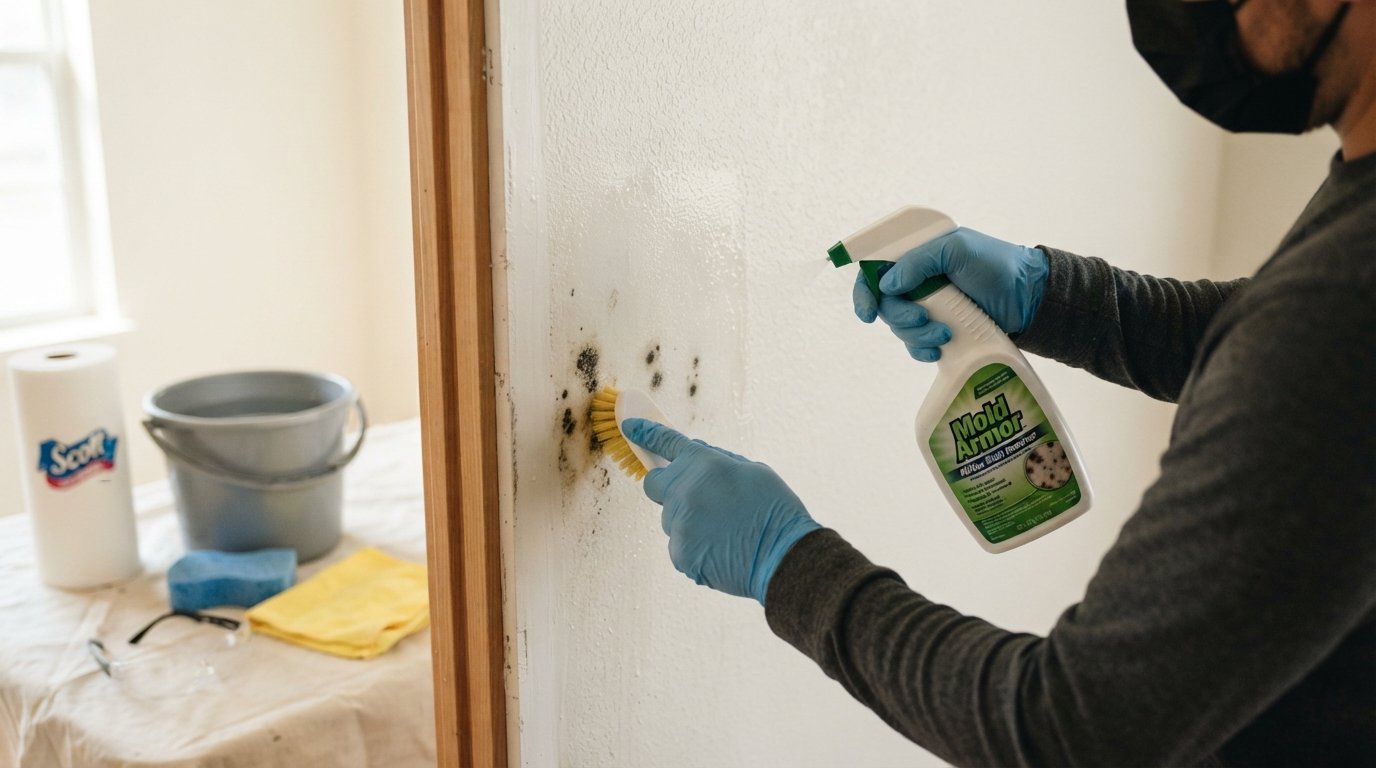
Noticing a dark patch, fuzzy growth, or a new stain on your wall can be alarming. It’s crucial to address these signs quickly, as they can escalate into a larger problem. This guide will help you assess the situation safely, choose effective cleaning methods, and determine when it’s best to call in the professionals.
Understanding the difference between removable surface contamination and growth that has penetrated the material is essential. The latter can pose a more significant risk and may require specialized attention.
The Environmental Protection Agency (EPA) recommends that if the affected area exceeds 10 square feet, professional remediation is likely the safest option. This is particularly important as exposure to these contaminants can lead to respiratory issues, allergic reactions, and worsen asthma symptoms, especially for vulnerable individuals.
Key Takeaways
- Act quickly if you notice any signs of contamination.
- Assess the severity of the problem before attempting DIY solutions.
- Know when to seek professional help for larger infestations.
- Understand the health risks associated with exposure.
- Differentiate between surface contamination and deeper growth.
What Mold on Drywall Looks Like—and Why It Grows
Seeing unusual patches or discoloration on your walls can be concerning. Understanding the differences between mold and mildew is essential for effective treatment. Mildew typically appears flat and powdery, showcasing shades of gray or white. In contrast, mold often looks fuzzy or slimy, displaying colors like green, brown, or black.
Excess humidity and poor ventilation often encourage mildew growth. However, the presence of mold may indicate deeper issues, such as leaks or flooding. The cellulose paper facing of standard drywall provides a food source for mold when water seeps into the material.
Moisture can travel into the gypsum core, allowing growth behind walls even when the painted surface appears clean. If you notice a musty smell, staining, or have experienced a known water event, these could be signs of hidden growth inside the wall cavity.
- Mildew is usually flat and powdery, while mold is fuzzy and slimy.
- Excess humidity encourages mildew; mold signals deeper moisture issues.
- Drywall’s cellulose paper can feed mold once water enters.
- Moisture can hide behind walls, leading to unseen growth.
- A musty smell or stains may indicate hidden mold.
For a step-by-step guide on tackling mold issues, check out this helpful resource.
When Can You Clean Mold on Drywall Safely?
If you spot light growth on your walls, you might wonder if it’s safe to tackle it yourself. Knowing when to clean and when to call for help is crucial for your health and home.
Small, light growth on painted, solid surfaces may be suitable for careful DIY cleaning. However, if the drywall feels soft, crumbles, or shows stains that return after cleaning, it’s time to reassess. These signs indicate that the material may be compromised and require replacement.
The EPA suggests that if the affected area exceeds 10 square feet, professional remediation is necessary. Wet drywall can hide spores beneath the surface, making apparent cleaning success misleading. It’s essential to consider personal exposure, especially if someone in your home has allergies or asthma.
- Light growth on solid surfaces may be manageable for DIY cleaning.
- Stop if the drywall is soft or shows signs of recurring stains.
- Follow the EPA’s guidance for areas larger than 10 square feet.
- Wet drywall can harbor hidden spores, complicating cleaning efforts.
- Consider health concerns, particularly for those with respiratory issues.
When to Call a Mold Remediation Professional
When you see extensive growth on your walls, it’s time to consider professional help. This is especially true if the affected area exceeds 10 square feet. Tackling large infestations on your own can be overwhelming and risky.
Additionally, if you suspect that contaminated water, such as sewage, is involved, professional assistance is crucial. Such situations introduce hazards that require specialized handling.
Look for signs like a musty odor or visible stains that may indicate growth behind walls. If you notice these issues, it’s wise to get a professional inspection. SERVPRO technicians are trained to assess visible contamination, identify hidden moisture sources, and carry out proper cleanup and remediation.
Moreover, if you experience recurring growth, it often means the source moisture problem hasn’t been resolved. Experts can use tools like moisture meters and thermal imaging to pinpoint where the water is coming from.
- Call a professional when growth covers more than 10 square feet.
- Sewage or contaminated water should be handled by experts.
- Seek inspection for signs of growth behind walls.
- Professionals assess both visible and hidden issues.
- Recurring growth indicates unresolved moisture problems.
What Protective Gear and Supplies Should You Gather?
Preparing for a cleaning task requires gathering the right tools and protective gear. Taking the necessary precautions can significantly reduce your exposure to harmful spores. Here’s what you need to ensure a safe cleaning experience.
Respirator, goggles, gloves, and work-area protection
- Start with an N95 respirator to filter out harmful particles.
- Wear rubber gloves to protect your hands from contaminants.
- Use sealed goggles without ventilation holes to shield your eyes from disturbed spores.
- Consider disposable coveralls or old clothing to minimize skin exposure.
Cleaning supplies, cloths, and a HEPA vacuum
Next, gather your cleaning supplies:
- Plastic sheeting to isolate the work area and prevent contamination spread.
- A HEPA vacuum for effective debris collection.
- Mild detergent, diluted dish soap, and white vinegar as cleaning solutions.
- Clean cloths, sponges, and disposal bags for easy cleanup.
Before starting, ensure you have everything ready. Remember, the Home Depot guide was last updated on February 5, 2025, providing reliable advice on safe cleaning practices.
How to Clean Small Areas of Mold on Sealed Drywall
If you notice small patches of discoloration on your walls, it’s important to know how to address them properly. Cleaning small areas of growth on sealed surfaces can be done safely with the right approach.
Prepare and contain the work area
Start by sealing the work area with plastic sheeting. This helps contain any spores that may be disturbed during cleaning. Wear protective gear, including gloves and a mask, to minimize exposure. Keep children and pets away from the cleaning zone for safety.
Gently clean the surface with mild detergent or diluted vinegar
Before you begin, ensure the drywall is painted or primed and structurally sound. Apply a mild detergent or a diluted vinegar solution to a cloth. Wring it out to avoid saturating the surface. Gently wipe the affected area instead of scrubbing aggressively, as this can damage the porous material.
Dry the wall thoroughly and safely dispose of used materials
After cleaning, dry the wall completely using a fan or dehumidifier. This step is crucial to prevent future growth. Seal used cloths, gloves, and any contaminated materials in garbage bags for safe disposal.
For more detailed steps on mold remediation, check out this essential guide.
What to Do About Mold in Wet or Unsealed Drywall
Finding wet or unsealed areas in your home can raise serious concerns. Many people think that bleach is a quick fix for visible growth, but this isn’t the case for porous materials like drywall. While bleach can whiten the surface, it doesn’t penetrate deeply enough to tackle the root of the problem.
In fact, bleach is mostly water. Using it may add moisture to your drywall, allowing deeper growth to survive inside the paper or gypsum core. The Home Depot guide suggests a solution of one cup of bleach per gallon of water for certain surfaces, but this does not apply to drywall.
Wet drywall from leaks or floods should be treated as affected on both sides, including the surface facing the cavity. If you notice soft, stained, or crumbling material, it’s a clear sign that you need to cut out and replace that section. In cases where the water source was sewage or if the area is extensive, professional removal is highly recommended.
How to Prevent Mold on Drywall from Returning
Preventing recurring issues is key to maintaining a healthy home environment. Start by identifying and fixing any sources of moisture. This includes promptly repairing plumbing leaks, roof leaks, and other water intrusions.
Controlling humidity is also essential. Aim to keep indoor humidity between 30% and 50%. You can achieve this by using air conditioning or a dehumidifier, especially in areas like basements and bathrooms.
Improving ventilation is another important step. Run exhaust fans in kitchens and bathrooms during activities that add humidity, such as cooking or showering. This helps reduce excess moisture in the air.
Finally, dry wet areas quickly. Spills, leaks, and flood-affected areas should be dried as soon as possible. Remember, mold often grows when drywall stays damp for too long.
By taking these proactive measures, you can significantly reduce the risk of growth and keep your home safe and clean.
Conclusion
For a small patch, careful cleaning may work if your drywall is sealed and firm. Wet or deeply affected material often needs removal. Skip bleach: a lighter stain does not prove the mold is gone.
If limited DIY work is suitable, wear an N95 respirator, sealed goggles, and gloves. Use containment sheeting and proper supplies. For mold drywall concerns covering more than 10 square feet, involving sewage, suggesting hidden growth, returning after cleaning, or raising health concerns, call a qualified professional.
Keep your home safer by fixing leaks, holding humidity at 30% to 50%, improving airflow, and drying wet areas fast. These steps help protect your home and reduce future risk.