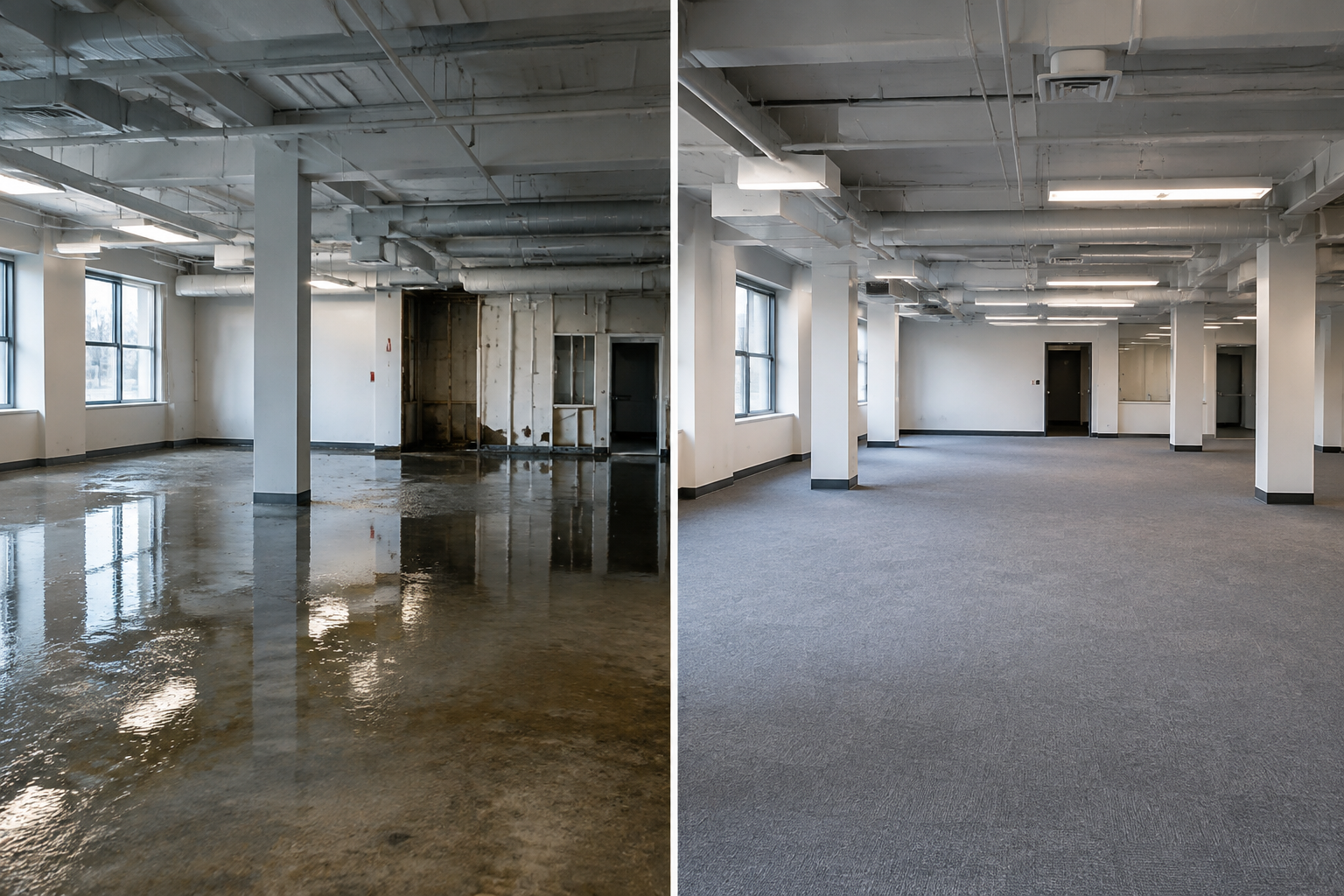
What You’ll Need Before You Start Vetting Restoration Teams
- Insurance policy details — carrier name, policy number, and adjuster contact if a claim’s already open
- Building access — keys, fobs, or a super on-site to let the crew into affected units and common areas
- Photos and video of the damage, taken before anything gets moved or dried
- Tenant contact list so you can notify residents or commercial tenants about access and downtime
- Proof-of-credential checklist — IICRC certification number, NY/NJ/CT/PA license, and current liability insurance
- Building details — square footage, unit count, number of floors affected, and age of the property
- Prior violation history, if applicable — HPD mold notices or open compliance issues
- A phone that’s on — most of this vetting happens over calls in the first hour, not email
- Time required: roughly 30-60 minutes to vet and confirm a team once you have this information ready; on-site response should follow within 60 minutes of your call
A pipe bursts on the sixth floor of a Bushwick apartment building at 2 a.m., and by the time your super calls it in, water’s already running down three stairwells into a ground-floor retail space. Now what? You’ve got maybe an hour before mold becomes a second problem on top of the flood damage, and the wrong call — hiring whoever answers the phone fastest — can turn a bad night into a six-figure headache with your insurance carrier.
Commercial water damage restoration isn’t the same job as drying out a homeowner’s basement. It requires a crew that’s actually IICRC certified, licensed to work in New York, and experienced with multi-family and commercial buildings that can’t just shut their doors while repairs happen. Brooklyn’s older housing stock — brownstones, pre-war walk-ups, mixed-use buildings from the 1920s — makes this even trickier. Old plumbing, shared walls, and tenants who need answers fast.
Picking the right team isn’t guesswork. It’s a checklist. Here’s how property managers and facilities managers across Brooklyn’s five boroughs can vet a restoration company before disaster hits, so when it does, they already know who to call.
What You’ll Achieve — and What to Have Ready Before You Call
It’s 6:45 a.m. in Downtown Brooklyn. A sprinkler head snaps on the fourth floor of your mixed-use building, and by the time your super calls it in, water’s already running down the stairwell into two occupied units below. That’s the exact moment you need a vetted crew, not a Google search spiral.
Your goal is simple: get an IICRC-certified team on-site fast for commercial water damage restoration that also handles insurance coordination directly, so tenants stay housed and downtime stays short. The same logic applies to a mixed residential building — condo water damage restoration jobs move faster when owners have documentation ready before the crew arrives.
Before you dial, gather:
- Policy number and carrier contact
- Building access — keys, fobs, alarm codes
- Photos of the flooded area and any moisture stains
- Tenant contact list for units affected
Step 1: Confirm IICRC Certification and Licensing for NY, NJ, or CT
No certification, no contract. That’s the rule.
How to Verify Credentials Before You Sign Anything
IICRC certification means the crew has trained on water categories, drying science, and structural moisture — not just running a pump and hoping. Brooklyn’s brownstones and prewar multi-family buildings hide moisture in plaster walls and old joists, so a tech guessing at drying times can leave mold growing behind a wall for weeks. Ask for the certification number, the NY/NJ/CT license, and proof of insurance before anyone touches your building. A legitimate commercial property restoration company will hand these over without hesitation — see commercial property restoration company credentials as a benchmark.
Red Flags That Signal an Uncertified or Unlicensed Crew
- Can’t produce a license number on request
- Vague or dodgy answers about insurance coverage
- No written scope of work before starting
- Pressure to sign same-day without documentation
Step 2: Check Response Time and 24/7 Emergency Availability
How fast can they actually get a truck to your door? When a pipe bursts and starts flooding two floors of a Bushwick walk-up or a Sunset Park mixed-use building, every extra hour underwater means more ruined drywall, more soaked flooring, and a bigger repair bill. A team worth hiring answers day or night — not a voicemail that gets returned tomorrow.
Ask any prospective vendor point-blank: what’s your dispatch radius, and do you staff crews around the clock across all five boroughs? A 60-minute-or-faster response is the standard to demand, especially in dense buildings where water travels fast through shared walls and stairwells. Also ask how they handle carpet water damage restoration in occupied units — saturated carpet left untreated for even a few hours breeds mold underneath. Companies experienced in carpet water damage restoration know when extraction saves the material and when it needs to come out entirely.
Step 3: Evaluate Their Experience With Large-Loss and Multi-Family Properties
Here’s a number that should stop you: nearly 70% of large commercial water losses involve buildings over five stories, according to industry claims data — yet plenty of crews advertising commercial water damage restoration have never worked above a two-story walk-up. That gap matters in Brooklyn, where brownstones sit next to 15-story mixed-use towers. A team that’s only pumped out basements in single-family homes doesn’t know how to stage equipment across a flooded parking garage, coordinate elevator shutdowns, or sequence drying floor-by-floor. Any established commercial restoration company Pennsylvania crews trust for large-loss work should be able to describe past jobs with real specifics — not vague reassurances.
Questions to Ask About Past Commercial Jobs
Ask directly:
- How many units or square feet were affected on your largest job?
- What was the building type — office, multi-family, healthcare?
- How long did drying and moisture monitoring take?
- Did you coordinate directly with the insurance adjuster?
Vague answers mean limited scope. Specific numbers mean real logistics experience.
Step 4: Ask How They Coordinate Directly With Your Insurance Adjuster
Most property managers assume the restoration crew’s only job is drying out the building. That’s wrong. The real value shows up in the paperwork — the estimates, the photo documentation, the phone calls with your adjuster that you don’t have time to make yourself.
Ask any candidate one blunt question: will your team call my adjuster directly, or will I be relaying updates back and forth? A qualified commercial water damage restoration crew handles moisture logs, itemized estimates, and scope-of-work calls without pulling you into every conversation. That matters whether the building sits in Brooklyn or falls under a different state’s policy language entirely.
This isn’t just an NY issue.
A commercial restoration company Connecticut property owners trust should follow the same protocol — and so should teams working NJ or PA-insured buildings. Consistent documentation across state lines keeps claims moving and keeps you out of the middleman seat.
Step 5: Compare Their Process for Mitigation, Drying, and Repair
Picture a flooded basement level in a Downtown Brooklyn office building — tenants locked out, a leasing manager calling every hour for updates. This is where a clear process separates a real crew from a truck with a pump. Ask any prospective vendor to walk you through their sequence step by step, not in vague terms.
A solid commercial water damage restoration plan looks like this: extraction first, using truck-mounted pumps to pull standing water fast; then moisture mapping with meters to find water hiding behind walls or under flooring; then targeted drying equipment placed by room, not guessed at; then mold prevention treatments applied before framing closes back up; finally, structural repair once readings confirm dry conditions. Each stage should come with documented moisture logs — insurers expect them, and so should you.
If you’re comparing a commercial restoration company Bronx property managers already trust against a Brooklyn-based option, ask both the same question: what happens on day two?
Step 6: Review Their Handling of Mold Risk, Odor, and Compliance Deadlines
Mold doesn’t wait for your insurance adjuster to call back. Once water sits in a wall cavity for 48 hours, spores start colonizing — and in a Brooklyn brownstone or a Bed-Stuy multi-family, that means a moisture problem turns into a legal problem fast. Ask any team bidding on your commercial water damage restoration job how they document drying progress, because that paperwork matters later.
Why NYC Landlords Should Ask About HPD Mold Violation Experience
Landlords sitting on an active HPD mold violation don’t have the luxury of a slow timeline. Ask potential vendors directly: have you resolved a violation before, and can you produce compliant documentation for the city? A crew unfamiliar with HPD deadlines can leave you exposed to fines or a reopened case. If you’re weighing options outside Brooklyn too, a commercial restoration company Staten Island owners trust handles the same compliance pressure, which tells you what a properly equipped crew looks like.
Common Mistakes Property Managers Make When Hiring a Restoration Team
How many buildings have you seen get re-flooded because the first crew cut corners? It happens more than most portfolios want to admit. Brooklyn brownstones and mid-rise rentals alike suffer when a manager rushes the hiring decision under pressure. A solid restoration company for multi-family properties gets vetted before disaster hits, not during it — and that’s exactly why a good restoration company for multi-family properties should already be on your shortlist.
Here’s where things usually go wrong:
- Picking based on price alone — the cheapest bid often skips proper drying protocols
- Skipping the license check — no verified IICRC credentials, no accountability
- Not asking about insurance coordination — you become the middleman with your adjuster
- Ignoring response-time claims — “fast” means nothing without a written guarantee
- No clear scope of work in writing — vague estimates lead to change-order surprises
Fix these five, and you’ll avoid most of the headaches other Brooklyn property managers deal with after a burst pipe.
How to Verify You Picked the Right Team — and What Happens Next
Here’s a number that should stop you: 30% of commercial water claims get delayed because moisture readings weren’t documented properly at closeout. Don’t let your building be part of that stat.
Before signing off, confirm three things:
- Moisture readings — dry standard hit on walls, subfloor, and any basement slab (not just carpet-level readings)
- Adjuster sign-off — written confirmation, not a verbal nod on-site
- Tenant re-entry clearance — air quality and structural checks cleared for occupied units
For multi-unit Brooklyn buildings with damage spanning multiple floors or units, this documentation matters even more — it’s what separates a routine job from a large loss insurance claim restoration case that needs tighter tracking.
Once those three boxes are checked, get final paperwork in writing and keep a copy for your files. If a crew won’t provide readings or sign-off documentation, that’s your answer — move on before the next pipe breaks.
How-To FAQ
How long does commercial water damage restoration take in a Brooklyn multi-family building?
Most jobs run 3 to 10 days for drying — mitigation, longer if repairs or mold remediation get added on. A two-floor flood in an older Bed-Stuy or Sunset Park building with plaster walls can take longer to dry than a newer construction with drywall — the material holds moisture differently. Ask for a projected timeline in writing before work starts, not a verbal guess.
Can I stay open during commercial water damage restoration?
In most cases, yes — a good crew works in phases so tenants and businesses aren’t displaced from the whole building. They’ll section off affected units or floors, run drying equipment there, and keep common areas usable. Ask this directly during your first call; if they can’t explain how they’ll phase the work, that’s a red flag.
What’s the difference between mitigation and full restoration?
Mitigation stops the damage from spreading — extraction, drying, moisture control. Restoration is the rebuild after: drywall, flooring, painting, sometimes structural repair. Some companies only do one half of that list, so confirm your team handles both, or has a repair partner already lined up.
Do I need a separate mold remediation company after a flood?
Not if you pick the right team the first time. IICRC-certified restoration companies typically handle mold prevention and remediation as part of the same job, especially important for Brooklyn landlords watching an HPD compliance clock. Ask upfront whether mold falls under their scope or gets outsourced — outsourcing adds delay and another point of contact.
Is it safe to send maintenance staff in before the restoration crew arrives?
Only for basic tasks — shutting off the water valve, moving tenant belongings, taking photos for your file. Standing water and saturated drywall can hide electrical hazards and mold growth within 24 to 48 hours, so anything beyond that should wait for a certified crew with the right gear.
How much does commercial water damage restoration cost near Brooklyn?
Cost depends on square footage, number of units affected, and how long water sat before it was caught — there’s no flat rate that applies across a whole building. Insurance-paid jobs are the norm for commercial and multi-family losses, which is why picking a company that coordinates directly with your adjuster matters more than chasing the lowest quote.
A flooded floor in a Bushwick walk-up or a Sunset Park mixed-use building doesn’t wait for anyone to finish vetting contractors — which is exactly why the checks above matter before the water shows up, not during. Confirm the license number. Ask about adjuster coordination before signing anything. Get the scope of work in writing, every time.
Commercial water damage restoration in Brooklyn isn’t just about drying out a floor — it’s about a crew that understands older housing stock, five-borough dispatch logistics, and the insurance paperwork that determines whether tenants get back in this week or next month. The property managers who avoid the worst headaches are the ones who ask hard questions upfront: certification, response time, past job size, HPD experience if it applies.
If a pipe just burst or a tenant just reported a ceiling leak, don’t wait for a quote round-up. Call an IICRC certified team that already works directly with adjusters across NY, NJ, and CT, and get someone assessing the damage today — not next week.