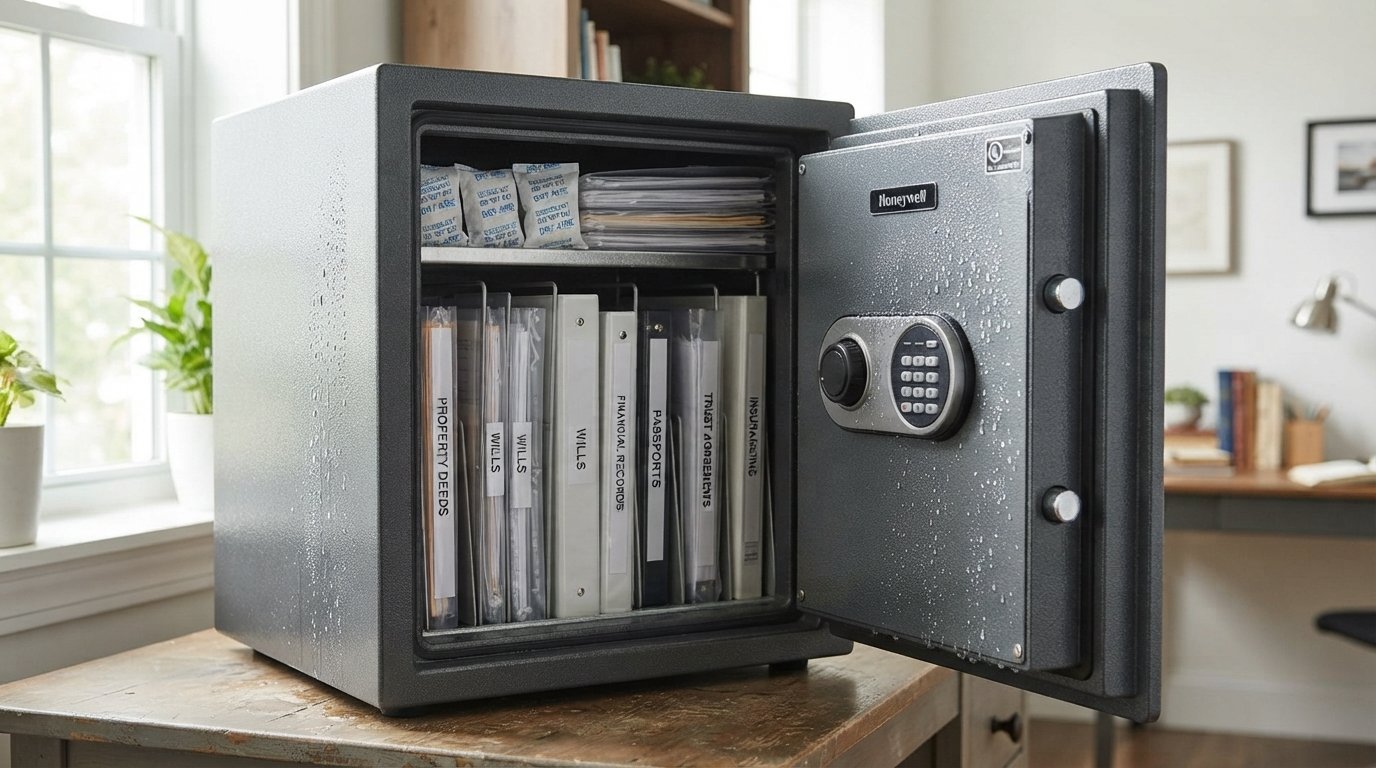
When you think of securing your valuables, you might focus on theft or fire. However, there’s a hidden danger that often goes unnoticed: moisture. Inside a secure container, trapped humidity can wreak havoc on important items like documents, photographs, and even firearms. These valuables can lose their value or effectiveness when exposed to damp conditions.
Items such as passports, birth certificates, and coins are particularly vulnerable. If humidity builds up, these paper products can become a breeding ground for harmful growth. Not only can this lead to musty odors, but it can also damage your cherished records.
This article aims to help you control moisture and improve air circulation within your storage solutions. By choosing suitable absorbers and following best practices, you can protect your important contents effectively. If you notice any musty smells or visible damage, knowing how to respond quickly can save your items from irreversible harm.
Key Takeaways
- Moisture can be a hidden threat to valuable items.
- Important documents need protection from humidity.
- Improving air circulation can help control moisture levels.
- Choosing the right absorbers is crucial for preservation.
- Responding quickly to signs of damage can save your items.
Why Mold Grows in a Fireproof Safe
Your focus may be on fire and theft, but moisture can be a silent enemy. Fireproof safes are designed to be insulated and airtight, which unfortunately can trap humidity. This lack of ventilation slows down the natural drying process, creating the perfect conditions for growth.
Humid environments allow mold spores to thrive on various materials. Paper, leather, and fabric are particularly susceptible. Items like important documents, photographs, and film negatives can suffer severe damage when exposed to high humidity.
For instance, photographs might stick together or to glass surfaces, while film negatives can deteriorate over time. Additionally, coins stored in humid conditions may tarnish, leading to a decrease in value. It’s crucial to monitor the contents of your safe regularly to avoid these risks.
By understanding how trapped moisture affects your valuables, you can take proactive steps to safeguard them.
How to prevent mold in a fireproof safe
It’s easy to focus on fire and theft, but humidity can silently damage your important items. Taking proactive steps can significantly reduce the risk of growth inside your storage solutions. Here are some effective methods to keep your valuables dry and safe.
Air out your safe regularly and check its seal
Open your safe every two weeks and let it air out for about 20 minutes. This simple action allows fresh air to circulate, helping to reduce internal humidity. Also, inspect the airtight seal regularly. Look for cracks or gaps that could allow moisture to enter.
Choose a dry storage location and acclimatize a new safe
When you purchase a new safe, especially during winter, keep it open for 24 hours indoors before use. This acclimatization prevents trapped condensation. Ensure your safe is placed in a dry, well-ventilated area of your home. Avoid high-humidity locations like bathrooms, as they can increase the risk of mold growth.
Keep damp items out of the safe
Always store only completely dry items inside your safe. Damp papers, clothing, or packaging can raise humidity levels. By ensuring that everything is dry, you minimize the chances of moisture buildup and the potential for growth.
| Action | Frequency | Notes |
|---|---|---|
| Air out the safe | Every 2 weeks | Let air circulate for 20 minutes |
| Inspect seal | Monthly | Check for cracks or gaps |
| Acclimatize new safe | Once | Open for 24 hours indoors |
| Store dry items | Always | Prevent excess moisture |
Protect Your Papers and Other Stored Items
As you secure your important items, don’t overlook the threat posed by humidity. Keeping your valuables dry is essential for their longevity. One effective way to do this is by using airtight containers for delicate contents.
Consider placing photographs, valuable coins, and jewelry in these containers before storing them. This will help shield them from moisture. Remember, completely dry documents are crucial. They reduce the moisture available for mold growth and help prevent mildew from spreading between stored items.
Use airtight containers for delicate contents
Handle photographs with care. Excess moisture can make them stick together or adhere to glass surfaces. Additionally, firearms are at risk too. Moisture can cause rust and damage wooden stocks.
Make sure documents, photos, and valuables are completely dry
For valuable documents, consider using acid-free parchment paper or polyethylene bags. These containers provide protection, but they do not allow for damp contents. Ensure everything is safe dry before placing it inside.
| Item Type | Recommended Storage | Risks of Moisture |
|---|---|---|
| Photographs | Airtight containers | Sticking together or damage |
| Documents | Acid-free parchment paper | Mold growth and deterioration |
| Firearms | Dry storage area | Rust and corrosion |
| Jewelry | Protective bags | Tarnishing |
Choose and Maintain a Moisture Absorber
While securing your valuables, it’s crucial to consider hidden threats like humidity. One effective way to manage moisture is by using absorbers. Options like silica gel, charcoal, baking soda, and cat litter can help keep your items dry and odor-free.
Each of these materials has its own benefits:
- Silica Gel: Excellent for absorbing moisture and often reusable.
- Charcoal Pouches: Great for eliminating odors and moisture.
- Baking Soda: Affordable and effective, but needs replacement every 2-3 months for best results.
- Cat Litter: Works well in absorbing dampness and is easy to find.
For larger safes or homes with high humidity, consider using an electric dehumidifier. Rechargeable units can be dried according to the manufacturer’s instructions, making them a versatile option.
| Absorber Type | Replacement Frequency | Notes |
|---|---|---|
| Silica Gel | As needed | Reusable after drying |
| Charcoal Pouches | Every 6 months | Great for odors |
| Baking Soda | Every 2-3 months | Effective but needs regular replacement |
| Cat Litter | Every 6 months | Accessible and efficient |
What to Do if You Find Mold or Musty Odors
If you discover mold or musty odors, it’s vital to act quickly. Start by removing any affected items immediately. Place them in a dry environment with good air circulation. Ensure these items are kept away from clean materials to avoid cross-contamination.
Next, inspect your safe thoroughly. Look for damaged seals or any other areas where moisture could have entered. This step is crucial to prevent further issues.
For cleaning, you can use a bleach-based cleaner to kill any mold inside the safe. However, be cautious, as some sources recommend using a mild cleaner instead. Harsh chemicals may damage your valuables.
For irreplaceable items, consider seeking professional help. Restoration services like Polygon can assist with documents, photographs, or delicate jewelry. They have specialized products, such as the 600 ppm Superstratum Building Cleaner and the 25g Deodor Bomb, that can effectively treat affected areas.
Conclusion
Moisture control, low humidity, and steady airflow form the foundation for protecting papers and valuables inside your fireproof safe. Open it every two weeks for 20 minutes, check its seal, and keep it away from persistently damp rooms.
Dry each document, photo, coin, firearm, and keepsake fully before storage. Choose an absorber that fits your space, then replace or recharge it as directed. Many charcoal pouches need replacement every six months.
If you spot visible growth or notice musty odors, remove affected items right away. Clean and dry the storage space, then seek professional restoration for valuable or badly damaged pieces. For related moisture cleanup advice, read our bathroom mold removal guide. Regular checks and quick action help keep your valuables in good condition.