Every home is a place of comfort, but it can also be unpredictable. In 2015, the National Fire Protection Association reported an alarming 365,500 home fires. This statistic highlights the need for preparation. I believe that understanding the risks is the first step toward safety.
In moments of crisis, a few seconds can make all the difference. It’s crucial to have a strategy in place, rather than trying to figure things out in the heat of the moment. I will share my approach to ensuring that everyone in my home knows what to do when danger strikes.
We will cover important actions, such as checking exits, selecting a safe meeting spot outside, testing smoke alarms, and practicing our responses together. It’s essential that every resident, guest, and visitor understands our household’s response before any alarm sounds.
Understanding the Importance of a Fire Evacuation Plan
Even the coziest home can face sudden threats that challenge our sense of security. That’s why having a personal emergency strategy is essential. The National Fire Protection Association recorded a staggering 365,500 home fires in 2015, highlighting the urgency of being prepared.
When a smoke alarm sounds, a few seconds can mean the difference between safety and danger. Making decisions in advance can significantly reduce hesitation during these critical moments. It’s crucial to have smoke alarms installed inside every sleeping room, outside each sleeping area, and on every level of the home.
Moreover, children may not wake up when an alarm goes off. Therefore, I assign an adult helper and a backup person to ensure everyone is accounted for. Remember, evacuation is about safety, not firefighting. No one should risk their life trying to control a dangerous situation.
For more information on effective safety measures, check out this guide on restoration strategies.
How I Developed My Fire Evacuation Plan
Our homes should be sanctuaries, yet they can also present unexpected dangers. Understanding how to navigate your space is vital for safety. I start by assessing the layout of my home and identifying all possible exits.
Every room should have at least two ways out, whether through doors or windows. I ensure that these escape routes open easily from inside. For security bars covering windows or doors, I install emergency release devices to facilitate quick exits.
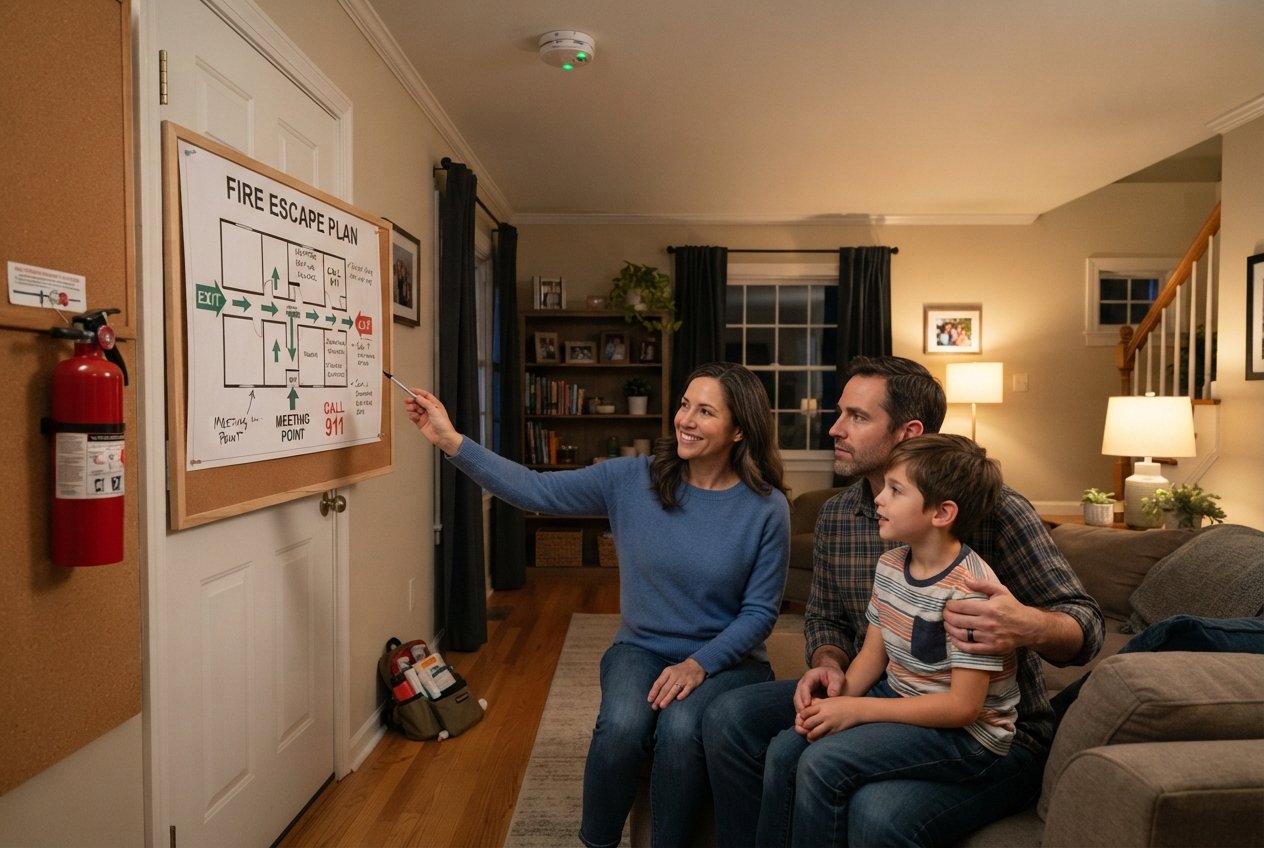
Involving my children in this process is crucial. Together, we draw a home map that marks two exit routes and the locations of smoke detectors. This visual guide makes the plan easy to understand for everyone.
Additionally, I highlight bedrooms, stairways, and accessible windows on the map. I review it with every resident regularly. This way, we ensure that our escape routes remain clear, even if smoke or flames block usual paths.
Essential Elements of My Fire Evacuation Plan
A home should feel like a safe haven, yet it can sometimes harbor unforeseen risks. That’s why I focus on the essential elements of my safety strategy. The first step is to ensure that every room has two ways out. This means that if one exit is blocked, a window can serve as an alternative.
Next, I establish a reliable meeting point outside. This could be a neighbor’s house, a mailbox, or a stop sign positioned in front of our home. I choose a visible location so that emergency responders can quickly see where everyone has gathered.
It’s crucial to instruct everyone to remain at this meeting place and never re-enter the building after leaving. I also encourage family members, including children and overnight guests, to repeat these instructions during our planning discussions. This repetition reinforces the importance of knowing what to do when the time comes.
Implementing Safety Measures and Regular Practices
A safe home requires more than comfort; it demands readiness for potential emergencies. To enhance our safety, I focus on two critical areas: installing smoke alarms and conducting regular drills.
Installing and Testing Smoke Alarms and Fire Detectors
Following the National Fire Protection Association’s guidance, I will install and test smoke alarms inside every sleeping room, outside each sleeping area, and on every level of the home. It’s essential that these alarms are functional and regularly checked.
Additionally, I ensure that my house number is visible from the street. This visibility helps emergency responders quickly identify our location during an emergency.
Regular Drills to Ensure Everyone Knows the Plan
I conduct a household drill at least once a year. During these drills, everyone uses stairs, avoids elevators, and moves briskly without running. I designate an assembly area at least 150 feet away from the building to account for everyone.
Furthermore, I teach everyone to keep the left side of a stairwell clear for emergency personnel while evacuees move along the right side. It’s vital to explain that nobody may re-enter the building until authorized personnel give an all-clear.
Navigating Challenges and Special Considerations
Home should be a sanctuary, yet it can also present unique challenges. When planning for emergencies, it’s vital to consider the specific needs of every family member.
Children may not wake when a smoke alarm sounds. To address this, I will assign an adult to help each child and designate a backup helper if the primary person is unavailable.
Older adults and individuals with mobility limitations may require different escape routes. It’s essential to adapt the strategy for these members instead of assuming everyone can use the same exit.
For those who may need additional support, I will create a buddy plan, following guidance from Florida International University. This plan includes contacting the Disability Resource Center or local emergency personnel when necessary.
If both planned exits are blocked, I will instruct everyone to close doors, place a towel under them, and move to an exterior-facing window to call the fire department.
Lastly, I will remind children, older adults, and visitors that no one should risk injury by attempting to control the fire.
Conclusion
Readiness starts with clear choices made before an emergency. I keep my evacuation plan easy to find and review it each year. I update it when household needs, rooms, exits, or contacts change. Every smoke alarm gets an immediate response; I leave at once instead of waiting to judge the event.
I make sure family members, children, older adults, people with disabilities, and visitors know two escape options and the outdoor meeting location. We use stairs, gather at least 150 feet from the building, and wait for authorized personnel to give the all-clear. I call 911 and follow directions from the fire department.
The National Fire Protection Association reported 365,500 home fires in 2015. That figure still shows why preparation matters. A simple, practiced evacuation plan can support safety when every second counts.