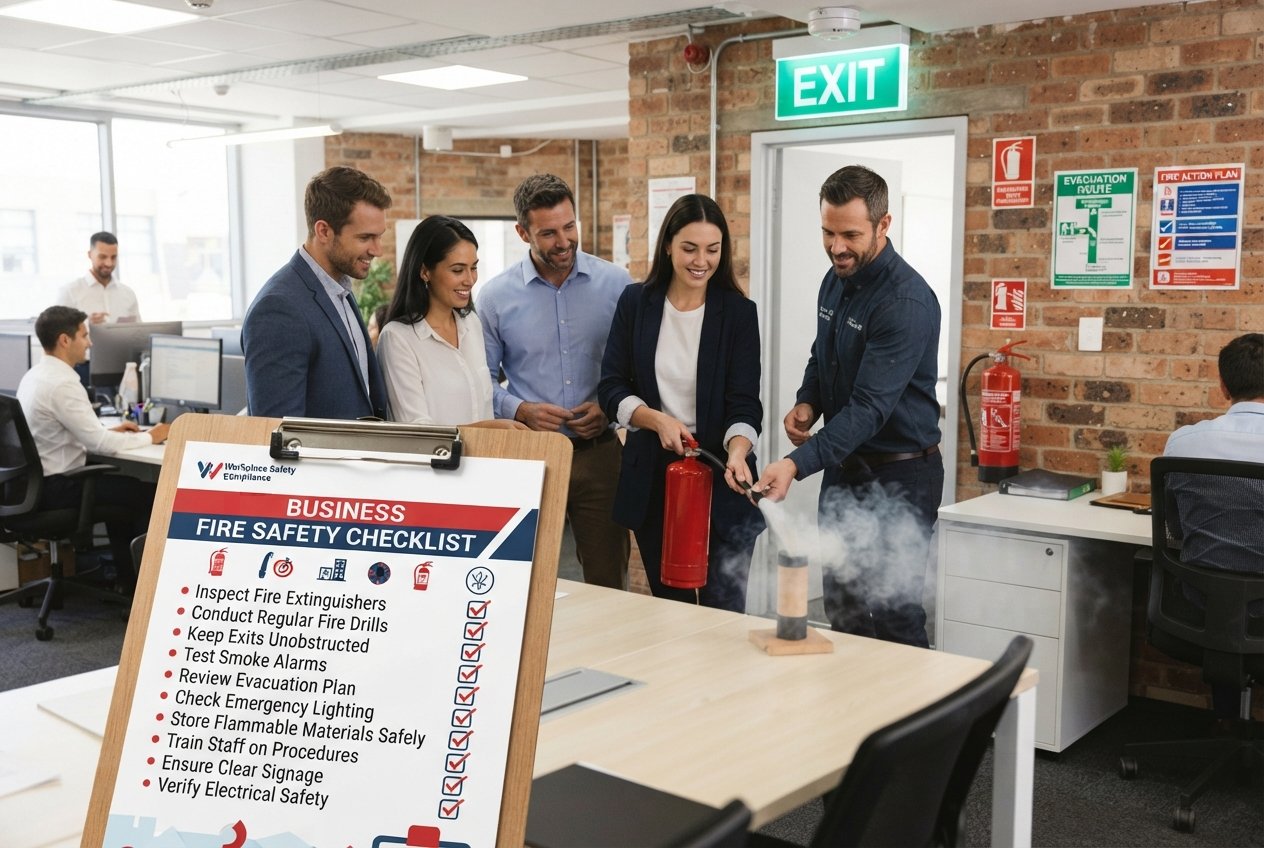
Every 24 seconds, a fire department in the U.S. responds to a call. This alarming statistic from the National Fire Protection Association highlights the importance of being prepared. In 2023, the U.S. Fire Administration estimated around 110,000 non-residential fires. Such incidents can severely impact employee well-being, business operations, and financial stability.
In this article, I will provide a practical checklist aimed at reducing the risk of fires in your business. It’s essential to understand that fire safety is not a one-time task but an ongoing commitment. By addressing hazards, ensuring proper equipment is available, and training employees, we can create a safer environment.
This guide will cover everything from identifying flammable materials to establishing an effective evacuation plan. My goal is to equip U.S. businesses with actionable fire safety tips based on recognized risks and emergency preparedness principles.
Key Takeaways
- Fires can occur every 24 seconds in the U.S., emphasizing the need for preparedness.
- Over 110,000 non-residential fires were reported in 2023.
- Employee well-being and business operations are at risk without a safety plan.
- Regular training and drills are crucial for effective emergency response.
- A comprehensive checklist can help mitigate fire risks in your business.
Understanding the Basics of Workplace Fire Safety
Ensuring a safe environment in my business means understanding the fundamentals of fire prevention. I define workplace fire safety as protecting both people and operations. This involves being proactive about hazards, ensuring equipment is ready, and having clear emergency procedures in place.
Cooking is the leading cause of non-residential fires, particularly in commercial kitchens. This makes areas like break rooms and kitchens critical spots for regular inspections. Additionally, electrical malfunctions accounted for 7,400 building fires in 2023, resulting in significant financial losses.
Common hazards include clutter, damaged wiring, and overloaded circuits. I must also consider that about 20% of fires occur in offices, kitchens, or break rooms. In open-office layouts, smoke can spread quickly, increasing the risk of damage and harm. Furthermore, burning synthetic materials can release harmful substances like carbon monoxide.
To mitigate these risks, I focus on regular training for my employees. Awareness of potential hazards and clear evacuation routes can save lives. For more detailed strategies on effective fire prevention, I recommend checking out this effective fire and water restoration guide.
Implementing Practical Fire Prevention Measures
To minimize risks, I focus on implementing practical fire prevention measures. These strategies are essential for maintaining a safe environment. Regular checkups and maintenance of equipment play a vital role in preventing incidents.
Electrical issues, such as damaged wiring and overloaded circuits, can lead to dangerous sparks. I recommend inspecting:
- Wiring, outlets, and cords
- Appliances and smoke alarms
- Fire extinguishers and sprinkler systems
Moreover, proper storage of flammable materials is crucial. Keeping these items away from heat sources can significantly reduce risks. I ensure that:
- Flammable liquids are stored in sealable containers
- Clear labels are used for all chemicals
- Ventilation is adequate in storage areas
Clutter can also accelerate fire spread. Regular cleaning helps remove paper, cardboard, and grease that may pose risks. My checklist verifies that emergency exits remain unobstructed.
| Equipment | Maintenance Frequency | Notes |
|---|---|---|
| Fire Extinguishers | Monthly | Check pressure and accessibility |
| Smoke Alarms | Quarterly | Test functionality and replace batteries |
| Sprinkler Systems | Annually | Inspect for blockages and functionality |
For more tips on dealing with smoke damage, check out this guide on smoke damage.
Creating an Emergency Action Plan for My Business
Creating a solid emergency action plan can save lives and protect assets. This plan should clearly define the chain of command, communication methods, evacuation routes, and gathering points. By establishing these elements, I ensure that everyone knows their role during an emergency.
To facilitate effective evacuation, I require floor plans that display escape routes, life-safety equipment, and designated outdoor assembly locations. In case of smoke or fire, I instruct employees to:
- Call 911 and notify building security.
- Activate the building alarm and evacuate without personal belongings.
- Walk calmly to the designated gathering area.
Supervisors play a critical role by accounting for all personnel and reporting any missing individuals to first responders. New employees must review their emergency responsibilities with supervisors soon after starting work. Furthermore, anyone exposed to smoke or chemical vapors should be moved to uncontaminated areas and receive prompt medical attention.
Finally, I emphasize that no one should re-enter the building until first responders authorize it. This measure protects employees from ongoing risks associated with smoke, fire, or structural damage.
Essential Workplace Fire Safety Strategies
Regularly practicing emergency drills can greatly enhance employee preparedness. These drills familiarize everyone with evacuation routes and emergency procedures. It’s essential that employees know how to respond quickly and effectively during a crisis.
Scheduling Regular Fire Drills and Equipment Inspections
I schedule regular fire drills so employees practice evacuation routes and emergency procedures before facing an actual incident. This proactive approach helps ensure that everyone knows their role during an emergency.
Moreover, I recommend teaching the PASS method—Pull the pin, Aim at the base, Squeeze the trigger, and Sweep across the fire’s base. Fire extinguishers should only be used on small, controllable fires after calling 911 when necessary.
Leveraging Technology and Best Practices in Fire Prevention
Assigning a fire warden or team is crucial. They inspect equipment, keep evacuation routes clear, assist mobility-impaired staff, and account for personnel during drills. I also use OSHA-aligned training records to document fire prevention instruction and emergency responsibilities.
Additionally, I suggest implementing motion-sensor lighting and CCTV as security measures. These tools can deter trespassing and help document intentional fires or suspicious activity.
Finally, I review drill results, alarm performance, and employee feedback to update the business plan. Combining technology, housekeeping, maintenance, training, and recurring inspections creates an integrated safety program that effectively prevents fires.
Conclusion
A strong business checklist turns prevention into a steady routine: spot hazards, service equipment, store materials with care, and keep exits clear. NFPA reported 7,400 electrical-malfunction fires and $354.4 million in losses in 2023. Regular maintenance can help limit costly risks.
My emergency action plan lists exit routes, assembly points, ways to share updates, and staff roles. I schedule drills and OSHA-related training so employees can act quickly, stay calm, and report missing people or hazards.
Review the checklist whenever layouts, equipment, supplies, staffing, or responsibilities change. These regular updates help keep the plan useful and support a more prepared team.