Cooking is a vital part of our daily lives, but it also comes with risks. In fact, it is the leading cause of home fires and injuries in the United States. In 2021 alone, U.S. fire departments responded to an estimated 170,000 cooking-related incidents. These alarming statistics highlight the importance of understanding how to keep our homes safe.
Each year, cooking fires result in approximately 135 deaths and over 3,000 injuries. The financial impact is staggering, with losses exceeding $494 million. A significant contributor to these incidents is unattended equipment, responsible for 37% of nonconfined cooking fires. Therefore, it’s crucial to be aware of the potential hazards and take steps to mitigate them.
In this guide, I will share practical safety tips and insights from the National Fire Protection Association and Travelers. We will cover essential topics such as cooking behavior, appliance safety, the use of extinguishers, and emergency response. Together, we can create a safer environment for ourselves and our loved ones.
Key Takeaways
- Cooking is the primary cause of home fires and injuries.
- In 2021, there were around 170,000 cooking-related fire incidents.
- Unattended equipment is a major risk factor in cooking fires.
- Awareness and preparation can significantly reduce fire risks.
- Practical tips can help ensure safety while cooking.
Introduction to Cooking Fire Hazards
Food preparation is a fundamental activity, but it brings along various risks that require our attention. In 2021, home cooking fires resulted in an estimated 135 deaths and over 3,000 injuries. These alarming figures translate to more than $494 million in property loss. Understanding these statistics is essential for recognizing the severity of the issue.
One of the primary causes of these incidents is unattended equipment. In fact, 37% of nonconfined cooking fires are attributed to distractions. This includes situations like leaving a stove unattended while cooking or not monitoring food that is heating. It’s crucial to remain vigilant during meal preparation.
Additionally, unsafe practices can elevate the risk of accidents. Items such as loose clothing, towels, and other combustible materials should be kept away from heat sources. These practices not only ensure safety but also contribute to a more secure cooking environment.
Kitchen Fire Prevention: Safe Cooking Practices
While meal preparation is a key part of our routines, it carries inherent dangers. To minimize risks, I follow several safe cooking practices that can protect my home and loved ones.
First, I always stand by the stove when cooking. The National Fire Protection Association advises turning off the burner if I need to leave the area. This simple action can prevent cooking fires from starting.
When using oil, I keep a lid nearby. If smoke appears or grease begins to boil, I know to turn off the burner immediately. This helps avoid the risk of flames.
Additionally, I make sure pot handles face the back of the stove. This prevents accidental bumps and spills. I also avoid wearing loose clothing and keep towels away from the cooking area.
Finally, I never cook when I’m tired or under the influence of alcohol or medication. Impaired attention can lead to dangerous situations. By following these practices, I can enjoy cooking while ensuring my safety.
Appliance Safety and Routine Checks
Safety starts with how we manage our appliances and perform routine checks. By taking a few simple steps, we can significantly reduce the risk of accidents in our homes.
Travelers recommends that I connect my appliances directly to wall outlets. This means avoiding extension cords or power strips, which can be hazardous. If I notice any frayed or damaged power cords, I should stop using the appliance immediately until it is repaired.
Another crucial step is to unplug small appliances when they are not in use. This practice not only saves energy but also minimizes potential electrical hazards.
Regular maintenance of the stove hood, filter, and exhaust system is vital. I need to check and clean these components to manage grease buildup safely. It’s also essential to avoid using the oven as a heating source or storing food items inside it.
Finally, keeping a kitchen-rated fire extinguisher accessible is a must. This precaution ensures that I am prepared in case of an emergency. For more detailed safety tips, I recommend checking out this guide.
| Safety Measure | Description | Frequency |
|---|---|---|
| Check Power Cords | Inspect for frays or damage | Before each use |
| Unplug Appliances | Disconnect when not in use | Daily |
| Clean Stove Hood | Remove grease buildup | Monthly |
| Check Fire Extinguisher | Ensure it is accessible and functional | Every six months |
Immediate Response and Emergency Actions
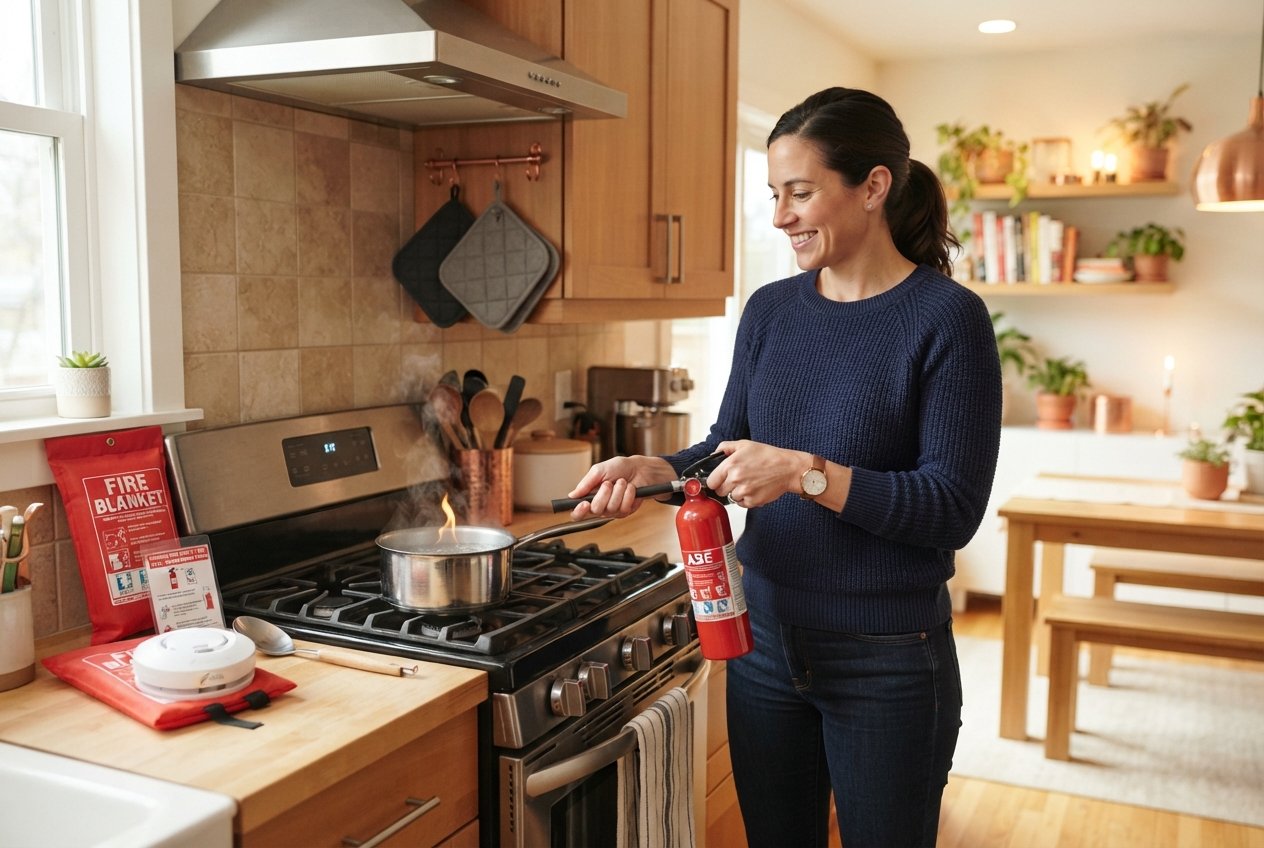
When a cooking mishap occurs, knowing how to respond can make all the difference. Quick actions can help control a small fire before it escalates. The National Fire Protection Association suggests covering a burning pan with its lid or a baking sheet. This method cuts off the oxygen supply, which is crucial in extinguishing flames.
In the case of an oil fire, it’s essential to place the lid carefully over the pan without moving it. Moving a burning pan can spread the flames and create a larger hazard. Additionally, keeping a kitchen-rated fire extinguisher within reach is vital. Travelers recommend having this equipment accessible at all times.
If a fire spreads beyond control, evacuate immediately and contact the fire department. Clearly communicate your location and follow the dispatcher’s instructions. Avoid re-entering a smoke-filled area for belongings, as safety should always come first.
| Action | Description | Timing |
|---|---|---|
| Cover with Lid | Use a lid or baking sheet to smother flames | Immediately |
| Keep Extinguisher Handy | Have a fire extinguisher accessible | Always |
| Evacuate | Leave the home if fire spreads | As needed |
| Contact Fire Department | Call for help and give location | Immediately |
Conclusion
I treat close attention as my best safeguard whenever I cook. Unattended equipment played a role in 37% of nonconfined cooking fires, and U.S. authorities responded to about 170,000 cooking-related incidents in 2021. Those numbers make steady focus worth the effort.
Before I start, I check that my appliances work well and keep towels and other combustible items away from heat. I manage grease with care and adjust burner heat as needed. I also keep a lid, baking sheet, and suitable extinguisher within reach.
If flames grow beyond what I can manage safely, I get everyone out and call the fire department. I never risk going back for belongings. A few steady habits can protect people and property and help me cook with greater confidence.