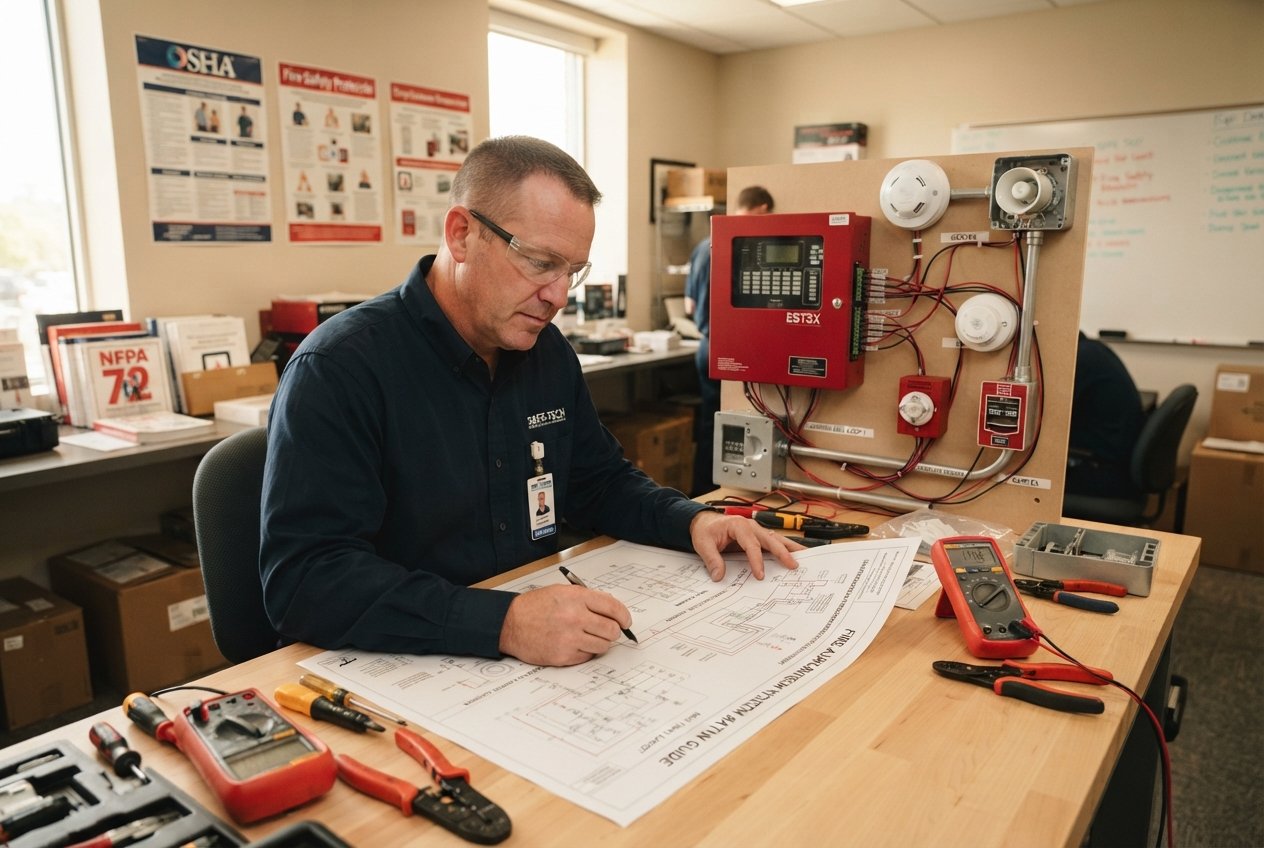
Ensuring safety in our homes is a priority. A well-planned alarm system acts as the first line of defense against potential hazards. The National Fire Protection Association (NFPA) recommends placing smoke detectors on every level of a building, inside each bedroom, and outside sleeping areas. This guidance is essential for creating a secure environment.
In this guide, I will introduce the various types of smoke detectors available. Understanding these options helps in selecting a system that protects both occupants and property. Additionally, I will cover crucial factors such as device location, power sources, and maintenance to ensure reliable safety.
It’s important to distinguish between simple residential setups and more complex commercial projects. Some installations may require oversight from local authorities or qualified professionals. Finally, I will outline the installation process, from assessing risks to testing the completed system.
Key Takeaways
- Proper planning is vital for an effective alarm system.
- NFPA guidelines emphasize smoke detector placement for safety.
- Different smoke detector types offer unique benefits.
- Maintenance and testing are essential for reliability.
- Residential and commercial projects have distinct requirements.
Planning for a Safe Fire Alarm Installation
Creating a secure environment begins with careful planning. I will evaluate various factors that contribute to safety in your building. Understanding these elements is essential for selecting the right detection equipment.
First, I will assess:
- Occupancy and building size
- Combustible materials present
- Sleeping areas and previous incidents
- The overall site layout
Next, I will refer to NFPA 72 and local codes to define the necessary alarm coverage. This ensures compliance with safety regulations. Additionally, I will map out:
- Rooms and corridors
- Exits and electrical sources
- Airflow paths and high-risk areas
Residential systems typically range from $1,000 to $2,500, while commercial setups can exceed $5,000. Before starting any work, it’s crucial to confirm permits and inspection expectations.
Choosing the Right Components and Devices
Choosing the appropriate devices can significantly enhance safety. Understanding the types of detectors available is crucial for effective protection. I will explore various components essential for a reliable safety system.
First, I will compare:
- Photoelectric and Ionization Smoke Detectors: Each type has unique benefits based on the environment.
- Heat Detectors: Ideal for kitchens and garages, these prevent nuisance alarms.
- Combination Smoke/CO Units: These units offer dual protection in one device.
- Manual Pull Stations: Essential for immediate alerting in emergencies.
Next, I will discuss the differences between battery-operated and hardwired options. For instance, First Alert offers 10-year sealed-battery models that require less maintenance. Hardwired options can be more reliable but may need adapter plugs for easy replacement.
Lastly, I will differentiate between conventional systems that report zones and addressable systems that identify individual activated devices. Each component should match the building’s hazards and the occupants’ needs for optimal fire protection.
Strategic Device Placement and Wiring Considerations
To ensure effective detection, proper positioning of devices is essential. Smoke detectors should be placed on every level of your home, inside bedrooms, and outside sleeping areas. It’s important to avoid locations near windows, ducts, and other airflow paths that may hinder performance.
Here are some guidelines for optimal placement:
- Keep smoke detectors at least 10 feet away from cooking appliances to minimize nuisance alarms.
- Ceiling-mounted alarms should be centered, while wall-mounted units should be no more than 12 inches below the ceiling.
- Identify accessible locations near exits for manual pull stations to ensure quick access during emergencies.
Next, consider wiring. I recommend using 18-gauge fire alarm cable, adhering to national and local codes. This ensures safety and compliance. Proper wiring should include:
- Secure connectors with correct polarity, avoiding sharp bends or kinks.
- Choosing between series loops and parallel circuits based on the system type, whether conventional or addressable.
For more detailed information on dealing with smoke damage, visit this guide.
Step-by-Step Process of fire alarm installation
Every step in the setup process plays a vital role in ensuring protection. This section will guide you through the critical phases of establishing your fire safety system.
Setting Up the Control Panel and Power Management
First, I will turn off all power before beginning work. This reduces electrical hazards. Next, I will mount the control panel centrally, close to an electrical source for easy access during maintenance.
Recommended tools include a drill, Phillips screwdriver, wire connectors, electrical tape, and a multimeter. Following these guidelines ensures a smooth setup process.
Mounting Devices and Connecting Wiring
After setting up the control panel, I will run approved cable from the panel to the detectors, manual pull stations, and other system accessories. Each device must be securely mounted, and I will connect the positive and negative terminals correctly.
It’s essential to protect connections with suitable connectors and insulation. I will also adhere to manufacturer instructions and local codes, as complex installations may require a qualified professional.
Testing and Inspection Procedures for Your System
Thorough testing is crucial to ensure that every component of your safety system functions as intended. Regular inspections help identify issues before they become serious problems. I will outline the necessary steps for effective testing and final inspections.
Performing Functional Tests on Each Component
First, I will activate the panel test function and selected smoke detectors. This confirms that signals reach the control panel correctly. I will also operate manual pull stations and notification devices to verify audible and visual warnings throughout the occupied building.
Using a multimeter, I will check voltage levels and investigate any abnormal readings before placing the system into service. This step is vital for ensuring that everything operates smoothly.
Conducting a Final Inspection for Safety Compliance
During the final inspection, I will verify secure wiring and correctly mounted devices. It’s essential to check for the absence of loose connections, which can lead to failures. I will inspect mounting hardware, cable routes, terminal connections, device polarity, and enclosure condition for visible defects.
Lastly, I will document test results and arrange for required authority or certified-technician inspections before declaring the system operational. Following NFPA 72 guidelines ensures compliance with safety regulations.
| Test Component | Purpose | Frequency |
|---|---|---|
| Control Panel Test | Verify signal reception | Monthly |
| Smoke Detectors | Confirm functionality | Monthly |
| Manual Pull Stations | Check alarm activation | Quarterly |
| Voltage Checks | Ensure power levels | Before service |
| Final Inspection | Confirm compliance | Annually |
Maintenance and Ongoing Care of Your Fire Alarm System
Regular upkeep is essential for the longevity of your safety system. I will outline key practices to ensure your devices function properly. This includes scheduling routine checks and addressing common issues that may arise.
Scheduling Routine Checks and Battery Replacements
To maintain optimal performance, I will:
- Test the system monthly and inspect detector housings for dust or obstructions that may cause false alarms.
- Replace standard batteries annually or sooner if a low-power warning appears on the control panel.
- Utilize 10-year sealed-battery products to minimize routine battery changes during their service life.
Troubleshooting Common Installation Issues
If the system activates unexpectedly, I will troubleshoot by:
- Checking for dust accumulation, cooking sources, and airflow that could trigger false alarms.
- Inspecting loose connections and ensuring devices are correctly placed.
- Scheduling a professional inspection at least once a year and keeping records of testing and repairs.
| Maintenance Task | Frequency | Notes |
|---|---|---|
| System Testing | Monthly | Ensure all components are functional. |
| Battery Replacement | Annually | Replace or check sealed-battery models. |
| Professional Inspection | Annually | Document findings and repairs. |
Conclusion
A dependable fire safety plan starts with clear choices and steady care. I can strengthen building protection by reviewing risks, following NFPA guidance, choosing suitable devices, and keeping records of the completed installation.
Place detectors on each level, inside bedrooms, and outside sleeping areas. Keep them at least 10 feet from cooking appliances. Before occupants rely on the alarm system, I will follow manufacturer directions, local rules, and NFPA 72. Complex wiring or system startup calls for qualified help.
I will test detectors, manual pull stations, notification devices, and the control panel before the system serves occupants. Monthly tests, yearly battery changes, and annual professional inspections help catch problems early. I will also act quickly when a fault or nuisance alert appears. Make routine care part of your plan to protect people and property.