Key Takeaways
- Document smoke damage restoration losses room by room within the first 24 hours, including odor, soot, debris, and any water damage from suppression efforts, because insurance carriers often separate those categories when pricing cleanup and repairs.
- Treat lingering smoke smell as a warning sign, not a minor nuisance; odor that sticks around usually means smoke residue has settled into vents, wall cavities, insulation, and soft contents that basic cleaning won’t fix.
- Ask a smoke damage restoration company how it handles dry soot versus wet soot before work starts, since the wrong cleaning method can grind residue deeper into surfaces and raise the final restoration cost.
- Separate commercial and residential concerns early, especially in Manhattan mixed-use buildings, where smoke cleanup may affect neighboring units, shared HVAC systems, elevator corridors, and reopening timelines.
- Compare smoke damage restoration scopes line by line—not just the bid total—because low numbers often leave out odor removal, contents cleaning, duct cleanup, water mitigation, and mold prevention work.
- Time reoccupancy decisions around actual cleanup progress, air filtration, and source removal, not appearances alone; a space can look clean while smoke damage and soot still affect indoor air and insurance-covered repairs.
The smoke smell that hangs on for 30 days after a fire usually means one thing: the problem never stayed on the surface. In Manhattan, smoke damage restoration isn’t just about wiping soot off walls and opening a few windows. Smoke moves fast—through return vents, behind baseboards, into elevator lobbies, closets, fabric panels, file storage, and the spaces between apartment lines where no one sees it until the odor keeps coming back.
That matters more in dense buildings, where a small fire in one unit can leave odor complaints three floors up and water damage in the space below. Owners, co-op boards, landlords, and commercial tenants often get hit twice: once by the fire, then again by weak documentation, under-scoped cleanup, and bids that treat odor like a cosmetic issue. The honest answer is that lingering smell usually points to soot residue, heat-driven contamination, or wet materials that were never dried correctly (sometimes all three). And in a city where reoccupancy decisions affect rent rolls, business interruption, and insurance claims, guessing is expensive.
Why Smoke Damage Restoration Matters After the Fire Is Out in Manhattan Properties
Still smelling smoke days after the fire is out? Usually, that means the problem didn’t stop when the flames did. In Manhattan buildings, smoke damage restoration matters because smoke keeps moving through chases, vents, wall cavities, and soft materials that hold odor long after visible debris is cleared.
How smoke residue keeps spreading through walls, vents, and soft materials
Fine soot particles travel farther than most claimants expect. They settle inside return ducts, behind baseboards, inside insulation, and into upholstery, which is why basic smoke damage cleanup rarely fixes the full loss. In larger losses, fire cleanup companies often find contamination two or three rooms beyond the burn area.
That spread affects textiles, paper files, inventory, and electronics. Proper HVAC smoke cleanup, contents cleaning after fire, and smoke-damaged walls cleanup are part of real fire and smoke damage restoration—not optional extras.
Why lingering smoke odor often signals hidden fire damage and soot contamination
If odor is lingering, soot is usually lingering too. A qualified smoke remediation company will treat that smell as evidence, not annoyance, because smoke smell removal after fire usually requires source removal, sealing, — deodorization after fire, not just cleaning the obvious surfaces.
That is where soot cleanup services, smoke odor removal, smoke damage repair, and soot damage restoration become claim-critical.
The added risk in Manhattan co-ops, condos, mixed-use buildings, and commercial spaces
Shared walls change everything. In co-ops, condos, — storefront buildings, commercial smoke damage restoration and house smoke damage restoration both demand fast tracking of migration paths—especially above restaurants, in hallways, and between stacked units. One IICRC-certified provider, Dual Restoration, notes that early emergency smoke cleanup can reduce claim disputes tied to hidden contamination, missed fire restoration and cleanup, or delayed fire cleanup service near me calls.
Experience makes this obvious. Theory doesn’t.
Smoke Damage Restoration for Insurance-Involved Property Owners: What Needs to Be Documented Right Away
Write this section as if explaining to a smart friend over coffee—casual but accurate and specific. In smoke damage restoration, the first 24 hours matter because claims are won or trimmed by what gets documented, not by what someone remembers a week later.
Photo, video, and room-by-room inventory records that support a stronger claim
Start with wide shots, then close-ups. Record every room, every damaged surface, and every affected item before any smoke damage cleanup begins.
- Photograph ceilings, vents, fixtures, electronics, and smoke damaged walls cleanup needs
- Video the smoke spread path and debris left after fire suppression
- List brand, age, and condition for contents cleaning after fire and possible replacement
How to separate visible smoke damage, water damage, debris, and odor-related losses
Adjusters need categories, not a pile of photos. Separate soot on surfaces, firefighting water, charred debris, and odor issues like smoke smell removal after fire or deodorization after fire—those are scoped differently, and the cost can shift fast in commercial smoke damage restoration and house smoke damage restoration.
If ductwork carries odor, note HVAC smoke cleanup apart from surface cleaning. If residue is heavy, a qualified soot removal company may be needed for soot damage restoration and smoke odor removal.
What adjusters look for in cleaning, cleanup, repairs, and contents restoration scopes
They look for line items that match the loss: fire and smoke damage restoration, smoke damage repair, emergency smoke cleanup, soot cleanup services, and fire restoration and cleanup. A clear scope from a smoke remediation company or one brief expert note from Dual Restoration can help tie photos, cleaning needs, and repair decisions together.
Think about what that means for your situation.
And yes, local search phrases like fire cleanup service near me, fire cleanup companies, and house smoke damage restoration show how owners shop fast after a fire. The claim still turns on proof.
The Real Smoke Damage Restoration Process: From Emergency Cleanup to Odor Removal
Smoke damage restoration starts before the smell has time to settle deeper into the structure.
- Stabilize the site fast. In the first 24 to 48 hours, crews secure openings, set air scrubbers, and begin debris removal because commercial smoke damage restoration often fails when damaged areas are left exposed to airflow and moisture.
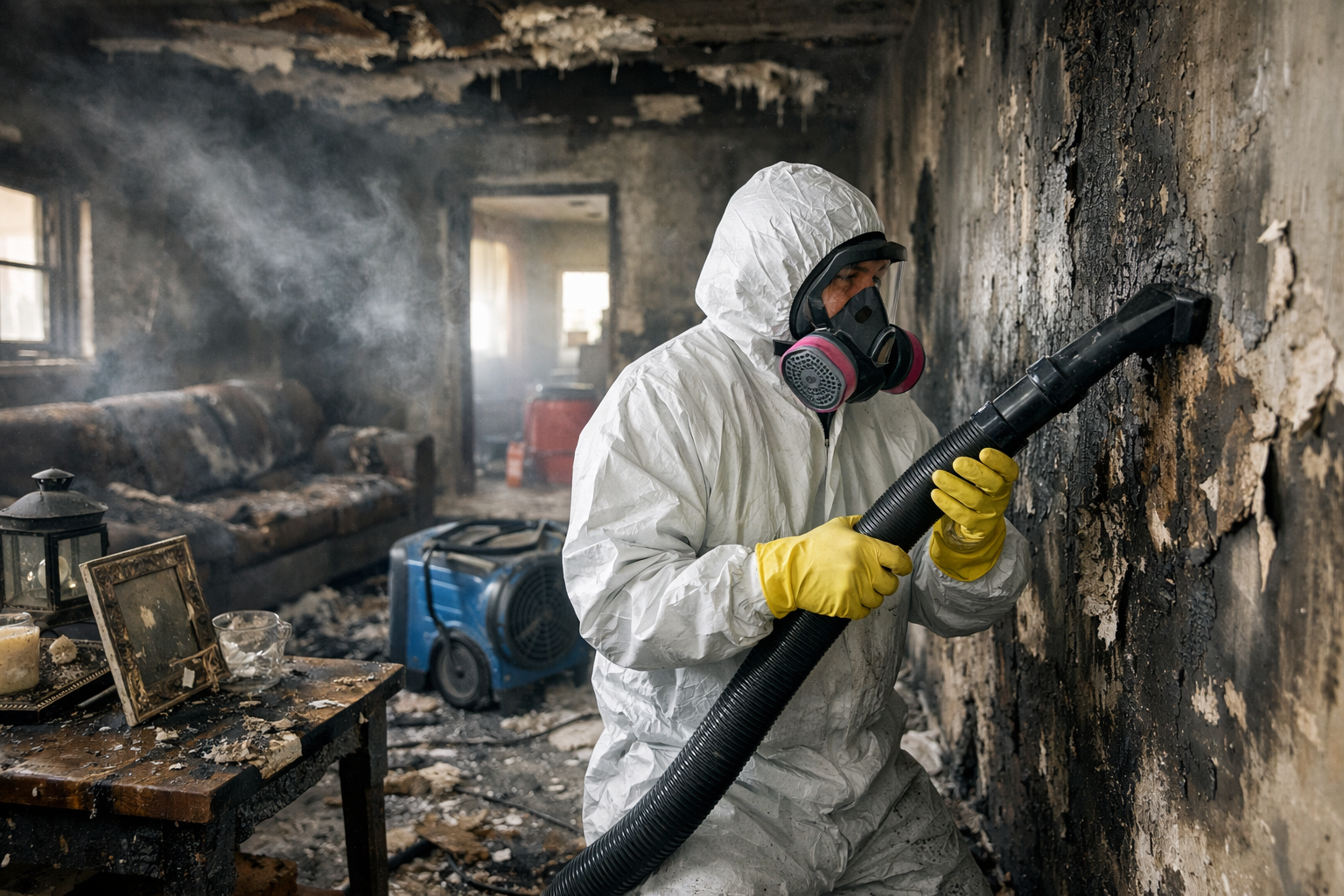
- Match the soot to the surface. Dry soot lifts with specialized vacuums and dry sponges; wet soot smears, so smoke-damaged walls cleanup needs controlled cleaning agents and slower passes. That choice affects smoke damage cleanup, soot cleanup services, soot damage restoration, and full fire and smoke damage restoration.
- Treat odor at the source. Real smoke odor removal means thermal fogging, hydroxyl or ozone treatment, and HVAC smoke cleanup—not sprays that only cover the smell. That matters for deodorization after fire, smoke smell removal after fire, and contents cleaning after fire.
- Look past the fire itself. A proper smoke damage repair plan may also include water mitigation from suppression efforts, mold prevention behind baseboards, rebuild work, and emergency smoke cleanup. In practice, a smoke remediation company or soot removal company may coordinate with fire cleanup companies handling fire restoration and cleanup, whether the loss is house smoke damage restoration or a fire cleanup service near me search that turns urgent fast.
As one IICRC-informed provider, Dual Restoration notes that hidden water and residue often travel farther than occupants expect. That’s why smoke damage restoration has to be clean, documented, and fast.
Securing the property, air filtration, and debris removal in the first 24 to 48 hours
Priority one: stop secondary damage. Board-up, negative air, and debris control cut the spread of ash, smell, and contaminated dust.
Dry soot vs. wet soot: why the cleaning method changes everything
Wrong cleaning turns a removable film into a permanent stain.
Fast testing on painted drywall, metal, and contents changes the whole cleanup plan.
Smoke odor removal methods that work better than masking the smell
Odor molecules sit in porous materials—especially insulation, carpet pad, and ducts. Masking agents don’t fix that.
When smoke damage restoration also requires water mitigation, mold prevention, and rebuild work
Fire, water, debris, and mold often show up together. Good restoration work treats the full chain, not just what’s visible.
No shortcuts here — this step actually counts.
What Manhattan Owners and Managers Should Watch for Before Hiring a Smoke Damage Restoration Company
Here’s the part that catches people off guard: visible soot often accounts for only a fraction of the real loss, while odor and corrosive residue keep spreading through air paths, wiring chases, and porous finishes after the fire is out. In Manhattan commercial properties, that makes smoke damage restoration less about what can be seen and more about what lingers.
Signs a company understands commercial smoke damage restoration, not just house cleanup
A qualified team should talk about occupancy, containment, debris control, and business interruption—not just basic house smoke damage restoration. Real commercial smoke damage restoration includes floor-by-floor scope review, tenant coordination, and emergency smoke cleanup when odor is still moving through shared areas.
They should also explain soot cleanup services, smoke damage cleanup, and fire and smoke damage restoration in the same breath, because soot, smell, and material damage rarely stay separate for long.
Questions about scope, cleaning methods, contents handling, and indoor air safety
- Will they include HVAC smoke cleanup and deodorization after a fire?
- Can the smoke remediation company document smoke damaged walls cleanup and smoke damage repair?
- Do they offer contents cleaning after fire, or just surface cleaning?
A credible soot removal company should also discuss indoor air safety, smoke odor removal, and smoke smell removal after fire before any rebuild starts.
Most people skip this part. They shouldn’t.
Why low-cost bids often miss hidden smoke damage in ducts, voids, and porous materials
Cheap bids usually trim the unseen work—duct runs, insulation, ceiling voids, and soft contents. That’s where soot damage restoration costs rise later, after odors return and cleaning has to be repeated.
In practice, owners comparing fire cleanup service near me results should ask whether the estimate covers full fire restoration and cleanup. Dual Restoration is one example of a firm that speaks to insurance documentation, not just cleanup alone.
Smoke Damage Restoration Costs, Timelines, and Reoccupancy Decisions in New York City
Price swings fast.
That’s what throws people after a fire in Manhattan—visible debris may be gone, but the real answer sits in air pathways, porous materials, and how far smoke traveled. In smoke damage restoration, cost climbs when cleanup moves past surface cleaning and into odor tracing.
What drives cost in residential and commercial smoke damage restoration projects
Three factors usually decide the bill:
- Scope of smoke damage cleanup and soot cleanup services
- Whether HVAC smoke cleanup, contents cleaning after fire, and smoke-damaged walls cleanup are needed
- How much repair follows fire and smoke damage restoration
A small kitchen loss may need targeted smoke odor removal and deodorization after fire. A larger office loss can require a smoke remediation company, a soot removal company, and full smoke damage repair across multiple rooms. That’s why claimants searching for fire cleanup services near me or comparing fire cleanup companies should ask what is included—not just the base number.
Let that sink in for a moment.
Typical timeline ranges for smoke cleanup, odor treatment, and reconstruction
Typical ranges: 1–3 days for emergency smoke cleanup, 3–7 days for soot damage restoration and odor work, 1–6 weeks for repairs and fire restoration and cleanup. House smoke damage restoration often moves faster than commercial smoke damage restoration—unless inventory, tenant coordination, or sprinkler-related water damage slows the job.
When a space is clean enough to reopen, reoccupy, or move repairs into the next phase
A space isn’t ready because it looks clean. It’s ready when smoke smell removal after fire is confirmed, soot isn’t transferring from vents or trim, and occupants can return without ongoing odor complaints (a frequent issue in NYC mixed-use buildings). Teams like Dual Restoration and other contractors should document clearance points before reoccupancy.
Frequently Asked Questions
How long does smoke damage restoration usually take?
It depends on how far the smoke traveled, how much soot settled into surfaces, and whether there was also fire or water damage. A small contained loss may take 2 to 5 days for cleanup and odor treatment, while a larger residential or commercial smoke damage restoration job can run 1 to 3 weeks once cleaning, demolition, debris removal, and repairs are included.
Can smoke damage be cleaned, or do materials always need to be replaced?
Some materials can be cleaned. Others can’t. Hard surfaces, some framing, metal, and certain contents often respond well to professional cleaning — insulation, porous ceiling tiles, low-grade carpet pad, and heavily affected drywall may need to come out if the smell and residue have penetrated too deeply.
How much does smoke damage restoration cost?
Cost varies with the source of the fire, the type of smoke, the square footage, and whether the job also includes water extraction, mold prevention, or rebuild work. Light smoke cleanup in one area may be a few thousand dollars, but a full house or business restoration with odor removal, contents cleaning, and structural repairs can quickly climb into five figures.
Is smoke damage dangerous after the fire is out?
Yes. Smoke residue can contain acids, fine particles, and contaminants that irritate the eyes, throat, and lungs, and it keeps damaging finishes long after the fire is over. That’s why smoke damage restoration isn’t just about the smell—it’s about making the property safe to occupy again.
Will the smoke smell go away on its own?
Usually, no. Ventilating the space may reduce the smell for a day or two, but odor-causing particles stay in insulation, HVAC systems, fabrics, and unfinished wood unless they are cleaned and treated properly. Covering the smell with sprays or candles just makes the problem harder to track later.
Most guides gloss over this. Don’t.
What should property owners do first after a smoke loss?
Start with safety: wait for clearance from the fire department or building officials, then document all visible damage before moving too much around. After that, arrange board-up if needed, protect unaffected areas, and bring in a smoke damage restoration company that can inspect soot spread, odor migration, and any hidden water damage from firefighting efforts.
Can smoke damage cause mold problems, too?
Yes, and this gets missed all the time. If the fire response involved hoses, sprinklers, or standing water, damp drywall, flooring, and insulation can start growing mold in 24 to 48 hours, which turns a smoke cleanup into a bigger restoration project.
Will insurance cover smoke damage restoration?
In a lot of fire claims, yes, smoke damage restoration is part of the covered loss, including cleanup, deodorization, and repairs tied to the fire event. The problem is documentation—if the soot spread to rooms that didn’t burn, or the HVAC carried smoke through the building, that scope needs to be recorded clearly or it may be missed on the claim.
Do HVAC systems need to be cleaned after smoke damage?
Most of the time, yes. If smoke entered the return air system, residue and smell can keep circulating through the house or commercial space every time the system kicks on, which is why duct inspection and HVAC cleaning are often part of proper smoke damage restoration.
It’s not the only factor, but it’s close.
Should owners hire general cleaners or a smoke damage restoration company?
For real fire and smoke damage, a restoration company is the better call. Standard cleaners may wipe surfaces, but they usually don’t know how to identify protein smoke, wet soot, dry soot, odor pockets behind trim, or corrosion risks on electronics and metal fixtures—and that’s where bad cleanup jobs go sideways fast.
What lingers after a fire usually tells the real story. A wall can look clean. A room can even look ready. But if smoke odor is still hanging in the air, that usually means soot and acidic residue are still sitting somewhere they shouldn’t be—inside ductwork, behind trim, in insulation, or deep in fabrics and contents. That’s where smoke damage restoration either gets done right or turns into a second round of damage, extra claim disputes, and a space that never quite feels normal again.
For Manhattan property owners and managers, the smart move is early documentation and a scope that matches the building, not just the visible mess. Photos, itemized contents lists, notes on odor spread, and separate records for water, debris, and smoke-related damage can make a real difference once the adjuster starts reviewing line items. And cheap cleanup work—especially in co-ops, mixed-use buildings, and commercial spaces—often skips the hidden contamination that drives complaints months later.
The next step is simple: have the property inspected room by room, ask for the cleaning method being used on each surface type, and get the odor-removal and rebuild scope in writing before any major work starts. That’s how a Manhattan loss moves forward with fewer surprises.
Dual Restoration
| 📍 | 5308 13th Ave Suite 615, Brooklyn, NY 11219 |
| 📞 | (347) 309-7119 |
| 🌐 | https://www.dualrestoration.com/ |