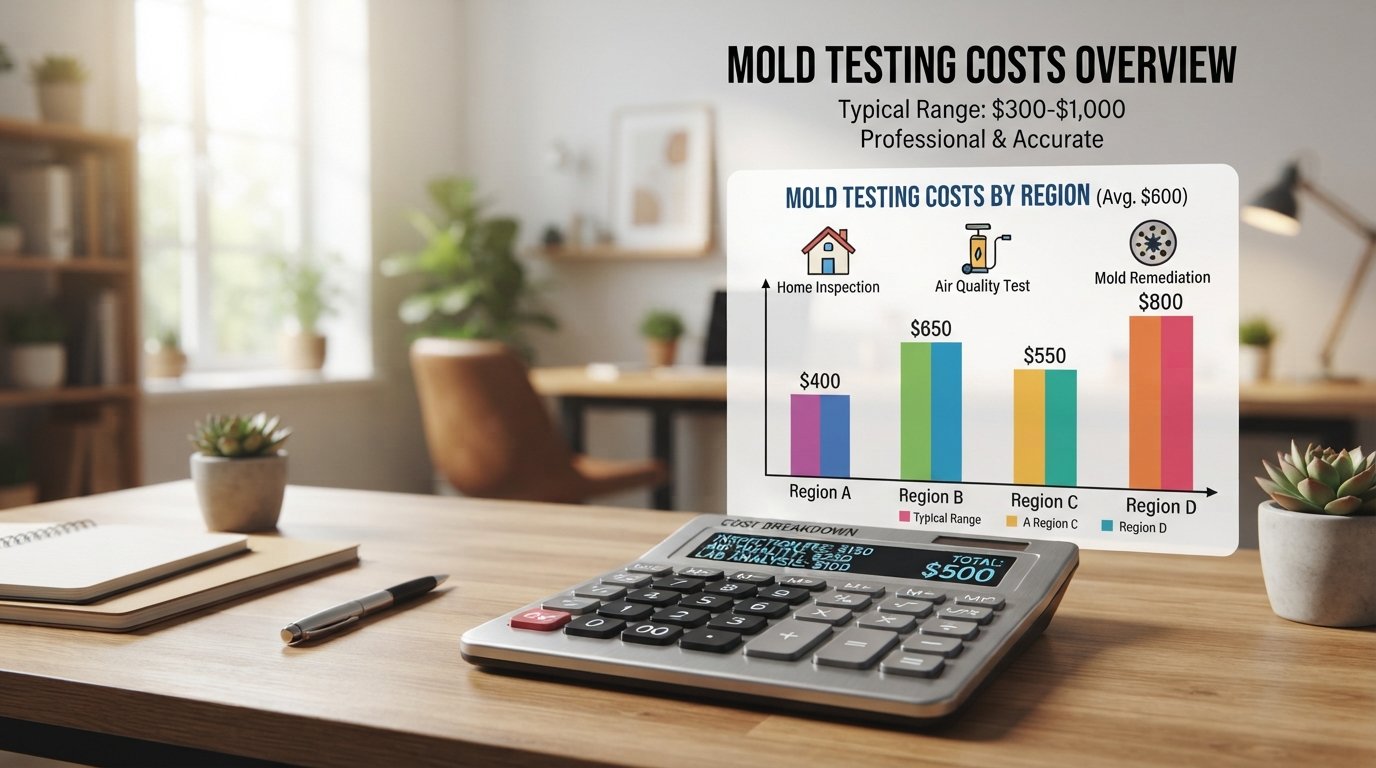
Understanding the expenses associated with a professional assessment can be challenging. According to Angi’s 2026 data, the average inspection fee is around $689. However, many homeowners find themselves paying between $303 and $1,075. This variation often depends on factors like your home’s size and moisture conditions.
In this guide, you’ll discover why these costs differ and what to expect during an inspection. It’s essential to know that a routine assessment is not the same as laboratory analysis. Additionally, neither service guarantees remediation.
We’ll provide insights into warning signs, such as musty odors and visible water damage, that indicate a professional assessment may be necessary. With this knowledge, you can make informed decisions about your home.
Key Takeaways
- The average professional inspection fee is approximately $689.
- Most homeowners pay between $303 and $1,075.
- Home size and moisture conditions affect the final price.
- Routine inspections differ from laboratory testing.
- Warning signs include musty odors and water damage.
Mold testing cost at a glance in 2026
Figuring out what you’ll pay for a professional inspection can be tricky. In 2026, the national average for a mold inspection is around $689. Typically, homeowners can expect to pay between $303 and $1,075.
For smaller homes under 4,000 square feet, the inspection price generally falls between $300 and $400. On the other hand, larger properties can cost anywhere from $700 to $1,000 due to the additional time required for thorough inspections.
Here’s a quick overview of the costs:
| Home Size | Typical Cost Range | Average Cost |
|---|---|---|
| Under 4,000 sq. ft. | $300 – $400 | $350 |
| Larger Homes | $700 – $1,000 | $850 |
| Average Inspection | $303 – $1,075 | $689 |
“For 2026 budgeting, expect a typical inspection price between $303 and $1,075.”
Your final price may vary based on factors like access difficulties or multiple affected areas. Knowing these details can help you prepare for your inspection.
What your mold inspection cost includes
Determining what your professional assessment entails can be complex. A standard visit typically covers several key elements. This includes a visual inspection, moisture readings, and written findings detailing observed conditions.
During the inspection, professionals use moisture meters and specialized cameras to identify potential moisture issues. Basic inspections usually take about two hours, while challenging access or larger areas may extend this time to six hours.
Laboratory testing is often separate from the initial inspection. A complete mold test can add between $250 and $500 to your budget. Additionally, a stain test may incur an extra $150, while a culture test can add around $50.
| Inspection Component | Typical Time | Additional Costs |
|---|---|---|
| Visual Inspection | 2-6 hours | Included |
| Moisture Readings | 2-6 hours | Included |
| Lab Tests | N/A | $250 – $500 |
| Stain Test | N/A | $150 |
| Culture Test | N/A | $50 |
Your final report should include moisture sources, suspected locations, collected samples, laboratory results, and recommended next steps. This comprehensive approach ensures you have all the information needed to address any issues.
Mold inspection vs. mold testing vs. remediation
Navigating the differences between inspection, testing, and remediation can be overwhelming. Each plays a distinct role in maintaining a healthy home environment.
Inspection helps locate potential mold and moisture problems
An inspection focuses on identifying conditions that may lead to mold growth. It typically involves visual checks, moisture meters, and specialized cameras. However, it does not identify every mold species present.
Testing identifies mold types and spore levels
In contrast, testing analyzes air and surface samples. This process helps determine the specific types of mold and their spore levels. It clarifies the extent of contamination in your home.
Remediation removes mold and addresses its moisture source
Remediation goes beyond just removal. It involves correcting moisture sources, repairing damaged materials, and preventing future growth. Typical remediation costs range from $1,150 to $3,400, with extensive cases reaching up to $20,000.
- If black mold, or Stachybotrys chartarum, is suspected, inspections may cost between $600 and $800.
- Testing typically costs $250 to $500 and is essential for understanding the situation.
- Remember, remediation is about comprehensive solutions, not just surface cleaning.
Mold testing prices by sample type
When it comes to understanding the prices associated with different sample types, clarity is key. Various testing methods can impact your overall expenses. Here’s a breakdown of common sample types and their costs.
Surface swab or tape samples
A surface swab or tape sample generally costs $180-$320, although another source lists it at approximately $200-$300 for one visible area. This method helps identify mold in a specific location but doesn’t reveal how many airborne spores circulate through your home.
Air sampling and lab analysis
Air sampling typically ranges from $240-$360, while extensive air testing can reach around $700 if multiple locations require analysis. This method is crucial for understanding the overall air quality in your home.
HVAC system testing as an add-on
HVAC testing generally adds $50-$80 to your total cost. Technicians may use specialized tape inside ducts or filters to capture spores moving through the system. This step is essential for ensuring that your HVAC system isn’t circulating contaminants.
Before comparing prices, ask whether each quoted test includes collection, laboratory analysis, written interpretation, protective equipment, and travel. This will help you make informed decisions about your sampling needs.
Factors that affect your mold testing cost
Evaluating the factors influencing your inspection expenses can help you budget effectively. Several elements contribute to the final price of your professional assessment.
One major factor is the square footage of your home and the number of areas inspected. Larger properties usually require more time because professionals must review additional rooms and suspect areas. High-accessibility locations, like bathroom and kitchen walls, are easier to inspect and generally cost less.
In contrast, low-accessibility areas such as crawl spaces, ducts, and wall cavities can increase labor costs. Inspectors need specialized access and equipment for these hidden spaces. Accessibility can extend an appointment from about two hours for obvious areas to as long as six hours for a thorough assessment.
Additionally, the number of samples and lab tests also impact your expenses. If multiple locations require separate analysis, this can raise your overall inspection cost.
| Factor | Impact on Cost |
|---|---|
| Square Footage | Larger homes typically incur higher costs due to increased inspection time. |
| Accessibility | Hard-to-reach areas may require more specialized equipment and time. |
| Number of Samples | More samples lead to higher lab testing fees. |
Additional inspection costs to budget for
Budgeting for your inspection can be more complicated than it seems. There are various additional expenses you should consider beyond the basic inspection fee.
Extra samples and specialized lab testing
If visible damage appears in multiple rooms or materials, you may need extra samples. This specialized laboratory analysis can significantly increase your bill.
Opening drywall or other materials to investigate hidden mold
Sometimes, you might need to open drywall to check for concealed conditions. This can add up to $700, excluding any replacement work afterward. Removing drywall can also reveal issues like a leaking pipe or damaged framing that must be repaired before rebuilding.
Potential remediation and repair costs
It’s crucial to budget separately for remediation. Standard inspection costs do not cover removal, treatment, repairs, painting, or resurfacing. For many homes, extensive remediation may cost between $1,150 and $3,400, with serious cases reaching approximately $20,000.
When to schedule a mold inspection
Knowing when to arrange a professional inspection is essential for your home’s health. Certain situations can trigger the need for an assessment. Recognizing these signs early can save you from more significant issues later.
After flooding, leaks, or other water damage
Schedule an inspection promptly after flooding or leaks. Damp materials can support mold growth even before visible signs appear. Addressing these issues quickly can prevent more extensive damage.
For musty odors, visible growth, or unexplained moisture
A persistent musty odor or visible discoloration warrants professional attention. Signs like warped walls, cracked paint, and rust should not be ignored. Unexplained moisture can indicate hidden problems that need to be addressed.
Before buying or selling a home
Before making a real estate transaction, an inspection can uncover expensive conditions. This knowledge can affect negotiations and property value. Significant mold damage may reduce a home’s value by approximately 20%-37%.
- Early assessment can help you address moisture before contamination spreads.
- Common growth areas include attics, basements, and around HVAC vents.
- Being proactive can protect your investment and maintain a healthy living environment.
What to expect during a professional mold inspection
Gaining insight into the inspection process can empower you as a homeowner. Understanding how inspectors operate can help you feel more prepared. Here’s what you can expect during a professional assessment.
How an inspector checks for growth and moisture
Your inspector will review visible conditions, using moisture meters and specialized cameras to check likely growth locations. Common areas examined include:
- Attics
- Basements
- Crawl spaces
- HVAC vents
- Windows and fireplaces
How samples are collected and sent to a lab
When sampling is appropriate, the inspector collects air or surface material. These samples are then sent to a laboratory for analysis. This step is crucial for identifying potential issues.
When you can expect results and recommendations
Timing for results depends on the selected laboratory process. Be sure to ask whether the quote includes rush service, interpretation, and written recommendations. A professional report should connect observed conditions with moisture sources, likely contamination areas, laboratory findings, and practical next actions.
“With over 30 years of experience, Deane Biermeier emphasizes the importance of thorough inspections.”
How to compare mold inspection quotes
Understanding what different inspection quotes include can be quite tricky. To make informed decisions, you need to know what to look for in each estimate. Start by checking what the inspection and testing fees cover.
Check what the inspection and testing fees cover
Each quote should detail what services are included. This typically covers the visual assessment, moisture readings, equipment used, and a written report. Don’t forget to ask about travel, sample collection, and laboratory interpretation as well.
Ask about sample limits, lab fees, and add-on charges
It’s crucial to inquire how many locations are included in the quote. Additional samples can significantly increase the final invoice. Confirm whether charges for air analysis, surface analysis, HVAC checks, and rush laboratory services are separate.
Here’s a quick overview of common fees:
| Service Type | Typical Cost Range |
|---|---|
| Mold Testing | $250 – $500 |
| Air Testing | $240 – $360 |
| HVAC Testing | $50 – $80 |
Request an itemized explanation for any HVAC add-on to understand what the technician will examine. Being thorough in your comparisons can help you avoid unexpected costs.
“A well-informed homeowner is better prepared for any surprises.”
How to prepare and keep your inspection costs manageable
How you prepare for your inspection can significantly influence your overall costs. Taking the time to organize your space and document issues can help your inspector work efficiently.
Before the appointment, make sure to:
- Clear furniture and clutter from suspect spaces so your mold inspector can reach walls, floors, ceilings, and utilities efficiently.
- Write down when odors, leaks, condensation, or visible stains appeared, and photograph affected locations for the inspector’s review.
- Unlock or clear access to attics, basements, crawl spaces, utility rooms, HVAC equipment, and other areas that may otherwise require extra time.
Additionally, when comparing quotes, do so carefully. It’s essential not to skip necessary sampling just to make the initial estimate look cheaper. Preparing thoroughly can help the professional understand how much mold may be present without spending appointment time moving household belongings.
Choosing your next step after getting results
Deciding what to do next after receiving your inspection results can be a daunting task. You might feel uncertain about whether to seek remediation or get further assessments. Understanding your options is essential for protecting your home.
When to seek remediation or further assessment
If your results show significant contamination, persistent moisture, or hidden mold, it’s time to consult a qualified remediation professional. They can evaluate the full scope of the problem and provide guidance on necessary actions.
Remediation should not only address visible issues but also the underlying moisture sources and any damaged materials. This comprehensive approach reduces the chance of recurrence.
- Typical remediation runs between $1,150 and $3,400, while extensive cases may reach approximately $20,000.
- If your results are unclear or inconsistent with what you observe, seek further assessment before making costly decisions based on limited data.
- Always keep your inspection report, laboratory findings, photographs, repair records, and remediation documentation for future maintenance or real estate needs.
“A thorough approach to remediation can save you from more significant problems down the line.”
Conclusion
A clear quote and timely action can help you protect your home and avoid services you do not need. In 2026, professional inspections usually range from $303 to $1,075, while Angi reports a national average of $689.
Your final bill depends on home size, access, moisture conditions, sample count, lab work, and add-ons. Keep inspection, testing, and remediation as separate line items, since each serves a different purpose.
Before booking a mold inspection, clear access to problem areas and request an itemized estimate. This makes quotes easier to compare while preserving useful analysis. If you spot water damage, musty odors, visible growth, or signs of a hidden issue, contact a qualified professional soon. Early guidance may help limit repairs later.