Surprising fact: FEMA says starting cleanup within 24–48 hours can cut total costs and limit long-term harm.
You’ll read a clear guide that helps you face recovery after a blaze. This short intro shows how a prompt damage assessment and fast action protect walls, items, and the structure of your home.
Professional teams coordinate smoke removal and water cleanup so hidden hazards don’t worsen. A thorough assessment identifies the extent and structural issues that need repair.
Knowing the sequence—inspection, cleanup, and repair—helps you manage insurance claims and gather the right information. Quick help reduces odors, soot, and risks, and gets your property back to normal sooner.
Key Takeaways
- Start cleanup within 24–48 hours to lower costs and prevent permanent staining.
- A damage assessment reveals structural issues and guides repair work.
- Professionals handle smoke removal, water cleanup, and soot control.
- Timely action helps homeowners with insurance claims and documentation.
- Each part of the recovery aims to protect your building and belongings.
Understanding the Fire Damage Restoration Process Step by Step What to Expect
Recovering a safe, clean home starts with a clear map of the tasks ahead. A thorough assessment will identify hidden soot in vents, cracks, and behind walls. This lets professionals prioritize work and limit lingering odors.
Why coordination matters: smoke and water cleanup must run at the same time. If one is delayed, secondary issues can spread through your building and raise costs.
You should expect crews to document losses for your insurance and to explain timelines for cleanup and repairs. That guidance helps you manage stress and make informed choices.
- Simultaneous smoke and water removal prevents secondary spread.
- Soot and odors are removed from walls and items to make rooms safe.
- A property assessment sets priorities and helps with claims.
For details on handling lingering smoke in living spaces, see this short guide: property smoke tips.
Immediate Safety and Property Stabilization
Right after an incident, your top focus is safety and keeping the site secure so further loss stops. Quick action helps crews begin a proper fire damage restoration while protecting personal property and the building structure.
Securing the Perimeter
Securing the perimeter is the first protective move. Emergency board-up services usually cost between $200 and $800 to cover broken windows and doors.
Professional teams often add temporary fencing and roof covers so your property stays closed off during the assessment. This limits theft and prevents weather from increasing loss.
Preventing Secondary Damage
Stopping secondary issues means removing standing water, stabilizing weak floors and walls, and controlling soot and smoke migration. These actions reduce water damage and lower long-term repair costs.
- Document security measures and cleanup for your insurance within 48 hours.
- Make sure homeowners do not re-enter until a qualified service clears the structure.
- Every early step helps the overall damage restoration effort and speeds recovery.
Comprehensive Damage Assessment
A careful, systematic inspection reveals hidden threats that can raise repair costs. This assessment is the core of any solid damage assessment.
A structural engineer or qualified restoration professional will check support beams, foundations, and load points for compromised sections. They also evaluate smoke, soot, and water effects on walls and framing.
Experts document the condition of your home and items with photos and notes. That information helps with your insurance claim and guides the recommended work.
“Accurate records and a full inspection keep surprises low and costs clearer.”
- Identify structural damage and weak supports.
- Decide which items are salvageable and which must be removed.
- Create a detailed plan for restoration services and safe cleanup.
Homeowners should expect a thorough walkthrough and clear timelines. This step ensures safety before cleanup and reconstruction begin and sets the path for successful fire damage restoration.
Water Extraction and Structural Drying
Standing water and trapped moisture can undermine repairs unless removed fast. In the fire damage restoration phase, quick water removal helps prevent mold and ongoing loss.
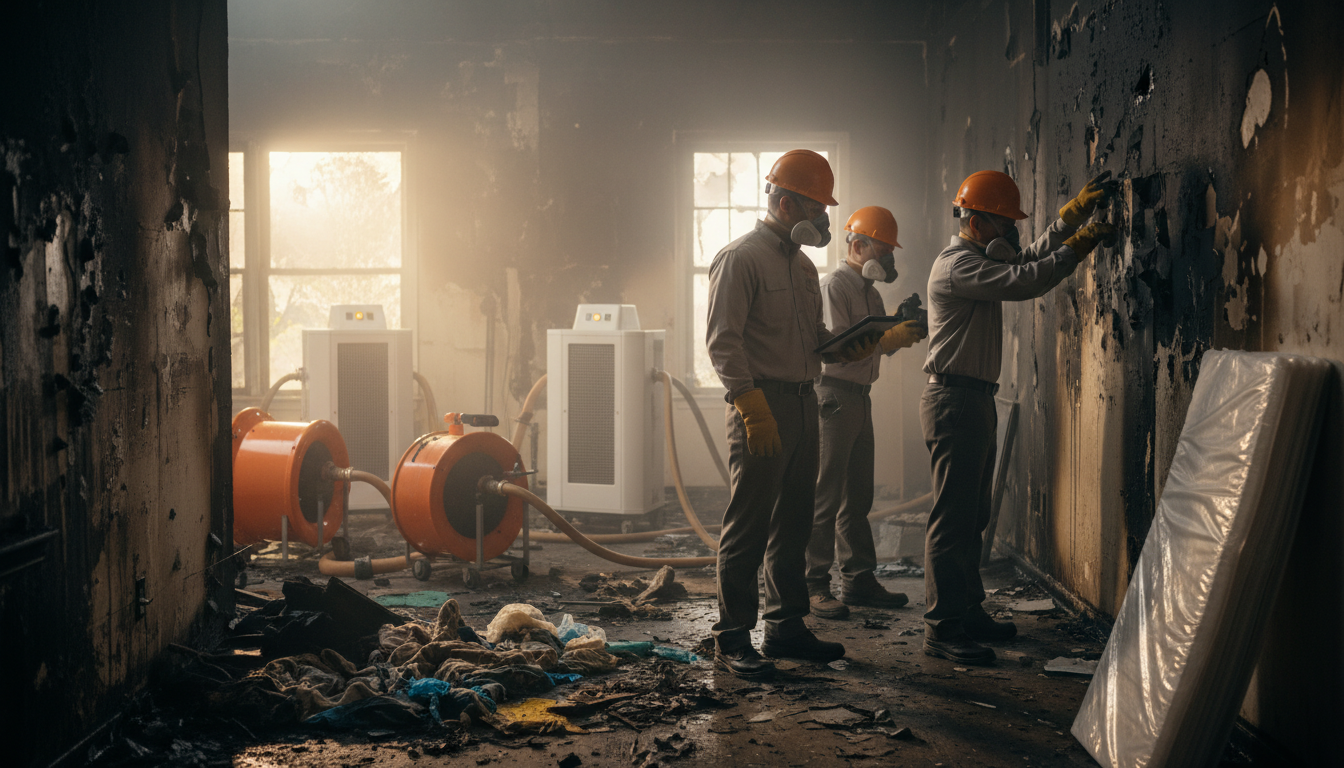
Professional teams use industrial-grade pumps to pull out pooled water left after firefighting. High-powered dehumidifiers and air movers then lower humidity and speed drying.
Why this matters: thorough water cleanup prevents mold growth and prepares structural elements for the next work, like soot and smoke remediation.
Dehumidification Techniques
- Extract standing water with truck-mounted pumps and wet vacuums.
- Place commercial dehumidifiers and axial air movers for even drying.
- Monitor moisture with meters and log readings until levels are normal.
| Equipment | Primary Use | Typical Run Time |
|---|---|---|
| Industrial pump | Remove large volumes of standing water | Hours to a day |
| Commercial dehumidifier | Lower relative humidity in rooms and cavities | Days to a week |
| Air mover | Increase airflow for faster evaporation | Continuous during drying |
Every stage is monitored so your home is fully dry and safe for reconstruction. Proper work here keeps the overall damage restoration on schedule and helps prevent further water damage.
Smoke and Soot Remediation
Removing smoky odors and fine soot particles protects indoor air and vulnerable lungs. The EPA warns that tiny smoke particles can reach deep into the respiratory system, so quick, thorough cleanup is critical for your household.
Thermal fogging uses heated deodorants that reach cracks and fabrics. Technicians apply fogging after surfaces are cleaned to neutralize lingering smoke odors at the molecular level.
Ozone Treatment
Ozone units break down stubborn odors in unoccupied rooms. Pros use controlled cycles and strict safety protocols so your home and belongings are safe when re-entry occurs.
HVAC Decontamination
Cleaning ductwork and coils prevents soot from recirculating through living areas. Technicians also replace filters and sanitize vents so air quality improves fast.
- Soot removal from walls, carpets, and items uses specialized vacuums and chemical cleaners.
- Professional remediation combines fogging, ozone, and HVAC work for full odor removal.
Tip: Document all remediation steps for insurance and future care. Proper smoke and soot cleanup restores air and reduces health risk while you recover from fire damage restoration.
Cleaning and Sanitizing Personal Belongings
Your belongings tell a story — and many can be saved with careful cleaning and sanitizing. Restoration teams start by tagging furniture, clothing, and important papers. They decide which items can be cleaned on-site and which need a specialized facility.
Professional teams use targeted methods to remove smoke soot and neutralize smoke odors from carpets, upholstery, and fabrics. They also sanitize surfaces so your home is safe for your family.
Items that show water damage or heavy soot may go to an off-site lab for deep cleaning. That keeps delicate pieces from getting worse during local cleanup.
- Technicians document every item and every action to help with insurance claims.
- Specialty services include ultrasonic cleaning for ceramics and freeze-drying for documents.
- Final inspections check walls, textiles, and furniture for lingering residues.
Good remediation brings many items back to life and helps your property feel like yours again. Accurate records, careful handling, and timely work speed recovery after fire damage restoration.
Structural Repairs and Reconstruction
Rebuilding work focuses on safety, code compliance, and materials that reduce future risk.
Contractors replace weakened floor joists and roof rafters and check every beam with moisture meters. They run strength tests so your home meets current safety standards.
Walls, floors, and support beams get repaired or replaced if they show structural damage. Electrical and plumbing systems that suffered from firefighting water are updated during reconstruction.
Selecting Fire-Resistant Materials
Choosing better materials can slow future fires and protect family members. Pros often recommend fire-rated drywall, treated framing, and noncombustible cladding for high-risk areas.
Building Code Compliance
Inspections happen at each major stage. Permits and final approvals ensure your property is safe and legally sound when you move back in.
- Licensed crews document repairs for your insurer and for local code officials.
- Every repair aims to restore your property to its pre-loss condition while adding long-term protection.
“Thorough rebuilds focus on structure, systems, and safer materials so you can return with confidence.”
Final Inspection and Quality Assurance
The closing inspection ties together all repairs, checks air quality, and verifies safety for reoccupancy.
During the walkthrough, technicians and your contractor review every room. They confirm that smoke odor and water issues have been resolved.
Quality assurance also includes checking structural repairs, finishes, and systems such as HVAC and plumbing. Any lingering items are logged and assigned for correction.
“A thorough final report makes it easier for you and your insurer to close the claim and move forward.”
The final report records the extent damage findings and notes readiness for occupancy. Insurers often require that report before they authorize final payment for services.
- Walkthrough verification of cleaned surfaces and odor control.
- Confirmation of completed structural and system repairs.
- Documentation for insurance and a closure checklist for your records.
| Inspection Item | What Inspectors Check | Outcome |
|---|---|---|
| Air quality | HVAC, vents, lingering soot, and odor levels | Pass/Fail with remediation notes |
| Structural work | Beams, joists, walls, and finished surfaces | Confirmed stable and code-compliant |
| Final cleaning | Surfaces, fabrics, and salvageable belongings | Cleared or scheduled for extra treatment |
| Insurance documentation | Photos, reports, and signed checklist | Approved for claim closure |
Result: you get clear, signed verification that your home and property are safe and ready for daily life again. Typical timelines vary; small incidents often finish in 6–8 weeks, while larger losses can take months.
Conclusion
A successful recovery relies on timely action, clear documentation, and trained crews. Follow the restoration process, keep careful records for insurance, and trust experienced teams to handle smoke, soot, and water issues.
Michaelis Corporation has offered expert fire restoration help for 39 years and guides homeowners through assessment and cleanup. Good assessment and thorough cleanup form the foundation of long-term repair and safe re-entry.
With proper documentation and skilled crews, your property can be rebuilt to pre-loss condition. Recovery is possible, and many families rebuild a stronger, safer home after fires.