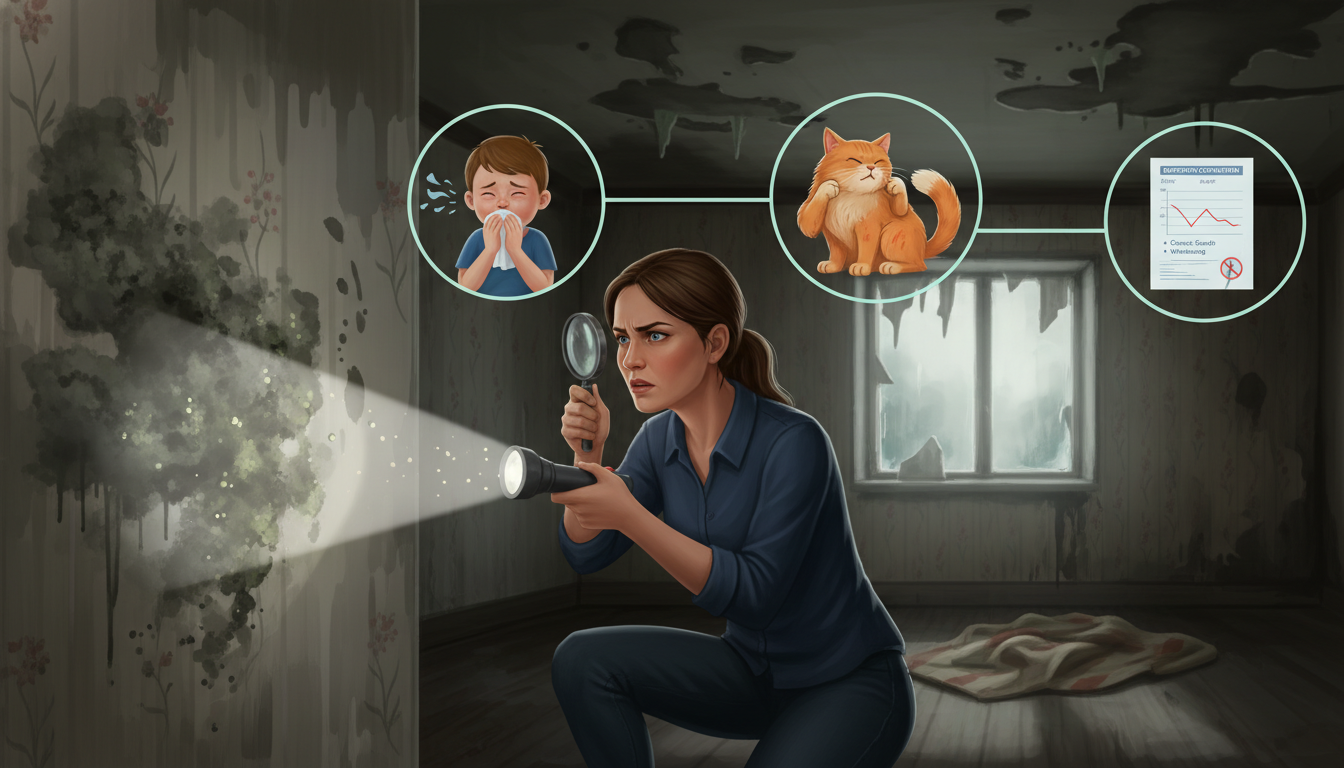
Surprising fact: More than 50% of U.S. houses show hidden fungal growth at some point, often long before physical issues appear.
You may feel fine one week and notice odd sniffles the next. That shift can come from unseen spores that affect breathing and comfort.
Quick action preserves structure and lowers health risks. Spotting early cues helps you avoid large repairs and recurring trouble.
Learn which visual hints, smell changes, and minor reactions often point to a growing problem. Stay alert, document changes, and seek simple testing when something feels off.
Key Takeaways
- Hidden fungal growth is common across many U.S. residences.
- Minor breathing issues or persistent congestion can be an early hint.
- Distinct musty odors rarely resolve on their own.
- Early detection saves money and protects health.
- When unsure, simple inspection and testing bring clarity.
Understanding the Basics of Indoor Mold
Tiny spores float through air and settle on damp corners long before you notice a problem. That quiet start explains why early checks matter. You should know the simple factors that let fungal growth take hold.
What is mold
mold is a fungal growth, not bacteria, and it spreads by releasing mold spores into the air. It needs moisture, organic material, and a warm environment to reproduce.
“Mold grows fastest in temperatures between 77 and 86 degrees Fahrenheit.”
Even small water leaks or high humidity create ideal conditions. When moisture persists, the whole ventilation system and connected areas can become affected.
The difference between mold and mildew
Not all fungal growth looks the same. Mildew is a flat, powdery type that often appears on tile and in bathrooms.
- Mildew is one type of mold and usually easier to clean.
- Other types of mold can penetrate porous materials and cause lasting issues.
- Controlling humidity and repairing water sources limits growth and protects health.
“Mold is a fungal growth and not a type of bacteria.”
How to Tell if Mold Is Dangerous in Your Home Signs and Symptoms
Not all health shifts start outside; indoor spores can quietly affect breathing and comfort.
Notice breathing changes. Persistent coughing, frequent sneezing, or unexplained congestion often point toward prolonged exposure. Track when you feel better — leaving the house for a few hours can reveal a link.
Look for visual cues. Discoloration on walls, ceiling stains, or black spots near a plumbing run often mean a hidden moisture source. Those areas deserve closer inspection.
“If symptoms ease away from the living space, consider an indoor air check.”
The table below compares common observations with likely actions you can take right away.
| Observation | Likely Cause | Immediate Action |
|---|---|---|
| Persistent cough or sneezing | Long-term exposure to spores | Ventilate rooms; document episodes |
| Musty odor | Hidden damp area | Inspect closets, basements; dry surfaces |
| Wall or ceiling stains | Water intrusion | Find leak; repair and replace damaged material |
Common Areas Where Mold Growth Hides
Certain rooms and structural gaps quietly collect moisture, then let spores flourish. You should focus checks on hidden spots where damp lingers, poor ventilation exists, or leaks have occurred.
Attics and basements
These places trap heat, cold, moisture. Poor airflow lets fungal growth take hold behind insulation, under floors, or inside rafters.
“Use a flashlight to inspect attics, basements, and under sinks,” recommends Michael Rubino.
Kitchens and bathrooms
High humidity near sinks, showers, or dishwashers creates an inviting environment. Run vents after showers; repair leaking pipes quickly.
Behind walls and wallpaper
Darren Hudema notes that out-of-sight wall cavities often host growth after water damage. Stains on ceiling or drywall may signal hidden sources.
Quick checks you can do:
- Look under sinks, around pipes for wet spots or discoloration.
- Scan ceilings, baseboards, floors for odd stains or soft drywall.
- Keep humidity levels down with a ventilation system or dehumidifier.
Visual Indicators of a Moisture Problem
Tiny beads of water on window glass can hint at a larger moisture problem nearby. Condensation often comes before visible mold growth and is an early warning you should not ignore.
“Condensation on windows is a sign that you may have a mold problem.”
Look for clear surface changes. Bubbling paint, peeling wallpaper, or warped floors often mean moisture sits behind the finish. That trapped damp can feed fungal growth.
“Tide lines on walls usually point to recurring water damage.”
- Dark or discolored patches on the ceiling or drywall suggest water has penetrated material.
- Concentric rings or tide lines mean repeated pooling in the same spot.
- Black, green, or white patches with fuzzy or slimy texture point toward active growth.
| Observation | Likely Meaning | Suggested Action |
|---|---|---|
| Window condensation | High indoor humidity or poor ventilation | Improve airflow; run a dehumidifier |
| Stains on ceiling/drywall | Water intrusion from above or leaks | Find leak; repair and replace damaged drywall |
| Peeling paint or warped floors | Moisture trapped behind surface | Dry area thoroughly; check subflooring |
| Tide lines or concentric rings | Recurring water pooling | Investigate source; fix plumbing or flashing |
Using Your Senses to Detect Hidden Mold
Your nose and simple observations often find trouble before tools do. A musty scent can mean tiny organisms are releasing volatile compounds into the air. Tony Abate explains that those smells come from MVOC — microbial volatile organic compounds.
Identifying the musty odor
Follow a lingering, earthy smell. If the scent appears when the HVAC system runs, mold spores may also be moving through vents and ducts.
Check likely areas such as the basement, behind drywall, and bathrooms for damp patches or leaks. Pay attention under carpets and behind furniture; growth can happen out of sight.
“Those odd smells can mean active growth and multiplication,” — Alex Stadtner
If you get eye or nose irritation when inside, that exposure could mean mold present at levels that affect health. Document the times you notice the scent and match them with household activities.
- Use your nose to trace the source.
- Inspect pipes, ceilings, and floors near water sources.
- Fix leaks and reduce humidity to lower the chance of future issues.
How Mold Exposure Affects Your Health
Exposure to airborne spores can change breathing within days for some people.
Short-term reactions often look like allergies. You may get coughing, sneezing, itchy eyes, or persistent nasal congestion after time spent near damp areas.
Dr. Kelly Johnson-Arbor notes that these fungal triggers can also cause wheezing and shortness of breath in people with asthma. Track when you feel better outside the house to spot a link.
The CDC warns that people with weakened immune systems face higher risks. For them, exposure may lead to more serious infections rather than simple allergy-like symptoms.
Keep notes about where reactions happen and what tasks you did before they began. That record helps doctors decide whether testing or treatment is needed.
- Exposure to spores can worsen existing respiratory conditions.
- Itchy, red eyes and runny nose are common early symptoms.
- If you have immune issues, seek medical advice promptly after exposure.
Distinguishing Between Mold Poisoning and Mold Toxicity
Not every exposure leads to lasting illness; some reactions clear quickly while others build over months.
Acute reactions are short-term and often obvious. You might get sudden coughing, sneezing, or eye irritation after entering a damp room. These responses are usually allergic or toxic reactions to airborne spores and often improve when you leave the space.
Chronic systemic responses develop slowly and can be much harder to link to a source. Megan McElroy of Parsley Health explains that toxicity often involves systemic inflammation that affects multiple body systems over time.
You may also notice brain fog, fatigue, or tingling in extremities with long-term exposure. Individuals with a weakened immune system can struggle to clear mycotoxins produced by certain types and may face more severe issues.
- Short-term: coughing, sneezing, watery eyes.
- Long-term: cognitive changes, ongoing fatigue, joint or nerve sensations.
- When in doubt, seek professionals who use proper methods for testing mycotoxin exposure.
For a practical next step, consult a reputable inspection guide like home mold inspection so you can match observed reactions with clear testing pathways.
When to Call in Professional Help
Widespread staining or soft materials that return after drying often signal a larger issue. The EPA recommends professionals handle a problem covering more than 10 square feet.
If you notice persistent symptoms after cleaning, or the issue spreads despite efforts, call an expert. A licensed assessor can find the moisture source and suggest a qualified remediation team.
Who should contact a pro:
- You find growth across multiple areas or larger than 10 square feet.
- Household members have ongoing symptoms after exposure that do not clear.
- You rent and see recurring water leaks or black patches; ask your landlord for an immediate inspection.
- You suspect hidden leaks in pipes or the ventilation system that feed the growth.
“A licensed assessor can identify root causes and recommend safe cleanup methods.”
| Scenario | Why a Professional Helps | Expected Outcome |
|---|---|---|
| Area > 10 sq ft | Containment and proper removal reduce spore spread | Safe remediation and repaired surfaces |
| Persistent health reactions | Testing determines exposure levels and guides medical advice | Clearer diagnosis and targeted cleanup |
| Hidden leaks or HVAC concerns | Assessors locate moisture sources; technicians fix systems | Long-term prevention and lower recurrence |
Practical Steps for Preventing Future Growth
A steady, dry indoor climate makes it hard for spores to survive and multiply. Start with small, consistent habits that cut moisture and lower exposure risks. These actions protect building materials and reduce allergy reactions for residents.
Controlling humidity levels
Keep indoor relative humidity below 50 percent. Use a dehumidifier in basements and damp spaces. The CDC recommends running ventilation fans in the bathroom and kitchen during and after use.
Find and repair any water leaks quickly. Wet carpets, rugs, or padding exposed to water should be removed and replaced, since they often become persistent sources of growth.
When cleaning affected areas, wear a mask and gloves to shield your eye and nose from spores. If problems persist across rooms or return after drying, consult a licensed assessor.
- Run fans during showers and dishwashing; dry surfaces within 24–48 hours.
- Use mold inhibitors when painting in high-risk areas like the bathroom.
- Keep vents, gutters, and HVAC filters clean so the system moves air and moisture effectively.
| Action | Why it helps | Quick tip |
|---|---|---|
| Dehumidify | Reduces moisture that lets spores grow | Target 40–50% relative humidity |
| Fix leaks fast | Stops water from feeding growth | Check under sinks and near appliances |
| Ventilate bathrooms/kitchens | Removes moist air at the source | Run fans 20 minutes after finishing |
Conclusion
Small, steady steps often stop a cycle that harms structures and breathing.
Spot early clues and act quickly. Identifying mold growth helps protect family health and prevents costly repairs. Most problems trace back to a persistent moisture source; fixing that root cause ends repeat episodes.
If you notice persistent symptoms or unusual reactions after time spent inside, consult a medical professional. Document episodes and areas where exposure seems linked to symptoms.
Take simple actions now: control humidity, repair leaks, and keep vents clean. Stay vigilant, act fast, and you will cut the chance of toxic mold impact on your living space.