Experiencing a fire in your home can be overwhelming. Understanding the fire restoration timeline is crucial for any property owner navigating the aftermath. The process involves several steps that ensure your property is returned to a safe condition. Typically, the total restoration time for most residential properties falls within a 2-4 month range, depending on the severity of the damage.
When fire damage occurs, you can expect the timeline to vary significantly. Each incident is unique, and having a clear roadmap can help you understand how the restoration process unfolds. Professional guidance can ease the emotional stress of recovery while assisting you in coordinating with your insurance provider.
The initial phase focuses on securing your property to prevent further damage. By knowing what to expect, you can better manage the situation and work effectively with restoration professionals. In this article, we will explore how each stage contributes to restoring your home safely.
Key Takeaways
- Understanding the timeline is essential for recovery after a fire.
- Restoration processes vary based on the severity of the damage.
- Professional help can streamline the recovery process.
- Securing your property is the first step in the restoration process.
- Clear communication with your insurance provider is crucial.
- Each stage of restoration plays a vital role in the overall recovery.
Overview of Fire Damage and Initial Safety Measures
Facing the consequences of a fire can be a challenging experience. The first step is understanding how to respond effectively. Emergency response teams typically arrive within 24-48 hours after the fire department clears the scene. Their role is to assess and mitigate damage, ensuring your property is safe.
During this crucial phase, professionals will evaluate the structural integrity of your home. This assessment helps prevent further issues before any restoration work can safely begin. Securing your property is essential, which involves boarding up windows and doors. This action protects against unauthorized access and shields your home from environmental elements like rain.
Emergency mitigation also includes extracting water from firefighting efforts. This step is vital to prevent secondary damage that could complicate the restoration process. Safety should be your top priority; allow experts to evaluate electrical systems before restoring power. Additionally, initial ventilation helps reduce smoke concentration, improving air quality for anyone entering the building.
Protecting your personal belongings from further damage is another key aspect of the emergency response. Proper documentation of your property’s condition during this phase is crucial for your insurance claim and future restoration work. For more information on managing smoke damage, visit this guide.
| Emergency Response Actions | Purpose | Timeframe |
|---|---|---|
| Assess Structural Integrity | Prevent further damage | 24-48 hours |
| Board Up Windows and Doors | Secure property | Immediately |
| Water Extraction | Prevent secondary damage | As soon as possible |
| Evaluate Electrical Systems | Ensure safety | Before power restoration |
Fire Restoration Timeline: From Emergency Response to Final Inspection
Dealing with the aftermath of a fire can be a daunting journey. The fire restoration timeline is a structured sequence of events designed to return your property to its pre-fire condition efficiently. It typically spans 2-4 months, but significant structural damage can extend this period.
Immediate mitigation is the first step in this process. It focuses on preventing secondary damage, such as mold growth or structural collapse. This phase is crucial to ensuring your home is safe and sound.
Coordinating with your insurance company early on is essential. Doing so helps keep the restoration timeline on track and avoids unnecessary delays. Obtaining necessary permits is also part of the process, which can influence how long the entire project takes to complete.
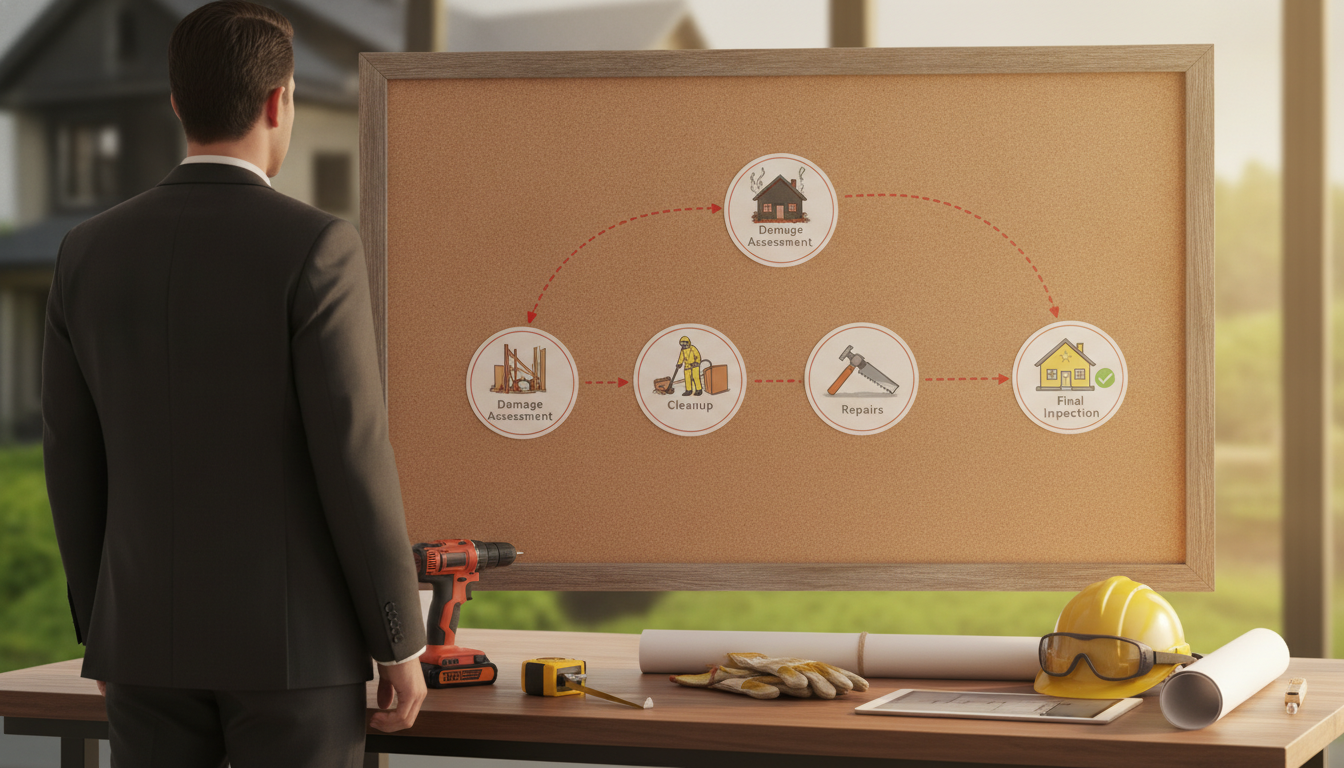
Expect the timeline to include specific phases like assessment, cleanup, structural repairs, and final inspection. Effective communication between your insurance adjuster and the restoration team is vital for maintaining a smooth and predictable timeline.
Comprehensive Damage Assessment and Detailed Planning
The aftermath of a fire often leaves you feeling lost and unsure of the next steps. A thorough damage assessment is essential to guide the restoration process. This assessment helps ensure that no hidden issues are overlooked during planning.
Professionals will document every instance of fire smoke and water damage. This creates a clear picture for your insurance claim adjusters. Developing a complete restoration scope involves identifying all materials and labor required to fix the damage caused by the fire.
A detailed plan prevents costly change orders and delays later on. Hidden damage in walls and attics is often identified during this assessment phase, ensuring a thorough and complete restoration. The restoration scope serves as a roadmap for the entire project, guiding the team through each necessary repair and cleaning task.
Accurate documentation of fire damage is crucial for securing the necessary approvals from your insurance company to proceed with work. By planning carefully, you ensure that the restoration process addresses both visible and concealed damage effectively and safely.
| Assessment Actions | Purpose | Outcome |
|---|---|---|
| Document Structural Damage | Create accurate restoration scope | Clear understanding for claims |
| Identify Hidden Issues | Ensure thorough planning | Prevent future complications |
| Outline Materials and Labor | Plan restoration process | Streamlined execution |
| Secure Insurance Approvals | Proceed with work | Timely restoration |
Effective Fire Cleanup: Soot, Smoke, and Water Damage Mitigation
Recovering from a fire can feel like navigating a maze. The cleanup process is essential for restoring your home. It involves specialized techniques to tackle soot, smoke, and water damage effectively.
Debris removal is the first step in this process. It ensures that all unsalvageable materials are disposed of properly. Here are some key aspects of the cleanup:
- Effective techniques: Specialized methods are required to remove soot and smoke residue from walls and ceilings.
- Water extraction: This is vital since firefighting efforts often leave significant moisture behind.
- Drying out: Professionals use industrial-grade dehumidifiers and air movers for 2-5 days to dry the structure completely.
- Smoke and soot cleanup: This phase typically takes 3-7 days, depending on the extent of the damage.
- Mold prevention: Proper water damage mitigation helps prevent mold growth, a common issue after such incidents.
Completing the cleanup is crucial for preparing your property for the structural repairs that follow. Understanding this process can ease the stress of recovery.
Rebuilding and Structural Repairs After Fire Damage
Reconstructing your home after experiencing a blaze involves careful planning and execution. This phase can take anywhere from 1-6 weeks or even longer, depending on the extent of the damage.
Structural repairs are often the most time-consuming part of the process. They include replacing essential elements like framing, drywall, and damaged systems. Licensed professionals are crucial for restoring electrical and HVAC systems to ensure they meet current safety codes.
Replacing insulation and drywall is another critical step. This part of the process requires multiple coats and drying time to ensure everything is properly set. You should anticipate that structural repairs will take between 1-6 weeks, depending on the severity of the damage to your home.
Restoring HVAC systems is vital for removing lingering smoke particles. These particles can circulate through your living space if not addressed. After completing structural repairs, final safety checks are performed to ensure your building is ready for the finish work phase.
Experienced contractors manage the structural repairs process. They ensure that all work complies with local building codes and regulations. By focusing on quality structural repairs, you ensure the long-term stability and safety of your property after the damage.
Finish Work and Odor Remediation for a Fresh Start
Transforming your home after a disaster requires a careful touch. The finish work is a crucial phase that brings your property back to life. This process typically takes about 1-2 weeks to ensure your space is safe and ready for you.
During this phase, several important tasks are completed:
- Finish work: This includes painting, flooring installation, and placing new fixtures, making your house feel like home again.
- Final cleaning: A thorough cleaning ensures that every corner is dust-free, creating a welcoming environment.
- Odor remediation: Techniques like thermal fogging or ozone treatment are used to eliminate any lingering smoke odors.
- Flooring installation: This is carefully managed to match the existing aesthetic of your home.
- Restoration of personal belongings: Often done alongside finish work to ensure everything is ready for your return.
- Attention to detail: Completing the finish work meticulously guarantees that your property is fully restored to its original condition.
By focusing on these steps, you can expect a fresh start in your home, free from the traces of past damage.
| Finish Work Tasks | Purpose | Estimated Timeframe |
|---|---|---|
| Painting | Restore aesthetics | 1 week |
| Flooring Installation | Enhance comfort | 1 week |
| Final Cleaning | Ensure safety | 1 week |
| Odor Remediation | Neutralize odors | 1 week |
Factors That Influence Your Restoration Timeline
Navigating the complexities of home damage can be a stressful experience. Several key factors significantly impact your restoration timeline. Understanding these can help you manage expectations and prepare for the recovery process.
Extent of Damage: The severity of fire, smoke, and water damage is one of the primary factors determining the overall timeline. More extensive damage typically requires more time for cleanup and repairs.
Insurance and Permitting: The processing of insurance claims and negotiations about the scope of work can either speed up or delay your restoration. Delays in obtaining necessary permits can also extend the timeline, especially if local building departments are busy.
Weather Conditions: Weather can impact your restoration timeline, particularly if your property is not secure. Rain or snow can cause further damage if the building envelope is compromised.
Property Size and Complexity: The size and layout of your home can affect how much time is needed for both cleanup and reconstruction. Larger or more complex properties often take longer to restore.
Material Availability: The availability of materials, such as custom cabinetry or specific flooring, can cause delays. Discuss these factors with your restoration professionals to get a realistic estimate of your specific timeline.
By understanding these factors, you can better prepare for potential challenges during the recovery process. Remember, “Preparation is the key to success.”
Tips to Expedite Your Fire Damage Restoration Process
Recovering from a significant property incident can feel like an uphill battle. However, there are effective ways to speed up the recovery process. Selecting the right restoration professionals is crucial. They can help you navigate the complexities of the process and ensure quality results.
Acting quickly is essential. You should reach out to experts within the first few hours after the incident. This allows them to begin the mitigation process immediately, reducing further damage. Experienced restoration professionals in regions like Northern New Jersey and Pennsylvania’s Capital Region are well-equipped to handle the challenges of fire damage.
Here are some quick actions you can take:
- Prompt insurance filing: This can save you months of waiting during the recovery process.
- Clear communication: Stay in touch with your team in the South Jersey Shore area to avoid unnecessary delays.
- Choose qualified professionals: Ensuring the work is done correctly the first time helps avoid future repair needs.
- Proactive steps: Taking action now can significantly reduce the time you spend away from your home or business.
Conclusion
Recovering from damage can often feel like a winding road filled with uncertainties. The fire restoration timeline is a complex journey, but understanding each phase helps you navigate the recovery process with confidence.
Whether your project takes a few days or several months, professional support is key to a successful outcome. By staying informed about the fire restoration timeline, you can better manage your expectations and coordinate with your insurance provider.
Remember that quality work takes time, and rushing the process can lead to issues requiring more repairs later. If you are currently facing damage, reach out to experienced professionals to begin your restoration timeline as soon as possible.
Your commitment to the process will ensure that your property is returned to a safe and comfortable state for your future.