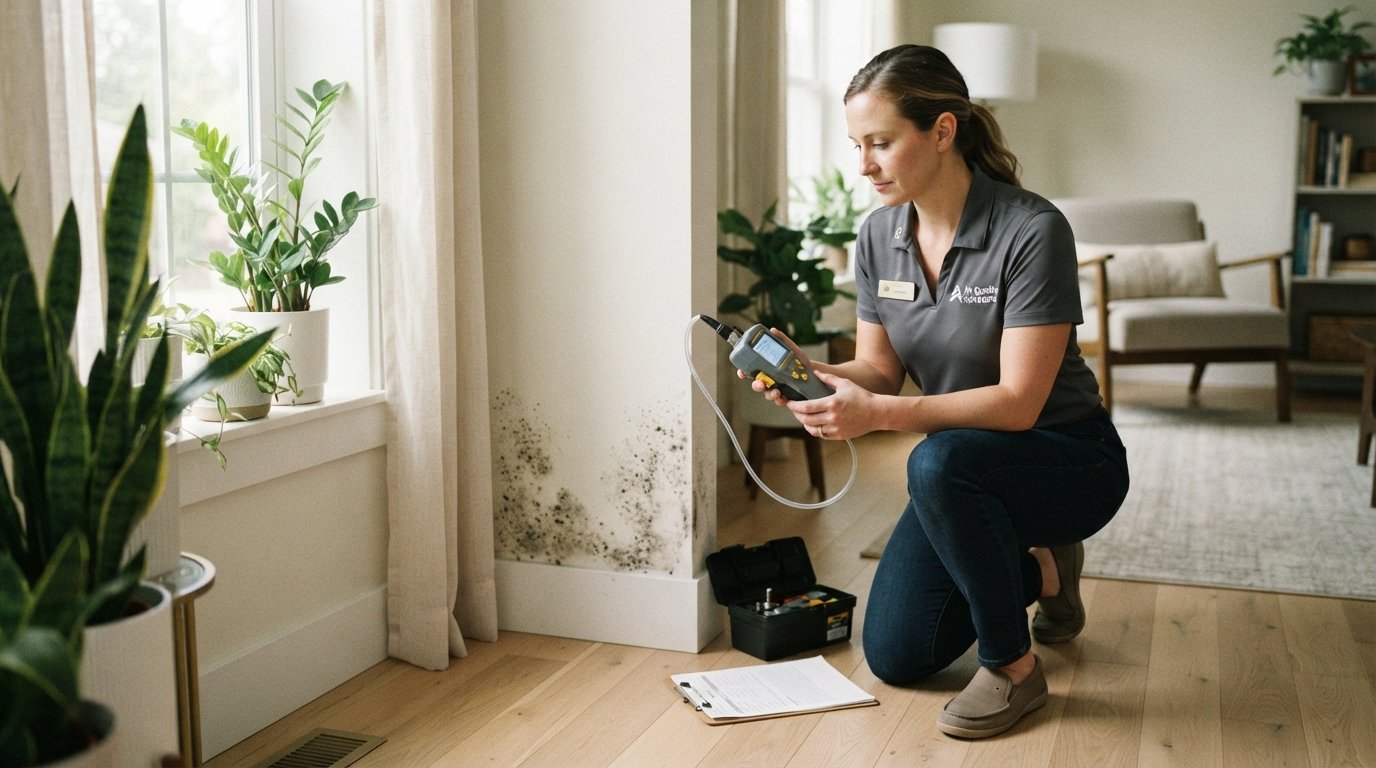
Indoor air quality is a growing concern for many homeowners. You might wonder about the frequency of testing your home for mold. The truth is, there isn’t a one-size-fits-all schedule. According to NIOSH, managing moisture and conducting regular inspections are more effective than sticking to a rigid timeline.
Excess moisture is the primary culprit behind indoor mold growth. This means that addressing leaks, damp materials, and humidity levels is crucial. It’s unrealistic to expect complete elimination of mold spores, as they exist both indoors and outdoors in every climate.
Interestingly, the color of mold doesn’t necessarily indicate its danger level. What truly matters is the presence of growth and the potential health risks it poses. This article will guide you on when professional testing may be necessary, why negative results can be misleading, and how prompt remediation can safeguard your home and health.
Key Takeaways
- No fixed testing schedule is needed; focus on moisture control.
- Excess moisture is the main cause of indoor mold growth.
- Complete elimination of mold spores is unrealistic.
- Mold color does not determine its danger level.
- Professional testing can help in specific situations.
How often to test for mold in your home
Maintaining a healthy indoor environment is crucial for every homeowner. Regular air sampling for mold is generally not recommended. According to NIOSH, thorough visual inspections and detecting musty odors are far more effective than relying on air samples.
Instead of a rigid testing schedule, focus on specific situations that may require action. Recurring leaks, flooding, and damp materials can indicate a need for further investigation. If you notice persistent odors or suspect hidden growth, it’s wise to consider testing.
It’s important to understand that a negative test result doesn’t mean mold is absent. Airborne concentrations can change rapidly, and short-term samples may not reflect actual exposure. Even identifying a toxic species like Stachybotrys chartarum doesn’t eliminate the need to address moisture issues and remove growth.
For more detailed guidance, check out this step-by-step guide on home mold inspection.
- NIOSH does not endorse routine air sampling.
- Visual inspections are more reliable indicators.
- Testing may be warranted in specific situations.
- A negative result doesn’t guarantee the absence of mold.
- Addressing moisture issues is essential for prevention.
Recognize common signs of mold growth and moisture problems
Your home’s air quality can significantly impact your health. Recognizing the signs of mold and moisture issues is essential. Look for visible growth, water damage, and musty odors in your living spaces.
Common locations where you might find mold include basements, bathrooms, attics, walls, ceilings, and air ducts. These areas can often hide moisture-related growth that goes unnoticed.
Additionally, pay attention to symptoms like coughing, sneezing, and nasal congestion. Individuals with allergies, asthma, or weakened immune systems may be particularly vulnerable. Remember, any mold indicates a moisture problem that needs addressing.
- Treat visible spots, peeling materials, and water damage as clues.
- Musty odors should not be ignored; they are a sign of potential issues.
- Be aware of common moisture-prone areas in your home.
- Review symptoms without assuming that testing alone proves causation.
- Recurring dampness is especially concerning for sensitive individuals.
Start with a visual inspection before choosing a test
Your home deserves a thorough examination to ensure a safe living environment. Begin by checking damp areas and materials where moisture can collect. This includes water-damaged walls, ceilings, and floors, as well as basements and attics.
It’s crucial to look for the source of water, not just the visible growth. A leak, condensation, or poor ventilation can lead to ongoing issues. Simply removing mold without addressing moisture is incomplete and can result in recurrence.
The Minnesota Department of Health recommends a detailed visual inspection as the first response. This approach helps identify moldy odors and potential growth locations. You can also utilize the NIOSH Dampness and Mold Assessment Tool, which is designed to document damp conditions effectively.
A thorough inspection can reveal the scope of a problem more effectively than collecting one isolated sample from an arbitrary location. Remember, understanding your home’s condition is key to maintaining a healthy indoor atmosphere.
Understand mold testing methods and what results can tell you
Understanding the methods used to analyze indoor air quality is essential for homeowners. There are three primary approaches: air sampling, surface sampling, and bulk sampling. Each method has its strengths and weaknesses.
Air samples measure spores in a specific place and moment
Air samples provide a snapshot of airborne spores at a particular time. However, airborne mold levels can change quickly, making these results limited. They reflect only one moment and may not represent ongoing conditions.
Surface and bulk samples check materials or suspected growth
Surface samples examine visible growth on materials, while bulk samples evaluate materials like drywall or insulation. It’s important to note that removing bulk samples can disturb existing growth, so caution is necessary.
Consider a qualified professional when testing has a clear purpose
When testing is needed, consider hiring a qualified professional. They can document cleanup efforts and support remediation decisions effectively. The Minnesota Department of Health states that testing can be valuable in specific situations.
| Testing Method | Measures | Limitations |
|---|---|---|
| Air Sampling | Airborne spores | Snapshot in time; levels change rapidly |
| Surface Sampling | Visible growth | May not represent entire area |
| Bulk Sampling | Material condition | Can disturb existing growth |
“Testing can help document cleanup or support remediation decisions in selected situations.”
Address mold growth and repair the moisture source
Creating a safe indoor environment is essential for the well-being of your family. When dealing with mold, it’s vital to act quickly. NIOSH recommends drying wet materials within 48 hours or removing them entirely. This guidance helps limit the opportunity for growth and keeps your home safe.
Repairs must focus on preventing additional water entry. Remediation efforts can’t be effective if leaks, flooding, or condensation continue. Simply covering moldy or water-damaged surfaces with paint can lead to more significant problems down the line.
When mold is identified, proper containment and precautions are necessary. The size of the contamination will dictate the measures you should take. The EPA’s Mold Remediation in Schools and Commercial Buildings Guide offers detailed planning resources to help you navigate this process.
- Dry wet materials promptly or remove them to limit growth.
- Repairs must prevent further water entry into your home.
- Avoid painting over moldy surfaces; it can worsen the problem.
- Containment should match the contamination’s extent.
- Consult the EPA guide for effective remediation planning.
Protect your home and indoor air quality throughout the year
Ensuring a healthy indoor environment requires ongoing vigilance. Regular maintenance is key to preventing moisture issues that can lead to mold growth. This is especially important in areas like Everett, Washington, where the wet and humid climate can encourage such problems.
Fix leaks and prevent water from entering your home. Check roofs, plumbing, windows, and foundations regularly. Bathrooms and basements are also critical areas to monitor. Proper ventilation systems can help reduce condensation, keeping your home dry.
It’s essential to keep an eye on areas with past moisture or mold issues. After cleanup, continue monitoring these spaces. NIOSH recommends confirming that repairs and remedial actions remain effective over time.
The NIOSH Dampness and Mold Assessment Tool can assist in these ongoing checks. This resource is beneficial for both general buildings and schools, ensuring a proactive approach to maintaining air quality.
Preventive maintenance protects indoor air quality more reliably than repeatedly ordering tests without addressing the underlying moisture condition.
Conclusion
There’s no need for routine air sampling when a careful walk-through reveals visible mold growth, musty odors, or damp spots. NIOSH guidance dated February 25, 2025, favors visual checks and odor detection over routine air samples.
Seek a professional assessment when water damage returns, hidden growth seems likely, or cleanup records matter. A negative result captures one moment; it cannot rule out growth elsewhere or later.
Dry wet materials within 48 hours, remove items that cannot dry, and fix water entry. Moisture control matters more than repeated sampling. Keep indoor humidity below 50%, and inspect trouble spots every six months. Use this safe remediation guide if growth is extensive or keeps returning. A steady plan can help keep your home comfortable and indoor air healthier year-round.