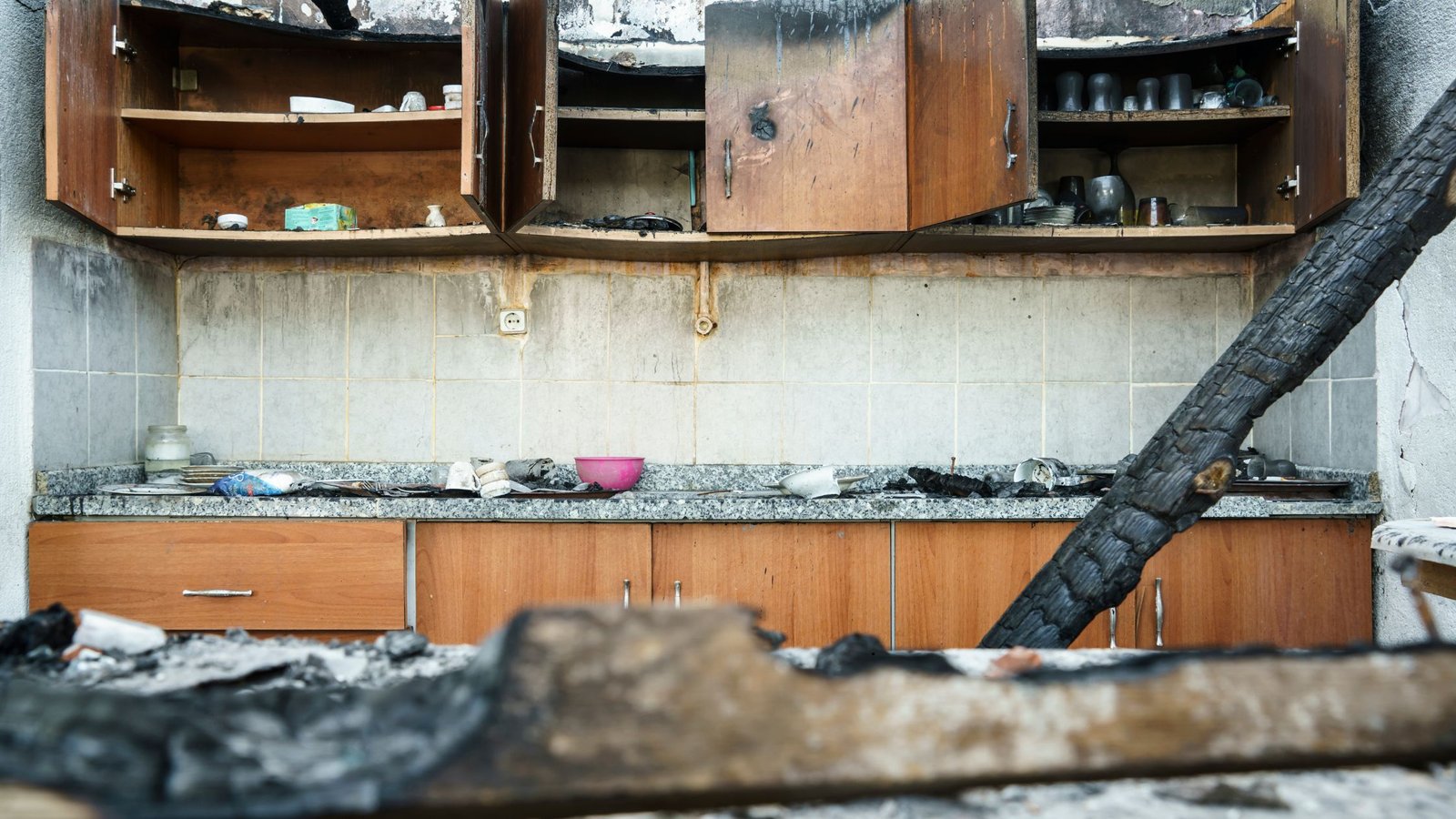
Here’s what nobody tells you after a fire: the flames aren’t the worst part. Not really. Once the trucks leave and the smoke settles, you’re standing in a space that looks wrong, smells wrong, and feels dangerous in ways you can’t quite put your finger on. Soot clings to every surface — acidic, greasy, eating into your walls. Smoke odor saturates things you didn’t even know could absorb a smell. And the water the firefighters used? That’s already soaking into your subfloor, quietly setting the stage for mold.
That’s the reality most homeowners walk into. And it’s exactly why you need a fire clean up company that understands what’s actually happening behind the drywall, inside the ductwork, and underneath the floors — not just what’s visible on the surface.
Dual Restoration is based right here in Brooklyn, NY, at 5308 13th Ave, Suite 615. Our emergency line is (347) 309-7119, and someone picks up around the clock — 2 AM, Sunday morning, doesn’t matter. Because fire damage doesn’t politely wait until business hours. The longer the residue sits, the deeper it penetrates. The longer moisture lingers, the more structural risk you carry. Speed isn’t a luxury here. It’s the whole ballgame.
This guide breaks down exactly how a professional crew handles smoke damage, stubborn soot stains, and the kind of hidden structural problems that can cost you big if they go unnoticed. You don’t need to figure this out alone — but you do need to understand what’s involved so you can make smart decisions when it counts.
Key Takeaways
- A fire leaves behind acidic soot, deeply embedded smoke odors, and hidden structural threats that aren’t always visible.
- Water from firefighting efforts creates secondary risks — including mold growth that can begin within 24 to 48 hours.
- Professional damage restoration is a phased process: secure the property, deep clean every surface, and repair what’s been compromised.
- Acting fast in the first 24 hours prevents escalation and strengthens your insurance claim.
- Dual Restoration is a local Brooklyn company with IICRC-certified technicians available 24/7 for emergency response.
- Advanced techniques — thermal fogging, ozone treatment, HEPA air scrubbing — eliminate smoke odor at the molecular level.
- Protecting your belongings and your property’s structural integrity are equal priorities for a quality restoration team.
The Critical First 24 Hours: What a Professional Fire Clean-Up Team Does First
Look, the first day after a fire is make-or-break. I’m not exaggerating. What happens in those initial hours determines whether you’re looking at a manageable recovery or a cascading mess of secondary damage — water warping your hardwood, soot permanently staining your countertops, moisture creeping into places you won’t notice for weeks.
A professional restoration crew doesn’t show up and improvise. They execute a tight sequence of steps designed to lock down the situation before it spirals. And the good ones? They start before they even arrive at your door.
Immediate Emergency Contact and Dispatch
The moment you call, things move. For Brooklyn homeowners, that means dialing Dual Restoration at (347) 309-7119. A live person answers — not a machine, not a callback form. An actual human who’s trained to coordinate dispatch while you’re still processing what just happened to your home.
There’s a reason the best fire cleanup companies operate on a “faster to any size disaster” mentality. Every minute that soot sits on a surface, it bonds deeper. Every hour that standing water pools against your baseboards, your mold risk climbs. Technicians get dispatched with specialized extraction equipment, industrial fans, moisture meters — the works. They don’t roll up with a shop vac and a prayer.
This rapid mobilization isn’t just about speed for speed’s sake. It’s about interrupting the damage cycle before secondary problems compound on top of the primary loss. That’s the difference between a crew that knows what they’re doing and one that’s just going through motions.
Initial Safety Assessment and Hazard Control
Before anyone touches a thing, the team does a full safety sweep. Structural instability, live electrical hazards, airborne toxins from burnt synthetic materials — these are real dangers that you genuinely cannot assess on your own. Don’t try. Seriously.
This initial evaluation maps out the entire scope of damage: the primary fire damage, the extent of smoke infiltration, and how much water damage the firefighting effort left behind. All of that data feeds into the master plan for every step of the restoration that follows.
Mitigation starts immediately. Standing water gets extracted to cut off mold growth at the source. The property gets secured from weather and unauthorized entry — often through professional board-up services that seal broken windows, damaged doors, and any exposed openings in the structure.
Throughout all of this, the team communicates with you. They explain what they’re seeing, what they’re prioritizing, and what the next 48 hours will look like. That clarity matters when everything else feels chaotic. A professional, organized response in this critical window is the single biggest factor in limiting how far secondary damage spreads — and in preserving what can still be saved.
Understanding the Full Scope: The Professional Fire Damage Assessment
Think of the professional damage assessment as a full forensic workup of your home. It’s not a glance-around-and-give-you-a-quote situation. Trained technicians from Dual Restoration go through every room, every wall cavity, every questionable stain with the kind of scrutiny that catches what untrained eyes miss entirely.
This step matters more than most people realize. The assessment dictates everything — what gets cleaned, what gets torn out, what gets rebuilt, and how your insurance claim gets documented. Skip this or rush it, and you’ll be dealing with surprises six months from now. Guaranteed.
Inspecting for Visible Soot, Smoke, and Char
The first pass is all about documenting what’s right in front of you. Every soot stain, every smoke discoloration, every charred surface gets cataloged. Walls, ceilings, cabinetry, personal belongings — all of it.
Here’s something most homeowners don’t realize: acidic soot can permanently etch glass and discolor painted surfaces if it sits too long. That’s not a cosmetic nuisance. That’s irreversible material damage. Professionals know how to differentiate between what’s salvageable with proper cleaning and what’s already past the point of return.
The itemized report that comes out of this inspection serves two purposes. It drives the cleaning and repair plan, and it becomes a key piece of your insurance documentation. Thorough reporting here means fewer disputes later.
Identifying Water Damage from Firefighting Efforts
This one catches people off guard. You survived a fire, and now you’ve got a water damage problem too. Fire hoses saturate building materials — drywall, insulation, subfloor — and all that moisture doesn’t just evaporate on its own. It settles. It hides. And within 24 to 48 hours, it starts breeding mold.
The assessment specifically targets these damp zones. Technicians probe areas that took the brunt of the firefighting water and flag anything holding elevated moisture levels. Finding saturation early is the difference between a controlled drying operation and a full-blown mold remediation job later. Quality fire and water damage cleanup services always account for this overlap, because ignoring water damage after a fire is one of the most common — and most expensive — mistakes homeowners make.
Using Technology to Detect Hidden Heat and Moisture
Some of the worst damage is the stuff you literally cannot see. Heat pockets are trapped behind walls. Moisture wicks through materials you’d never think to check. That’s where technology fills the gap.
Thermal imaging cameras pick up temperature differentials behind surfaces — showing exactly where heat is lingering or where moisture is pooling inside wall cavities. Moisture meters give precise saturation readings in wood, drywall, and concrete, so technicians know whether a material can be dried and saved or needs to come out entirely.
This high-tech inspection isn’t optional if you want a genuinely thorough restoration. It catches hidden problems that would otherwise go unaddressed — the kind that show up as mysterious odors, warped framing, or structural decay months down the road.
Common Assessment Tools and Their Uses
| Tool | What It Detects | Why It Matters |
| Thermal Imaging Camera | Hidden heat patterns and moisture behind walls | Identifies problems inside cavities without tearing anything apart |
| Moisture Meter | Exact water saturation levels in wood, drywall, etc. | Prevents mold growth by confirming materials are completely dry |
| Visual Inspection | Soot, char, and smoke stains on surfaces | Documents all visible damage for cleaning plans and insurance claims |
| Air Quality Monitor | Microscopic smoke particles and lingering odors | Confirms the environment is safe for your family or business operations |
The completed assessment produces a detailed report listing every identified issue and the proposed restoration services needed to address them. This document often goes directly to your insurance adjuster. Getting it right — thoroughly, methodically — is what separates a real fix from a patch job that falls apart later.
Securing Your Property: Board-Up and Roof Tarping Services
Once the fire’s out, your property faces an entirely different threat. Broken windows, holes in the roof, damaged door frames — these openings leave your home exposed to weather, animals, and anyone who decides to walk in uninvited. And here’s what people don’t always think about: every rainstorm that blows through an unsecured opening creates brand-new water damage on top of what the fire already caused.
Professional restoration services include immediate board-up and roof tarping precisely because of this. It’s not a cosmetic step. It’s structural triage. Dual Restoration handles this as part of the emergency response for Brooklyn properties — sealing the building envelope before anything else can go wrong.
Protecting Your Home from Weather and Intrusion
Your building’s outer shell is the first line of defense, and when it’s breached, everything inside becomes vulnerable. A professional crew moves fast to reconstruct that barrier, even temporarily.
Board-up service means installing treated plywood over every compromised opening — broken windows, busted door frames, any gap that lets the outside in. This stops wind-driven rain, debris, and temperature swings from accelerating interior damage. It also shuts down unauthorized entry, which protects your belongings from theft and vandalism. If you own a business, that security layer becomes a liability issue too.
Roof tarping handles the damage overhead. Crews use heavy-duty, reinforced tarps anchored to the intact sections of your roof structure. That temporary seal is remarkably effective — it blocks rain, snow, and animal intrusion into your attic and living spaces. Without it, every weather event would compound the damage you’re already dealing with.
Preventing Further Secondary Damage
Stopping new problems from piling on is just as critical as addressing the ones you already have. This is the whole philosophy behind securing the property first — you control the environment so the actual recovery work can proceed without constant setbacks.
By sealing the structure, you eliminate new water intrusion. That allows the interior drying and dehumidification process to work the way it’s supposed to. Without board-up and tarping in place, every rainstorm resets your progress. You’d be drying a space that keeps getting wet again. It’s pointless.
Preventing this secondary harm saves real money on the total project scope. It breaks the chain reaction that leads to mold growth, corrosion, rust on metal fixtures, and further structural decay in wooden framing. You get peace of mind knowing your home is stabilized while the detailed fire damage restoration work continues. For a local company like Dual Restoration, this is standard protocol — not an upsell.
Comparing Key Emergency Protection Services
| Service | Primary Purpose | What It Prevents |
| Board-Up Services | Secure openings in walls, windows, and doors | Unauthorized entry, theft, vandalism, and weather exposure through side openings |
| Roof Tarping Services | Create a watertight seal over compromised roof sections | Rain, snow, and debris intrusion leading to interior water damage and mold |
Board-up and tarping aren’t afterthoughts. They’re foundational emergency steps that stabilize the scene and create the conditions for every detailed phase of restoration work that comes after.
Tackling Smoke and Soot: The Deep Cleaning Process
Alright, so the property is secured. Now the real grind begins. Smoke and soot aren’t just sitting politely on your countertops waiting to be wiped away. They’ve infiltrated porous materials, circulated through your air ducts, and embedded themselves in fabrics, upholstery, and even the paint on your walls. The residue is toxic. The smell is relentless. And surface-level cleaning doesn’t cut it — not even close.
This phase requires specialized techniques, professional-grade equipment, and the kind of training that experienced fire restoration cleaning companies invest in heavily. The goal isn’t just making the space look clean. It’s making it genuinely safe to breathe in again. Dual Restoration employs these advanced cleaning and odor elimination methods for Brooklyn homes and businesses — and honestly, if your crew isn’t doing all of this, they’re leaving problems behind.
Specialized Techniques for Soot Removal from Surfaces
Soot is acidic. Let that sink in. Left untreated, it etches glass, corrodes metal finishes, and permanently discolors paint. Each surface demands a specific approach — there’s no universal “soot remover” that handles everything.
For walls and ceilings, technicians start with dry chemical sponges. These lift soot particles without pushing them deeper into the material. That distinction matters — a wet rag would just smear the residue and drive it into the pores of the drywall. Delicate belongings like china, glassware, and collectibles go through ultrasonic cleaning, which uses high-frequency sound waves in a water bath to dislodge particles from intricate surfaces without any abrasion.
Structural materials like brick, stone, and concrete might need abrasive blasting to strip heavy soot and char. Furniture, drapes, electronics — each gets individual attention based on the material and the extent of contamination. Professional-grade cleaning agents break down toxic residues safely and completely. A one-size-fits-all approach would destroy more than it saves.
Comparing Professional Soot Cleaning Methods
| Method | Best For | Key Benefit |
| Dry Chemical Sponges | Walls, ceilings, wood surfaces | Lifts soot without moisture, preventing smearing or absorption |
| Ultrasonic Cleaning | Delicate items, metals, glassware | Uses gentle sound waves to clean intricate details without abrasion |
| Abrasive Blasting | Brick, stone, concrete, structural beams | Effectively strips heavy soot and char from durable materials |
| Wet Cleaning & Rinsing | Washable surfaces, some contents | Uses specialized solutions to dissolve and rinse away residues |
Odor Elimination and Air Purification
Let me be blunt about something: spraying Febreze isn’t odor removal. Masking a smell with fragrance is a band-aid on a broken bone. Professional fire damage restoration tackles odor at the molecular level — neutralizing the particles that are trapped deep inside your home’s materials.
Thermal fogging generates a heated fog that penetrates walls, fabrics, and porous surfaces to reach and neutralize odor-causing particles where they hide. Ozone treatment is another heavy hitter — it chemically breaks down odor molecules so they simply don’t exist anymore. These aren’t pleasant consumer products. They’re industrial processes that require training and ventilation protocols.
Throughout the job, industrial air scrubbers with HEPA filtration run continuously. They pull microscopic smoke particles out of the air — particles small enough to pass through standard home filters but large enough to trigger respiratory issues. This air purification isn’t just about comfort. It’s a health imperative, especially if you’ve got kids, elderly family members, or anyone with breathing sensitivities living in the space.
True odor elimination requires science, not scent. When it’s done properly, the space doesn’t just smell better — it’s actually clean at a level you can trust.
Cleaning HVAC Systems to Prevent Contamination Spread
This is the step that gets overlooked more than any other, and it drives me nuts. Your HVAC system is essentially a network of tubes running through your entire home. When the fire happened, soot and smoke particles got pulled into those ducts. If you don’t clean them, every time your furnace or AC kicks on, it blows contaminated air right back into the rooms your crew just finished cleaning.
That’s a re-contamination cycle that can persist for months. Months! You’ll think the smell is coming back, or you’ll get headaches you can’t explain, and the whole time it’s your own HVAC system circulating toxins through your living space.
Professional teams clean the entire system — ducts, vents, return registers, filters, and the unit itself. Specialized vacuuming and mechanical brushing techniques clear the interior walls of ductwork. It protects the investment you’ve made in the deep cleaning of every room and ensures your property is hygienically restored from the inside out. Skipping this step undermines everything else.
Beyond the Surface: Finding and Fixing Hidden Structural Damage
Here’s the thing about fire damage that keeps me up at night: the most dangerous consequences are often completely invisible. Extreme heat weakens structural beams without leaving visible char. Firefighting water soaks into floor joists and wall cavities where you’ll never see it. And mold — mold doesn’t announce itself. It just grows quietly in the dark until it becomes a serious health hazard.
A complete damage restoration has to go beyond what’s on the surface. Dual Restoration’s trained technicians in Brooklyn know exactly where these hidden threats develop and how to root them out. If you’re searching for fire restoration cleaning companies near me that actually address the full picture, this is the kind of depth you should be looking for.
Checking Wall Cavities, Attics, and Subflooring
What’s happening behind your drywall might be the most important part of the entire assessment. Professionals use thermal imaging to see heat signatures and moisture patterns trapped inside wall cavities — damage that’s physically impossible to spot with the naked eye.
Moisture meters probe attic framing and subflooring for saturation levels that indicate ongoing decay risk. This inspection catches compromised insulation, weakened framing, and lingering dampness that would trigger mold if left alone. It’s the kind of critical step a homeowner doing their own walkthrough would almost certainly miss.
Industry protocols, including those emphasized by restoration leaders like Rainbow Restoration, stress that correct identification and containment of hidden damage prevent exponentially larger problems later. The findings from this inspection directly shape the entire repair plan — what gets reinforced, what gets replaced, and where preventative treatments get applied.
Addressing Weakened Beams and Supports
Wooden joists and steel supports don’t need to show visible char to be dangerously compromised. Extreme heat changes the molecular structure of these materials — wood loses tensile strength, and steel can warp under sustained temperatures. This is a genuine safety risk that has nothing to do with appearances.
Repairs here are non-negotiable. Sometimes the fix is “sistering” — bolting a new beam alongside the weakened one to restore load-bearing capacity. Other times, full replacement is the only responsible option. Either way, the work has to meet building code requirements. For your insurance coverage, for your structural safety, and for the long-term integrity of your property.
A skilled restoration team treats this as core work, not an afterthought. Your home needs to be structurally sound — not just cosmetically presentable.
Common Areas of Hidden Damage and Professional Solutions
| Area Inspected | Hidden Risks | Professional Solution |
| Wall Cavities | Trapped heat, moisture, and compromised insulation | Thermal imaging, moisture meters, controlled demolition & repair |
| Attics & Roof Framing | Weakened rafters, water saturation, and mold growth | Structural assessment, sistering or replacement, complete drying |
| Subflooring & Joists | Water damage, rot, loss of structural strength | Moisture mapping, antimicrobial treatment, reinforcement, or replacement |
| Concrete Slabs & Foundations | Heat spalling (cracking), moisture wicking | Specialized assessment, sealing, and moisture barrier installation |
The Link Between Fire Damage and Potential Mold Growth
This connection is direct, and it’s urgent. Water from firefighting drenches building materials, and as SERVPRO notes, mold can begin colonizing within 24 to 48 hours of moisture exposure. That’s not a generous timeline. That’s a countdown.
A comprehensive fire restoration includes proactive mold prevention as a standard part of the process. That means thorough structural drying with industrial-grade dehumidifiers and air movers. It means applying EPA-registered antimicrobial treatments to every area that holds moisture. And it means checking — not guessing — that materials have reached safe dryness levels before anything gets sealed back up.
Hidden mold inside walls or attics creates health risks and causes ongoing property damage that compounds over time. Addressing it proactively isn’t an extra service — it’s a fundamental part of responsible damage cleanup. Dual Restoration’s response protocol includes drying, treating, and verifying every affected zone to stop mold before it takes hold. That protects your home’s air quality and your family’s health long after the restoration crew packs up.
Finding and fixing these hidden issues is what separates a real recovery from a cosmetic cover-up. Your property should be restored, safe, and protected against problems that haven’t even surfaced yet. Trust professionals who look beyond the surface — because that’s where the real risks live.
Taking Care of What Matters Most: Content Restoration & Pack-Out
Recovery after a fire isn’t just about the building. I get that — and so does any decent restoration crew. Your furniture, your family photos, the kids’ stuff, your clothes — all of it faces the same smoke, soot, and water assault that the structure does. A genuinely complete damage restoration treats your belongings with the same level of care as the walls and ceilings.
Dual Restoration provides full content restoration and pack-out services for Brooklyn homeowners. That means careful handling, expert cleaning, and secure storage — so you can focus on your family while professionals take care of the things that make your house feel like home.
Inventorying and Securing Salvageable Belongings
The pack-out process starts with a meticulous, item-by-item inventory. A trained team goes through every room documenting what’s salvageable, noting the condition of each piece, and photographing everything for your records.
That detailed list isn’t just organizational busywork — it’s essential for your insurance claim. Every documented item strengthens your case for coverage. Once inventoried, belongings get carefully packed using specialized materials designed to prevent further damage during transport. Everything is labeled, tracked, and accounted for from the moment it leaves your property. Nothing disappears into a void.
Off-Site Cleaning and Restoration of Contents
Your belongings go to a secure, off-site facility where advanced cleaning techniques are used that simply aren’t feasible inside a damaged home. Each piece gets assessed individually to determine the best treatment method.
“A fire doesn’t just damage your property — it can impact the things that matter most to you.” — SERVPRO
The options range from dry cleaning for light soot on sturdy materials, to wet cleaning for deeper residue in washable fabrics, to immersion cleaning for delicate pieces that need a gentle soak. Electronics, documents, and heirlooms get specialized treatments tailored to their specific materials and vulnerabilities.
Ozone chambers tackle stubborn embedded odors. Freeze-drying technology can save water-damaged photographs, important papers, and documents that you might have assumed were lost for good. This professional-grade service regularly rescues items homeowners had already written off — which, honestly, is one of the more satisfying parts of the whole process.
Secure Storage Until Your Home is Ready
Once your belongings are cleaned and restored, they need a safe place to wait while your home finishes its own recovery. Items go into climate-controlled warehouse storage — protected from humidity fluctuations, dust, and temperature swings that could undo the restoration work.
Storage continues for as long as your home needs. There’s no pressure to rush the rebuild because your stuff is sitting in a garage somewhere getting musty. When the final repairs are complete, the same careful team unpacks and places everything according to your direction.
This end-to-end content service is what genuine, comprehensive care looks like. It goes well beyond the building itself to protect the personal items that carry real value — sentimental and otherwise.
Working with Your Insurance: Simplifying the Claims Process
Navigating insurance after a property disaster is its own special kind of misery. You’re already stretched thin emotionally, and now you’re supposed to understand policy language, document everything correctly, coordinate with an adjuster, and somehow not make a mistake that costs you coverage. It’s exhausting.
This is where working with a professional damage restoration company becomes genuinely invaluable — and I don’t use that word lightly. Firms like Dual Restoration work directly with your insurance provider so you don’t have to white-knuckle your way through the claims process alone. Their experience turns what could be a months-long headache into something manageable.
Detailed Documentation for Your Adjuster
A successful insurance claim lives and dies on documentation. Your adjuster needs a clear, thorough, factual picture of everything that was damaged and every service required to restore it. Vague descriptions and iPhone photos from bad angles don’t get the job done.
A professional restoration team builds a comprehensive file: high-resolution photographs, thermal imaging scans, moisture meter readings, and an itemized breakdown of all affected areas and proposed work. This level of detail leaves minimal room for dispute. It ensures you receive fair, complete coverage for all necessary fire damage restoration work.
As industry leader SERVPRO promotes, an “Easier Insurance Claim Process” starts with exactly this caliber of documentation. Detailed proof protects your interests and keeps the process moving forward instead of stalling on contested line items.
Direct Billing and Transparent Communication
Managing invoices on top of everything else? Nobody wants that headache. A major advantage of working with experienced professionals is direct billing — the restoration company invoices your insurance carrier directly, which cuts your upfront out-of-pocket burden significantly.
Equally important: transparent communication throughout the entire process. A reputable team keeps you informed at every stage — what’s happening with the restoration, what’s been communicated to your insurance company, and where things stand financially. No hidden fees. No surprise charges at the end. All costs are explained upfront and in writing.
This kind of partnership can accelerate the claims timeline dramatically. For a business claim, the assistance is even more critical — it helps maximize your policy benefits and supports continuity during a period when every day of downtime costs real money.
Ultimately, this service lifts a burden that most homeowners aren’t equipped to carry alone. It lets you focus on your family and your recovery while the experts handle logistics, paperwork, and negotiations with your carrier. That’s what quality restoration services actually look like in practice — not just fixing walls, but reducing stress at every turn.
Why Dual Restoration is Your Trusted Fire Clean-Up Company in Brooklyn
In Brooklyn, your restoration partner needs to be more than a name on a truck. They need to be embedded in the community, familiar with the building stock, and genuinely invested in outcomes — not just invoices. Dual Restoration operates from 5308 13th Ave, Suite 615, right in the neighborhood. This isn’t a national franchise dispatching someone from three states away. We’re local, and that locality matters in ways most people don’t consider until they need fast help.
When homeowners search for options — from metropolitan fire restoration services inc to smaller independent outfits — the real differentiator is always the same: who actually shows up fast, communicates clearly, and follows through on every phase of the work? That’s what we stake our reputation on.
Local, 24/7 Emergency Response for Brooklyn Homes & Businesses
Disaster does not keep business hours. Our emergency line at (347) 309-7119 connects you with a live expert any time — midnight, weekends, holidays. This isn’t an answering service that takes a message. It’s a direct line to someone who can dispatch a crew to your door.
Being truly local means faster mobilization than any national chain can match. Our team knows Brooklyn’s streets, its building types, its brownstones and multi-units and commercial blocks. That familiarity translates directly into quicker, more informed damage cleanup. We secure your property and begin mitigation work without the delays that come with unfamiliar territory.
Certified Technicians with Advanced Restoration Training
Your property’s safety demands skill, not guesswork. Our technicians hold IICRC certifications and undergo continuous training in the latest fire damage restoration techniques — soot removal, odor neutralization, structural drying, moisture mapping, the full scope. Like industry leaders such as SERVPRO, we maintain “Highly-Trained Fire Restoration Technicians” because cutting corners on expertise is how problems get missed.
They operate professional-grade equipment to address smoke damage, water damage, and mold prevention simultaneously. Every step follows proven, documented protocols. The result is restoration work that holds up — not a rushed job that looks fine on the surface but hides unresolved issues underneath.
How Technician Qualifications Translate to Better Outcomes
| Technician Qualification | Direct Benefit for Your Property |
| IICRC Certification | Ensures industry-standard methods for soot and smoke cleaning, protecting surfaces from further damage |
| Advanced Moisture Mapping Training | Prevents hidden water damage and mold by confirming complete structural drying |
| Odor Control Certification | Guarantees permanent odor removal — not masking — for genuinely healthier air quality |
| Content Restoration Specialization | Maximizes the salvage of your personal belongings and irreplaceable items |
Our Commitment to Your Community and Peace of Mind
We’re your Brooklyn neighbors. That’s not a marketing line — it’s the reality of how we operate. Our team understands the specific needs of local properties, from aging brownstones with plaster walls to modern commercial spaces with complex HVAC systems. That community focus shapes every interaction we have.
Our approach is people-first. That means clear, honest communication — not jargon-filled updates designed to confuse you. It means empathy for what you’re going through, because we’ve watched our neighbors deal with this, and we understand the stress runs deeper than the physical damage. From the first phone call to the final walk-through, you’re supported with transparent updates and proactive handling of every complexity, including insurance documentation and adjuster coordination.
This dedication to genuine peace of mind — not just structural repair — is what makes Dual Restoration the trusted choice for comprehensive restoration services in Brooklyn. We restore your property and your confidence. Both matter equally.
Taking the Next Step Toward Recovery
Your path to a full recovery starts with one decision: getting professional help on-site as fast as possible. Recovering from fire damage is a layered, technical process — soot removal, smoke odor elimination, water extraction, structural assessment, mold prevention, content salvage, and insurance coordination. No single homeowner should be expected to manage all of that alone.
A professional team like Dual Restoration handles every phase, from the emergency board-up to the final coat of paint, with both technical skill and genuine care. Your property and your belongings are the priority. Full stop.
Time is the one thing you can’t get back in this situation. The sooner you call, the better the outcome — for your home, for your claim, and for your peace of mind. As industry leaders consistently emphasize, restoration needs to begin now.
Take the next step. Call Dual Restoration at (347) 309-7119. Our local Brooklyn team is ready to answer your questions, conduct a thorough on-site assessment, and start the recovery process the same day. With the right partner by your side, this challenge becomes manageable. We’ll help restore your home or business to a safe, clean, and comfortable state — because that’s what recovery actually looks like.
FAQ
What should I do in the first 24 hours after a fire?
Call a professional restoration team like Dual Restoration immediately. We’ll secure your property, conduct a full safety assessment, and begin mitigation to prevent secondary issues like water damage and mold. This rapid response is critical — it protects your home, preserves your belongings, and strengthens your insurance documentation from the very start.
How do you find damage I can’t see?
Our technicians use advanced diagnostic tools — thermal imaging cameras and moisture meters — to detect hidden problems behind walls, beneath floors, and in attic spaces. We’re looking for lingering heat pockets, trapped moisture, and structural weakness that aren’t visible to the naked eye. This thoroughness is what ensures a genuinely complete restoration, not just a surface-level fix.
Can you get rid of the strong smoke smell?
Absolutely. We deploy industrial-grade air scrubbers, ozone generators, and specialized cleaning agents that attack odor at its source — not just cover it up. Our process includes full HVAC duct cleaning and air purification to remove embedded soot particles and that stubborn smoky smell from every corner of your living space. When we’re done, the air is actually clean.
What happens to my furniture and other personal items?
We carefully inventory, pack, and transport all salvageable contents to our secure off-site facility. There, each item receives specialized cleaning, deodorizing, and restoration treatment tailored to its material and condition. Your belongings stay in climate-controlled storage until your home is fully repaired and ready for move-back — nothing gets rushed or left unprotected.
Will you help me with my insurance claim?
Yes — and this is a big part of what we do. We provide detailed documentation, including high-resolution photos, thermal scans, moisture data, and itemized damage reports for your adjuster. Our team communicates directly with your insurance company, handles direct billing, and works to streamline the entire claims process so you’re not buried in paperwork during an already stressful time.
Why should I choose Dual Restoration in Brooklyn?
We’re a local Brooklyn company with 24/7 emergency response and IICRC-certified technicians trained in the latest restoration methods. We know this borough — its buildings, its people, its specific challenges. Our commitment goes beyond technical work; we focus on clear communication, genuine care, and restoring your peace of mind alongside your property. When your home is on the line, local expertise and fast response make all the difference.