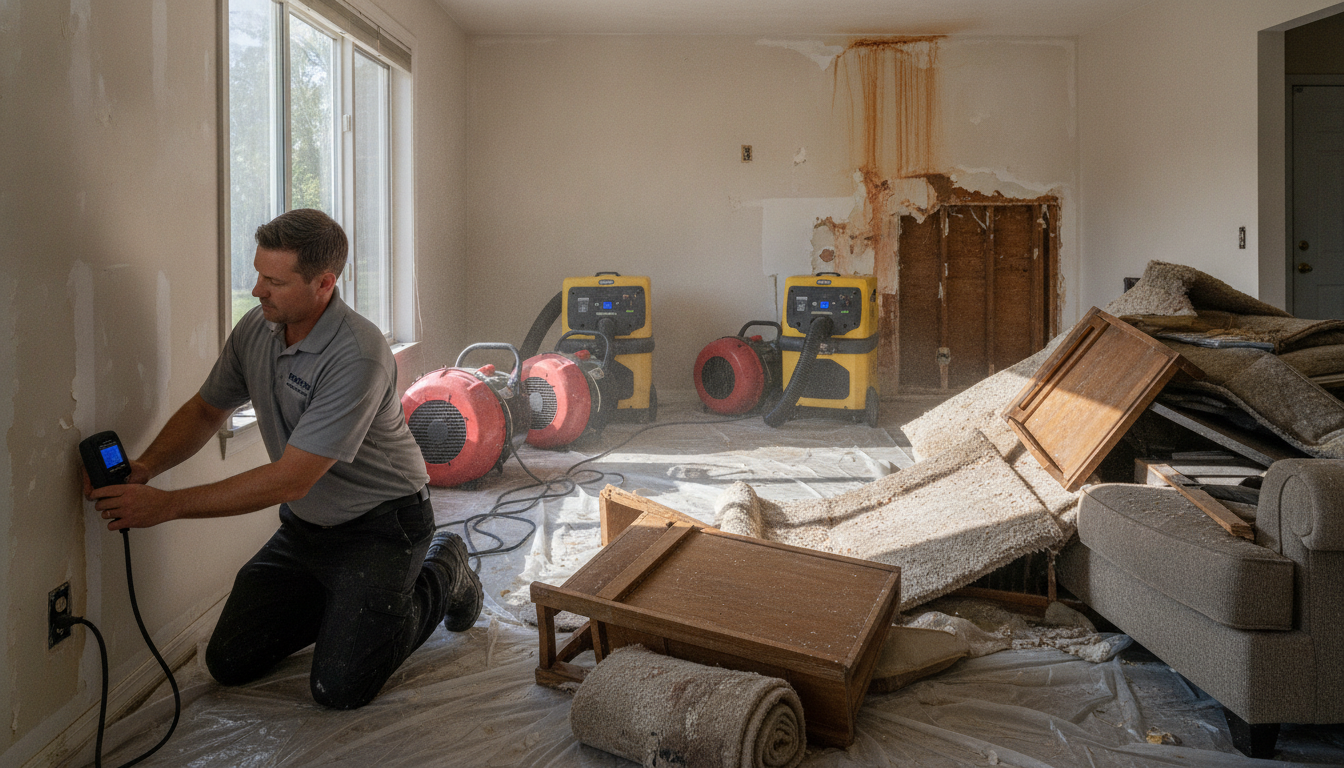
When faced with a sudden crisis, understanding the process of restoration is crucial. You may find yourself in a situation where quick action is necessary. This is where a professional team comes into play. They provide 24/7 emergency response to help secure your property immediately.
It’s essential to grasp the water restoration timeline. This knowledge can significantly reduce your stress levels and help you manage expectations. A skilled company will arrive at your home to assess the situation within hours of your call. They will use advanced technology to determine the extent of the issue.
Every minute counts when dealing with excess moisture. The sooner you act, the better your chances of preventing long-term structural issues. This is why clear communication with your restoration team is vital. They will guide you through the process, ensuring you understand what to expect as your property recovers.
Key Takeaways
- Immediate response is crucial to protect your property.
- Understanding the restoration timeline helps manage stress.
- Professional teams assess damage within hours of your call.
- Clear communication is essential during the restoration process.
- Every minute counts to prevent further issues.
Introduction to Water Damage Restoration
Recognizing the restoration process is vital to effectively manage a sudden home crisis. The first step is understanding the emergency mitigation phase. This phase is designed to halt the spread of moisture throughout your property, preventing further issues.
According to IICRC S500 standards, acting within 24-48 hours is crucial to avoid secondary damage like mold growth. Here are some key points to consider:
- The emergency mitigation phase protects your home from additional damage.
- Water is categorized into three types: clean, gray, and black. Each requires different handling.
- Your restoration team will assess the extent of damage to determine the necessary steps for recovery.
- Cleaning and sanitizing surfaces is essential, especially for gray and black water incidents.
- A professional company will respond within hours of your call, ensuring a rapid and thorough approach.
Understanding the type of water involved helps your team decide whether materials can be saved or need complete removal. Every day without intervention increases the risk of mold growth, making timely response critical.
Immediate Steps to Take After Water Damage
Understanding the initial actions to take after a crisis can significantly ease your stress. When you experience an incident, quick and effective measures are essential for restoring your property. Here’s what you need to know about the assessment and extraction process.
Assessment and Inspection Fundamentals
Professional technicians use moisture mapping and infrared cameras to establish a dry standard for your home after an incident. This initial assessment identifies hidden moisture in walls and floors using specialized meters. By checking these levels, the team can determine the extent of the damage.
Effective Water Extraction Techniques
The extraction process requires industrial-grade equipment to remove standing water from your property. Acting within hours of the discovery is crucial, as rapid removal prevents further structural decay. Effective extraction significantly reduces the total time needed for drying.
| Step | Description | Importance |
|---|---|---|
| Moisture Mapping | Uses infrared cameras to locate moisture. | Establishes a dry standard for restoration. |
| Initial Readings | Technicians take moisture readings. | Creates a baseline for the drying process. |
| Water Extraction | Industrial-grade equipment removes standing water. | Prevents water from wicking into porous materials. |
By following these steps, you can ensure that the restoration process begins efficiently, helping you return to your home much faster.
Water Damage Timeline: What Happens Next
Navigating the aftermath of a crisis can be overwhelming, but knowing what comes next helps ease your mind. The drying and dehumidification process is critical to prevent mold growth. In fact, mold can begin to grow in as little as 24-48 hours on wet porous materials. Therefore, starting the drying process immediately after extraction is essential.
Professional teams utilize industrial dehumidifiers and air movers to effectively reduce moisture levels in your home. This equipment is vital in preventing long-term structural issues. Daily monitoring of moisture levels ensures that the drying process is effective and meets required standards.
Drying and Dehumidification Explained
Once the drying phase is underway, the focus shifts to cleaning and sanitizing surfaces. This step is crucial, especially after exposure to gray or black water. Cleaning removes contaminants and prepares your home for the next stages of restoration.
Repair and Restoration Milestones
Reconstruction begins only after a certificate of dryness is issued by professionals. This certificate confirms that moisture levels are safe for repairs. Managing the timeline is vital, as repairs depend on the structure reaching a safe moisture content level.
| Step | Description | Importance |
|---|---|---|
| Drying | Using dehumidifiers and air movers to reduce moisture. | Prevents mold growth and structural damage. |
| Cleaning | Sanitizing surfaces to remove contaminants. | Ensures a safe environment for repairs. |
| Reconstruction | Replacing damaged materials like drywall. | Restores your home to its pre-loss condition. |
The Role of Materials and Equipment in Restoration
Understanding the tools and materials used in restoration can greatly impact the efficiency of the process. Among the most crucial are industrial air movers and dehumidifiers. These devices work together to ensure your home dries effectively and quickly.
Professional restoration teams utilize industrial air movers to promote rapid evaporation of moisture from floors, walls, and other structural materials. This increased airflow is vital in speeding up the drying process.
LGR dehumidifiers are essential tools that pull moisture out of the air, which is critical for drying a home in just a few days. The strategic placement of this equipment ensures that even deep-seated moisture is removed effectively.
Daily monitoring of moisture levels allows the team to adjust the equipment, ensuring the restoration process stays on the planned timeline. Using the right equipment is the best way to prevent mold growth, which can start within hours if the environment remains humid.
By focusing on the science of drying, the restoration company can complete the job faster, reducing the need for extensive structural repairs. Every piece of equipment is chosen based on the specific needs of your home, ensuring the most efficient path to a dry property.
Steps to Expedite Your Restoration Process
Effective strategies can make a world of difference when restoring your home after an incident. Taking the right steps early on can help you avoid unnecessary delays and ensure a smoother recovery.
One of the best ways to expedite the process is by hiring a full-service restoration company. They handle everything from emergency response to final reconstruction, minimizing the time spent coordinating between different contractors.
Here are some proactive measures you can take:
- Move furniture: Clearing personal belongings from the affected area allows crews to start work immediately.
- Document damage: Taking photos and videos helps speed up the insurance claim process by providing necessary evidence.
- Communicate with your insurance adjuster: Proactive communication is essential to avoid delays and ensure your repairs are covered.
- Choose a project manager: Having one point of contact for the entire job eliminates hand-off delays and streamlines the process.
- Act quickly: By responding within hours of discovering the issue, you can minimize the extent of the damage and make the restoration process much faster.
For more detailed information on how to respond immediately to incidents in your home, visit this guide.
Realistic Timelines and Factors Influencing Restoration
Understanding the factors that influence restoration timelines can significantly impact your recovery. Various elements play a role in how quickly you can return to normalcy after an incident.
External factors like weather conditions, insurance processes, and permit requirements can all affect the timeline. For instance, Florida law mandates that insurance companies acknowledge claims within 14 days. This can be a key factor in your overall restoration timeline.
External Influences
- The type of water involved, such as clean water versus black water, significantly impacts the extent of damage and the required remediation steps.
- High humidity can slow down the natural drying process, making professional dehumidification essential.
- Local building codes and permits must be navigated by your professional team to ensure safe repairs.
Internal Challenges
Internally, the extent of damage to materials like drywall often dictates how long the reconstruction phase will take. Mold growth is another major challenge that can add weeks to the project if the initial response is not swift.
Every restoration project is unique, and your team will adjust their plan based on the specific materials and challenges found in your home. By understanding these factors, you can better manage your expectations during the restoration process.
Conclusion
Your proactive measures play a vital role in navigating the complexities of recovery. The restoration process is intricate and requires immediate action to protect your home. By understanding the timeline and collaborating with a professional team, you can significantly reduce the impact of water issues on your life.
Acting within 24-48 hours is crucial to prevent mold growth and minimize repair costs. Keep your insurance documentation organized to facilitate a smooth settlement process. Remember, reconstruction is the final phase that restores your home to its original condition, marking the end of this journey.
Always prioritize safety and seek professional guidance to ensure your property is fully restored and free from hidden moisture issues. For more detailed steps on effective drywall recovery, visit this guide.