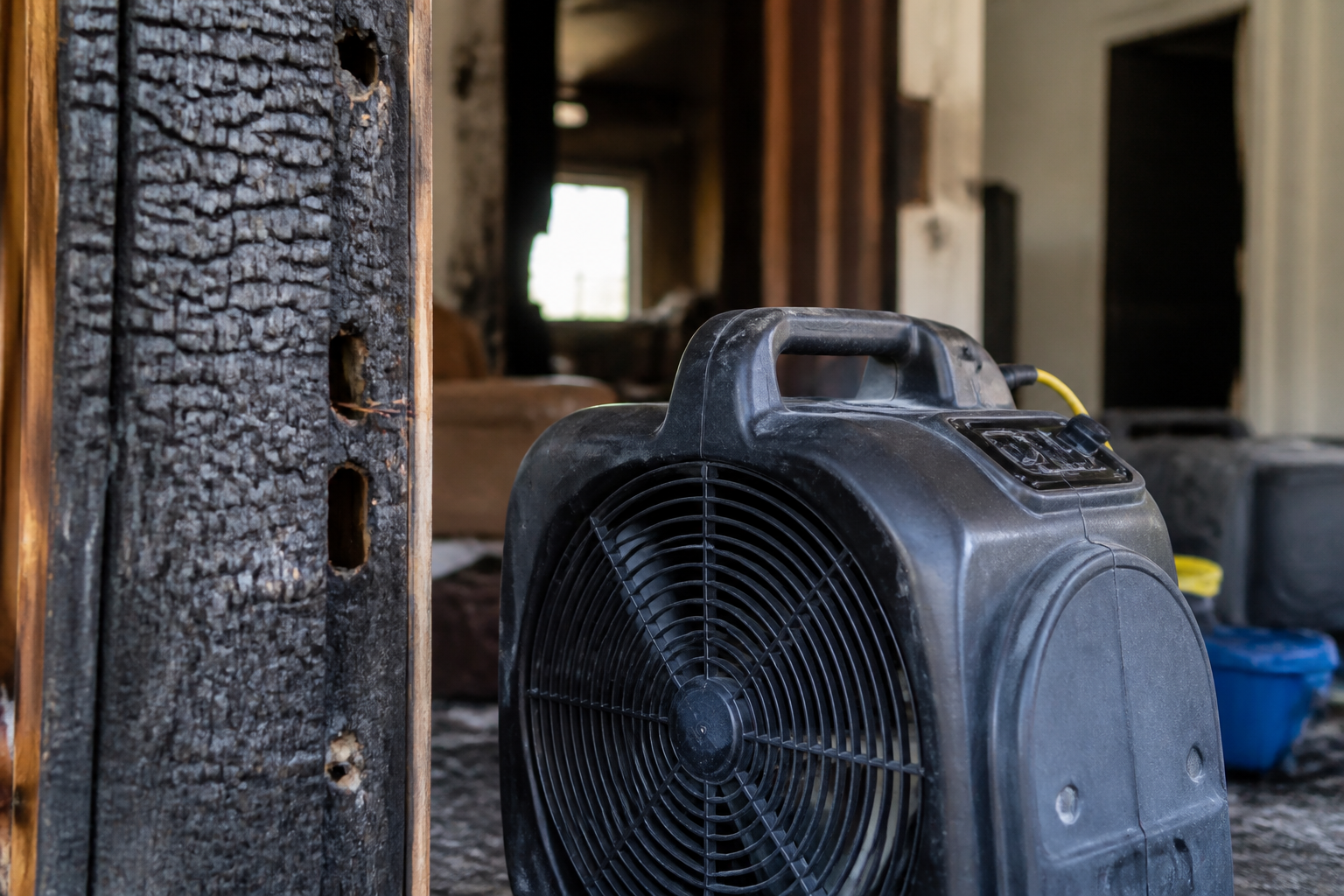
Key Takeaways
- Act fast with fire damage restoration services after heavy smoke exposure, because the first 24 hours often decide how much soot staining, odor spread, and downtime you’ll be dealing with.
- Secure the building early with board-up, roof tarping, and site safety checks so a fire restoration company can stop extra damage before full fire damage restoration starts.
- Document everything from day one—photos, affected rooms, HVAC impact, and water from suppression—so fire restoration services can support insurance scope writing and a faster reopening plan.
- Clean more than the obvious. Strong fire damage restoration means smoke odor removal, soot cleanup, HVAC cleaning, and moisture checks after firefighting water, not just wiping down visible residue.
- Ask direct questions before hiring a fire restoration company: Are the crews IICRC certified, insured, available 24/7, and able to handle cleanup, repairs, and rebuild under one roof?
- Watch the drivers of fire restoration cost, especially square footage, smoke spread, soot depth, water damage, and repair scope, because fast fire clean up services near me can cut extra loss and shorten closure time.
Smoke can shut a building down long after the flames are out.
In a busy office, street-level store, or multi-unit property, severe smoke damage spreads through hallways, vents, ceiling cavities, and stock rooms fast—and that’s why fire damage restoration services matter within the first day, not a week later. Owners in New York, New Jersey, Connecticut, and Pennsylvania usually face the same ugly mix: soot on surfaces, a sharp odor that won’t lift, wet materials from firefighting, and pressure from tenants, staff, insurers, or city inspectors to make the space safe again.
Realistically, reopening isn’t about wiping down a few walls. It takes trained crews to secure openings, clean smoke residue, check hidden damage, and deal with the water left behind before mold starts growing (and yes, that can happen fast). The honest answer is this: after a bad fire, smoke gets everywhere—inside HVAC runs, behind trim, above drop ceilings—and missed residue keeps causing odor, corrosion, and complaints. Fast, organized restoration work cuts downtime. Half-done cleanup doesn’t.
Fire damage restoration services for smoke-heavy buildings: what owners need to do first
At 6:30 a.m., a Brooklyn building owner opens the front door after an overnight electrical fire and gets hit by thick smoke odor, black soot on the lobby ceiling, and water dripping from the top floor. The flames are out—but the building still isn’t safe, and reopening starts with fast, ordered work.
Emergency board-up, roof tarping, and site safety after a fire
The first crew doesn’t start with paint or cleanup. They secure the site—broken windows, warped entry doors, roof openings, exposed wiring (a huge risk), and wet debris all have to be controlled before anyone talks about access.
- Board up for broken glass and forced openings
- Roof tarping to stop rain from pushing damage deeper
- Restricted entry zones for unsafe stairs, ceilings, and utility areas
In dense city buildings, fire damage restoration services usually begin with stabilization in the first few hours.
Smoke spread, soot settling, and why the first 24 hours matter
Smoke moves fast—through elevator shafts, duct runs, pipe chases, and corridor gaps. Within hours, oily soot can settle on walls, tenant contents, HVAC grilles, and retail stock; after 24 hours, cleanup gets harder, and costs climb.
That early window is why fire and smoke damage restoration services focus on air scrubbing, debris removal, and soot testing right away. No delay. No guesswork.
How a fire restoration company documents damage for insurance and reopening plans
A good file matters as much as cleanup.
Teams photograph each unit, mark smoke travel, list damaged materials, and separate salvageable items from total-loss contents—then they build a room-by-room scope for insurance and repair scheduling.
For co-ops, rentals, and mixed-use properties, multifamily building fire damage restoration needs tenant logs, moisture readings, and HVAC notes so owners can plan inspections, cleaning, and phased reopening.
What fire damage restoration involves after severe smoke damage in offices, retail spaces, and multi-unit properties
Severe smoke damage spreads farther than most owners think. In offices, retail floors, and apartment buildings, fire damage restoration services usually start with air testing, source tracing, and room-by-room cleaning plans—because smoke moves through halls, ceiling voids, and shared duct runs fast.
Smoke odor removal, soot cleanup, and HVAC cleaning across affected areas
Odor has to be removed at the source, not covered up. Teams clean soot from walls, ceilings, fixtures, vents, and return lines, and they often treat HVAC parts (a common issue after fires in a warehouse, store, or tower property).
Property managers looking for fire damage repair companies usually need one crew that can handle soot, smoke, and shared-area cleanup without dragging the process out.
Structural cleaning, debris removal, and contents handling during fire damage restoration
Cleanup isn’t just surface work. A proper fire restoration company removes burned debris, cleans framing and hard surfaces, sorts contents, and documents what can be restored versus discarded.
- Pack out for salvageable contents
- HEPA vacuuming for dry soot
- Wet cleaning for sticky residue
Even house fire cleanup companies handling mixed-use buildings have to treat retail stock, office files, and tenant belongings differently.
Moisture checks after firefighting water to stop hidden mold and extra repairs
Smoke isn’t the only problem. After extinguishers, hose lines, or sprinkler use, crews need moisture meters and thermal imaging—fast. Wet insulation, subfloors, and wall cavities can turn into mold trouble in 24 to 48 hours.
For dense city properties, smoke damage restoration in Manhattan often includes water checks on neighboring units, since smoke and firefighting water rarely stay in one suite.
The fire damage restoration process, step by step, for faster building reopening
Need the building open fast after heavy smoke damage? The honest answer is that fire damage restoration services move in a strict order—inspection, containment, cleaning, repairs—because skipping a step usually puts occupants back into a space that still smells like smoke or still holds soot in hidden cavities.
Inspection and scope writing: how crews map visible and hidden smoke damage
Inspection comes first. Crews check walls, ceilings, HVAC runs, electrical chases, and soft goods (yes, smoke gets everywhere), then write a room-by-room scope with photos, moisture readings if sprinklers went off, and notes on what can be cleaned versus replaced.
In dense buildings across NYC, New Jersey, Connecticut, and Pennsylvania, home fire restoration companies often find hidden soot above drop ceilings and inside return ducts—two spots people miss.
Containment, air filtration, and cleaning methods are used during fire restoration services
But here’s the thing. Cleaning starts only after crews isolate clean areas and control airflow.
- HEPA air scrubbers pull fine soot from the air
- Containment barriers stop cross-contamination
- Dry sponges, HEPA vacuums, and wet cleaning match the soot type
During severe fires, 24/7 fire restoration services can start stabilization within hours—which matters a lot, because acidic soot keeps staining metal, glass, and painted surfaces.
Fast action. Real difference.
Repairs, rebuild work, and final clearance before occupants return
If windows, doors, or roofing were breached, crews may begin with board-up and tarping after fire damage to stop weather exposure and theft. After cleaning, repair teams replace drywall, insulation, flooring, and damaged wiring, then run odor treatment—often more than once—before final walkthrough and clearance. No guesswork. People return only after the space is safe, clean, and functional.
Choosing a fire restoration company for commercial fire damage restoration services near you
About 30% of businesses never reopen after a major fire, according to FEMA, and smoke damage is often the reason, not just flames. For owners in NYC, New Jersey, Connecticut, and Pennsylvania, fast fire damage restoration services can mean the difference between a short shutdown and a long fight with soot, odor, and lost rent.
Why IICRC certification, insured crews, and 24/7 response matter after a fire
Credentials aren’t fluff. They show the crew knows smoke, cleaning chemistry, content handling, and safe demolition after warehouse fires, tower incidents, kitchen fires, or an extinguisher discharge. An IICRC-trained team that is fully insured and answers 24/7 can board up openings, start odor control, and protect unaffected areas—fast.
Property managers searching for fire damage restoration service near me should check three things:
- Certification for smoke and fire cleanup
- Insurance and clear documentation for claims
- Emergency response any hour, any day
Questions to ask about timelines, communication, and smoke damage cleaning services near me
Ask blunt questions. Who gives daily updates? How long will soot cleaning take? Can tenants or staff enter part of the building? And if someone is hunting for affordable fire damage restoration near me, the honest move is to compare scope—not just price.
- Ask for a written step-by-step schedule.
- Ask who talks to the adjuster.
- Ask what smoke damage cleaning services include (HVAC, contents, walls, odor).
What should a full-service fire restoration company handle from cleanup through rebuild?
Full service matters. The right fire restoration company should handle emergency board-up, soot removal, deodorization, debris cleanup, selective demolition, repairs, and rebuild—one chain of command, fewer delays.
Fire restoration cost, downtime, and what affects the price of fire damage restoration services
The biggest myth? Price doesn’t rise from flames alone—it often jumps from the smoke spread, soot depth, and how long a building sat closed. In dense Northeast buildings, fire damage restoration services often cost more than a similar house in California or Oregon because crews deal with shared walls, elevators, tight access, and stricter disposal rules.
Fire restoration cost per square foot and what changes pricing in dense Northeast buildings
Cost per square foot can swing hard—from light smoke cleaning in one store to full gut work in a warehouse. In practice, three things move price fast—and they move it a lot.
- Access limits: high-rise tower loading rules, street permits, after-hours entry
- Building type: apartment, retail, mixed-use, or warehouse
- Scope: cleaning only, demolition, rebuild, or full systems repair
Property teams comparing fire cleanup companies should ask for room-by-room line items—not a vague total.
Soot removal cost, odor treatment cost, and repair scope after severe smoke damage
Soot is the budget killer. Wet soot, protein residue, and HVAC spread can turn a simple cleaning job into weeks of detail work—ceilings, duct runs, contents, even hidden wall cavities. Odor treatment adds cost too (especially after severe smoke episodes), because one ozone or hydroxyl pass rarely fixes a heavy-loss building.
How fast action on fire clean-up services near me can cut business interruption and extra loss
Fast response saves money. Every extra day lets corrosion bite metal, odor sink deeper, and insurance scope fights get worse. That part gets expensive.
Teams tracking fire restoration company workflow improvements usually care about one thing: reentry speed. And they should. In cities like New York, Newark, and Philadelphia, shaving even 48 hours off cleanup can cut downtime, rent loss, and stock damage.
Frequently Asked Questions
What does fire damage restoration involve?
Fire damage restoration services cover the full cleanup and repair path after a house fire or smoke event. That usually means emergency board-up, soot and smoke residue removal, odor treatment, debris cleanup, damaged material removal, drying if firefighters used water, and rebuild work where needed. In practice, the job isn’t just cleaning walls—it’s making the home safe, clean, and livable again.
How much does fire restoration cost?
The honest answer is: it depends on how far the fire, smoke, and soot traveled. A small kitchen fire may cost a few thousand dollars to clean and repair, while a heavy-loss home can run into tens of thousands once demolition, deodorizing, and rebuilding work start. If you’re trying to pin down fire restoration cost or soot removal cost, square footage matters—but the burn pattern, smoke spread, and structural damage matter more.
How much does a national restoration brand cost?
Pricing changes by loss size, labor rates, and what the insurance carrier approves. No honest contractor can quote a real number off a brand name alone—anyone who does is guessing. Ask for a written scope, line-item estimate, and clear notes on cleanup, odor work, pack-out, and repairs.
What’s the difference between remediation and restoration?
Remediation means stopping the immediate problem: remove soot, clean smoke residue, get rid of odors, and take out unsafe materials. Restoration goes farther—it includes repairs and rebuilding so the property works like it should again. Put plainly, remediation handles the mess; restoration handles the mess and the fix.
What’s another company like, a national fire cleanup franchise?
If you’re comparing providers, skip the logo-first thinking and look at response time, IICRC training, insurance help, and whether the same team can handle cleanup and rebuild. For homeowners in NYC, New Jersey, Connecticut, and Pennsylvania, a local or regional fire restoration company with 24/7 response often gives better communication and faster site visits. That’s what matters after a fire. Speed and follow-through.
What does a fire restoration company do after the fire department leaves?
A good fire restoration company secures the house first—board-up, roof tarping if needed, and a full damage check. After that comes soot cleanup, smoke odor treatment, sorting salvageable items from unsalvageable ones, moisture drying, and repair planning. So what does that mean in practice? You should get a clear step-by-step plan, not vague promises.
How long does the fire restoration process take?
Minor smoke damage cleaning can take a few days. A larger house fire with demolition, cleaning, odor removal, and rebuild work can take weeks or months—especially if permits, inspections, or insurance approvals slow things down. Realistically, the cleanup phase moves faster than the rebuild phase, and that’s where homeowners often get surprised.
Can smoke damage be cleaned, or do materials always need to be replaced?
Some can be cleaned. Some can’t. Hard surfaces, tile, metal, and sealed wood often respond well to professional smoke damage cleaning services, while porous materials like insulation, badly charred drywall, and smoke-loaded carpet pad usually need to go—there’s just no good way around it.
Will insurance cover fire damage restoration services?
Many homeowners policies cover sudden fire — smoke damage, including parts of the cleanup, deodorizing, and repair scope, but coverage depends on your policy. Keep every photo, every emergency invoice, and every note from the first day because claim problems usually start with weak paperwork. And yes, the right restoration team should help document the loss for your adjuster (that part saves people a lot of grief).
How do I choose the best fire damage restoration services near me?
Ask four things right away: Can you respond now? Are you IICRC certified? Do you handle both cleanup and rebuild? Will you help with the insurance claim? If a company can’t answer those in plain English—or tries to rush you past the scope—move on.
After a serious smoke event, reopening a building isn’t about wiping down walls and hoping the smell fades. The work has to start with safety—securing openings, checking the roof, controlling air movement, and documenting damage before soot keeps spreading. Miss that early window, and the cleanup gets harder, the claim gets messier, and the downtime gets longer.
That’s why fire damage restoration services matter so much after a heavy smoke loss. A proper crew doesn’t stop at visible residue. They track smoke through HVAC lines, clean structural surfaces, remove odor at the source, and check for hidden moisture left behind by firefighting efforts (a step owners often miss). In larger offices, storefronts, and multi-unit buildings, that full scope is what gets people back inside faster—and with fewer repeat problems.
For owners in New York, New Jersey, Connecticut, or Pennsylvania, the smart next move is simple. Have the property inspected right away, ask for a written scope, and get a team involved that can handle cleanup, insurance support, and rebuild under one roof. To move fast, contact Dual Restoration at 347-218-8199 for 24/7 fire and smoke response.