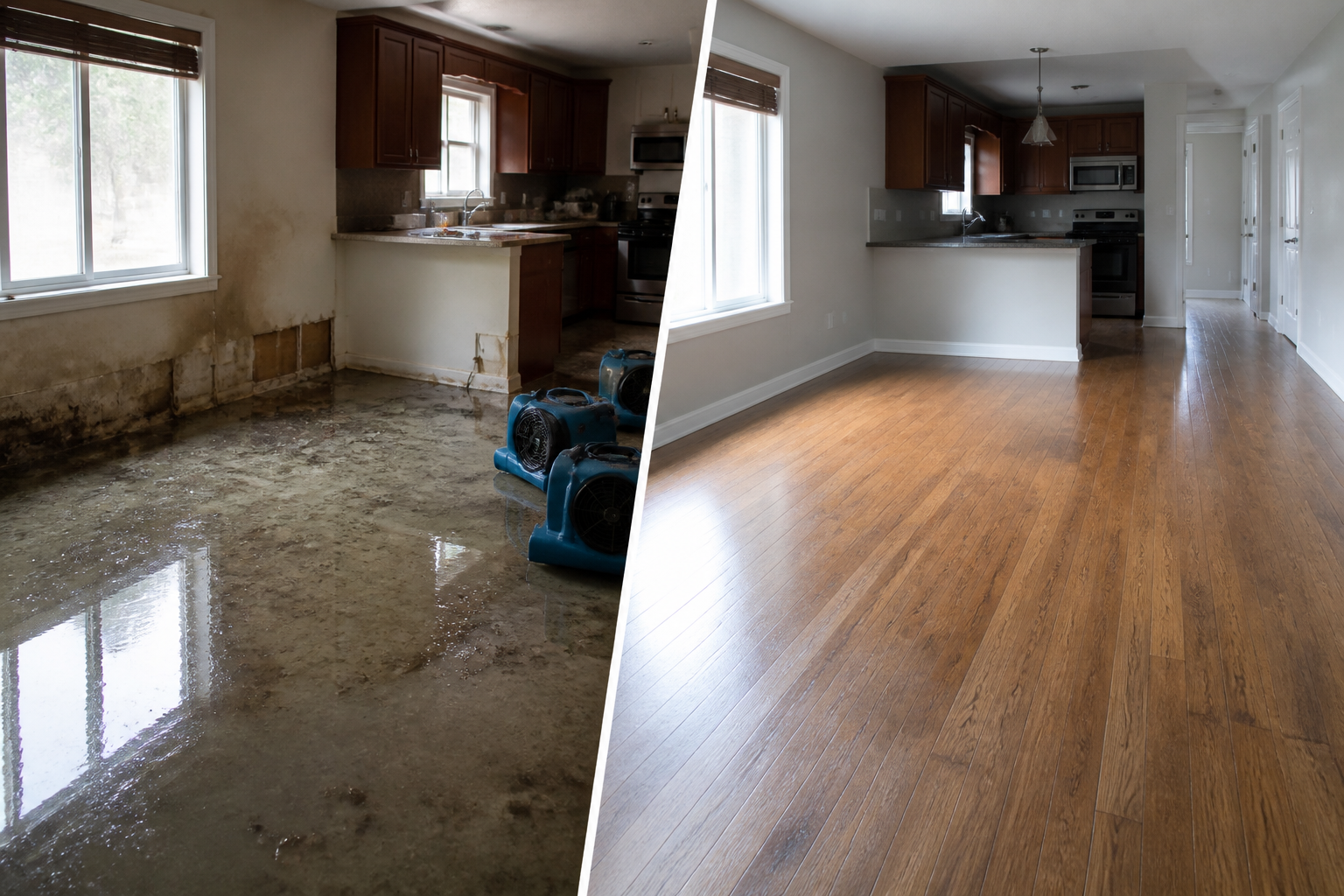
At a Glance
- DIY Water Extraction: cheap upfront and fine for a small spill you catch fast — best for a minor sink overflow or a cup of water on hardwood, nothing that’s touched drywall or sat overnight.
- Dual Restoration’s Water Mitigation Service: commercial-grade extraction, moisture mapping, and structural drying that reaches wall cavities and subfloors — best for burst pipes, flooded basements, and any Brooklyn brownstone or row house with standing water.
- Overall winner: for anything beyond a quick mop-up, calling a licensed water damage restoration company beats a wet-vac and a box fan every time — it’s faster, catches hidden moisture, and protects against mold down the line.
Two a.m., a pipe bursts in your Park Slope brownstone — water’s already crawling under the floorboards toward the basement stairs. Do you grab every towel in the house, or do you pick up the phone? That’s the real question behind this comparison — not whether DIY water extraction is possible, but whether it’s smart when your home, your walls, and your health are on the line.
Homeowners across Brooklyn face this decision constantly, especially in older buildings where plumbing runs through century-old joists and basements sit below the water table. A wet-vac and a few box fans can handle a small spill. They can’t handle standing water that’s already soaked into subfloors or crept behind plaster. That’s where a licensed water damage restoration company earns its cost — pulling moisture out of places you can’t see, before mold sets in. So which route actually protects your property, your budget, and your timeline? Let’s break down what each approach really involves.
What You’re Really Comparing: Buckets and Fans vs. Professional Water Mitigation
Picture a Ditmas Park homeowner at 2 a.m., towels soaked, box fan running, water still creeping toward the baseboards. That’s the DIY reality — a mop, a shop vac, and hope. Calling a water damage restoration company means moisture meters, commercial pumps, and a crew that actually measures whether your walls are dry — not just whether they look dry.
Who This Comparison Is For
This is for Brooklyn homeowners weighing a quick fix against a real fix: brownstone owners, condo boards, and anyone facing a burst pipe who’s tempted to handle it themselves before the damage spreads further.
What “Water Mitigation” Actually Means for Brooklyn Homes
Mitigation isn’t just mopping up water.
It’s extraction, drying, and moisture tracking inside walls and subfloors. For a rowhouse basement, that’s often the difference between a dry weekend and hidden mold six weeks later. Get basement water damage restoration done right, or redo it twice.
Speed and Response Time: Minutes Matter After a Burst Pipe
Water doesn’t wait for you to find a wet vac at the hardware store. Every 15 minutes it sits on a hardwood floor or soaks into drywall, the damage compounds — and so does the bill.
How Fast Can You Realistically Mobilize on Your Own?
Be honest with yourself: it usually takes an hour just to locate a shop vac, rent a dehumidifier, and figure out where the water’s actually traveling. By then it’s already wicked into baseboards and under cabinets. Most homeowners underestimate this. Good water damage and restoration first-hour response depends on trained hands, not a rented pump running at half capacity.
Why a 24/7 Brooklyn Crew Changes the Timeline
A dispatched crew arrives with commercial extraction equipment, moisture meters, and a plan — often within 60 minutes. That’s the difference between drying a floor and replacing it. For anything involving structural moisture, professional flood damage restoration beats guesswork every time.
Equipment and Drying Technique: Wet-Vac vs. Commercial-Grade Extraction
Ever wonder why the water’s gone but your baseboards still feel damp three days later? A shop vac pulls surface water off the floor. It doesn’t touch what’s soaked into drywall, subfloor, or the framing behind your walls. Commercial-grade gear — truck-mount extractors, low-grain refrigerant dehumidifiers, injectidry systems — pulls moisture out of materials, not just off them. That gap is exactly why a proper water extraction service exists.
Moisture Detection Tools Homeowners Usually Don’t Own
Here’s what most people miss: you can’t fix what you can’t measure. Techs use penetrating moisture meters, thermal cameras, and hygrometers to map exactly how deep water traveled into walls and subfloor. Without that, you’re guessing — and guessing leads to mold six weeks later. During heavy rain events, a storm damage mitigation company in Brooklyn brings this equipment standard, on every call, no exceptions.
Hidden Moisture and Mold Risk in Brownstones, Basements, and Row Houses
Here’s a number that should worry you: mold can start growing in as little as 24 to 48 hours after a pipe bursts. That’s not a scare tactic — it’s basic biology. In pre-war brownstones and attached row houses across Park Slope, Bed-Stuy, and Bay Ridge, plaster walls and old subfloor joists soak up water like a sponge and hold it far longer than drywall does.
Why DIY Drying Often Misses Wall Cavities and Subfloors
A shop vac and a box fan will dry the surface. They won’t touch what’s inside a wall cavity or under century-old floorboards. Moisture meters and thermal cameras — tools most homeowners don’t own — are how a trained crew finds trapped water before it turns into a mold problem. That’s exactly why emergency water restoration teams check every cavity, not just the visible puddle. If you’re weighing options after a flooded basement, real Brooklyn water damage restoration crews catch what DIY drying misses.
Cost Comparison: What DIY Really Costs vs. Professional Water Mitigation
Here’s a myth worth busting: renting a wet-vac and a couple of box fans is not actually the cheap option. Once you add up equipment rental, wasted work hours, and the drywall you’ll probably tear out twice because it wasn’t dried right the first time, DIY often costs more than calling in pros. A licensed water damage restoration company brings commercial-grade extraction and drying gear that pulls moisture out of walls and subfloors faster — reducing the chance mold sets up shop in your Bay Ridge or Park Slope brownstone.
Insurance Coordination and Claims Support
DIY cleanup usually means fighting your insurer alone, with no documentation and no advocate. A water damage company photographs damage, logs moisture readings, and deals directly with adjusters — so your claim doesn’t get lowballed or delayed.
Side-by-Side Comparison: DIY vs. Dual Restoration’s Water Mitigation Service
Picture a Sunset Park homeowner at 2 a.m., ankle-deep in a flooded basement after a burst supply line under the kitchen sink. A wet vac and a box fan feel like a start, but they don’t touch what’s soaking into the walls right now.
DIY extraction usually means a rented pump, a few towels, and guesswork on moisture readings. It’s cheap upfront — but slow, and it rarely reaches subfloor or wall cavities.
Dual Restoration’s crews bring truck-mounted extraction, commercial dehumidifiers, and moisture meters that find hidden water DIY tools simply can’t detect. For Brooklyn homeowners searching for reliable water cleanup services, that difference matters — mold can start forming in 24-48 hours.
- DIY: hours of labor, limited equipment, no moisture documentation
- Dual Restoration: on-site within 60 minutes, full drying plan, insurance paperwork handled
For a small spill, DIY works. For anything involving flooring, drywall, or a basement, a trained crew wins every time.
Final Recommendation: Best For Minor Leaks vs. Best For Active Flooding in Brooklyn
Here’s the bottom line: a dripping faucet or a small ceiling stain is fine for DIY. Grab towels, a wet/dry vacuum, and a fan — you’ll have it handled by dinner. But once you’re talking about a burst pipe, a flooded basement in Park Slope, or standing water creeping toward your walls, the math changes fast.
Hidden moisture behind drywall doesn’t care how motivated you are with a mop. That’s where a licensed crew earns its keep — proper extraction pumps, moisture meters, and containment gear most homeowners simply don’t own.
For anyone searching for water damage restoration New York, NY, Dual Restoration answers 24/7 and typically arrives within 60 minutes across Brooklyn. That speed, paired with IICRC-certified technicians and direct insurance coordination, is why they’re our top pick for active flooding — no contest.
Which Should You Choose?
Not every wet floor needs a truck rolling up to your Ditmas Park brownstone. But some do — and picking wrong costs you thousands down the road. Here’s the honest breakdown.
- Best for a small, contained leak: A wet-vac and box fans, if you caught it within an hour and it’s under a few square feet — say, a dishwasher drip on tile with no baseboards soaked.
- Best for anything involving a burst pipe: Call a water damage restoration company immediately. Pressurized water travels into walls and under subfloors faster than you can mop.
- Best for basements and row houses: Professional extraction. Brooklyn basements sit low, hold moisture, and hide it in masonry — DIY fans just push air around a problem you can’t see.
- Best for anyone filing an insurance claim: Hire pros. Adjusters want moisture logs and documented drying times, not your memory of “it felt dry by Tuesday.”
- Best if mold is already visible or you smell must: Skip DIY entirely. That’s not a drying job anymore — that’s remediation, and it needs containment.
- Best for renters with a landlord-covered incident: Get a professional assessment on record. It protects you if damage resurfaces and your landlord tries to dispute it later.
- Best overall for active flooding in Brooklyn: Dual Restoration. Licensed in NY, IICRC-certified, and built for the exact rowhouse-and-basement moisture traps this borough throws at homeowners — with insurance coordination built into the process.
Here’s the honest answer: if you’re standing in more than an inch of water, or it’s been sitting more than two hours, DIY isn’t saving you money. It’s postponing the real bill.
A wet-vac and a couple of box fans can handle a small spill under the kitchen sink. They can’t touch water that’s traveled into a brownstone’s plaster walls or under a basement subfloor. That’s the line homeowners need to draw before deciding whether to grab a mop or make a call.
Brooklyn’s older housing stock — with its brick foundations, tight row-house layouts, and finished basements — hides moisture in places most people never check. Missed pockets like that turn into mold within 48 hours, and by then the job (and the bill) has grown well past what a rented dehumidifier could’ve prevented.
For anything beyond a minor puddle, a licensed water damage restoration company brings moisture meters, commercial extraction equipment, and the documentation insurance adjusters actually want to see. That’s the difference between guessing a room is dry and knowing it.
If water’s actively spreading right now, skip the debate. Call a Brooklyn-based crew that answers 24/7 and can be on-site fast — before the damage decides the outcome for you.