Smoke damage doesn’t wait for business hours, and neither should your response. A kitchen fire in a Bay Ridge two-family or an electrical fire in a Park Slope brownstone can leave soot in the walls within minutes, even after the flames are out. That’s the moment most Brooklyn homeowners realize they have no idea how fire and restoration companies actually work — or what happens between the first phone call and the day they get their keys back to a livable home.
Here’s what most people miss: the process isn’t just cleaning. It’s inspection, documentation, insurance coordination, containment, odor removal, and rebuild — often in that exact order. Skip a step, or hire the wrong crew, and you risk trapped moisture, lingering smoke odor, or a claim denial you didn’t see coming. Realistically, knowing what to expect before the truck pulls up changes everything about how smooth this goes.
This walkthrough follows the actual sequence a licensed Brooklyn fire restoration technician uses on-site, block by block, so you know exactly what to ask and when.
What You’ll Accomplish and What to Have Ready Before You Call
Picture this: a stovetop fire in a Bensonhurst kitchen gets knocked down fast, but soot coats every wall and the smell has crept into the bedrooms upstairs. That’s the moment most Brooklyn homeowners realize they need help beyond a mop and some Febreze.
The Goal: A Safe, Documented Path From Fire Scene to Fully Repaired Home
The endpoint is simple — a home that’s structurally sound, smoke-free, and documented well enough for your claim to move quickly. Working with fire and restoration companies early keeps that goal from turning into months of disputes.
Prerequisites: Photos, Insurance Info, and Fire Department Paperwork
- Wide and close-up photos of every affected room
- Your fire department incident report number
- Insurance policy number and adjuster contact
When to Call a Fire Restoration Company vs. Handling Minor Soot Yourself
Small, dry soot on a single wall? A damp sponge might handle it. Anything involving synthetic materials, structural charring, or lingering odor calls for pros — part of the fire restoration workflow improvements for Brooklyn reentry needs now standard across the borough.
Step 1: Make the Call and Get Someone on Site Fast
Speed decides everything here. Soot sets into drywall — fabric within hours, and the longer smoke sits, the deeper it etches into surfaces. Call immediately — don’t wait for the fire department to clear the scene before dialing a restoration crew.
What a 24/7 Response Actually Looks Like in Brooklyn Neighborhoods
In Park Slope brownstones, Bensonhurst two-families, or a Sunset Park walk-up, a real emergency crew shows up within the hour, not the next morning. That’s what fire and water restoration teams built for New York City density are supposed to deliver.
Tip: Ask These Questions Before You Hang Up the Phone
- Are you licensed and insured in New York?
- Can someone board up openings tonight?
- Will you document damage for my insurance adjuster?
If This Goes Wrong: What to Do If a Company Can’t Respond Quickly
Hang up and call another one. Multifamily buildings especially can’t absorb delay — this Queens fire damage restoration insights for multifamily buildings breakdown shows why shared walls and hallways make fast containment non-negotiable.
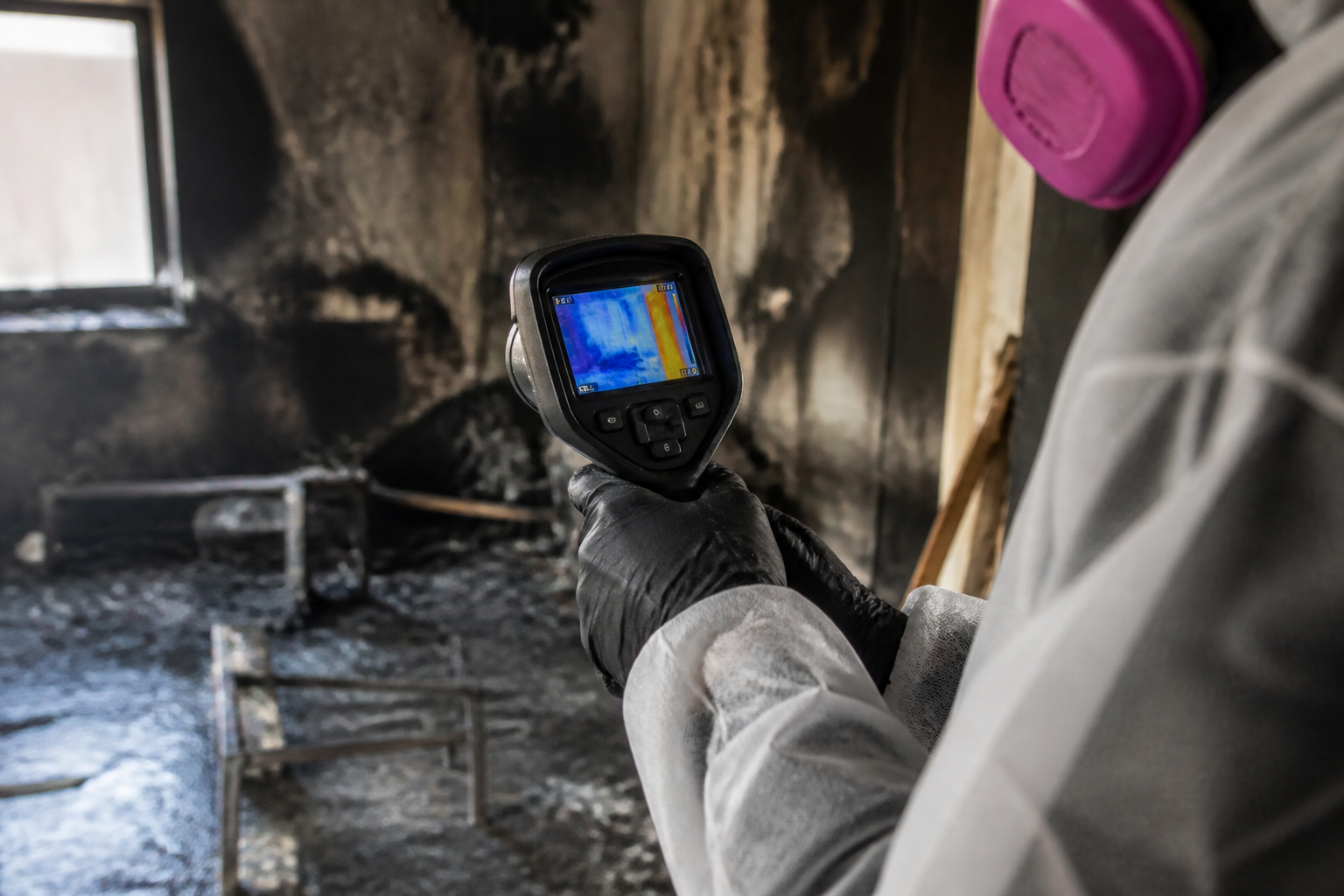
Step 2: Walk Through the On-Site Damage Assessment
So how bad is it, really? That’s the question every Brooklyn homeowner asks once the fire trucks leave. A proper walk-through answers it with facts, not guesswork.
How Technicians Check Structural, Smoke, and Water Damage Together
Techs move room by room, checking framing, drywall, and flooring for heat stress — then testing for hidden moisture left behind by hoses. Soot patterns get mapped, since smoke travels through HVAC ducts and wall cavities long after the flames are out. Any team searching for reliable fire flood restoration companies should expect both damage types assessed together, not separately.
What a Moisture and Soot Inspection Report Should Include
A solid report lists:
- Moisture readings by room
- Soot type (dry, wet, protein-based)
- Photos with timestamps
- Affected square footage
Note: Why Hidden Damage in Brownstones and Row Houses Gets Missed
Older Brooklyn brownstones have shared walls and tight crawl spaces. Smoke and water hide there — easily missed without moisture meters.
Step 3: Review the Restoration Plan and Insurance Coordination
About 40% of Brooklyn fire claims get delayed over scope disagreements between the adjuster and the contractor. That number alone should tell you why this step matters more than people expect.
How a Fire Restoration Company Works Directly With Your Adjuster
A solid crew calls your adjuster directly, sends photos, and documents every room before demo starts. Reputable providers of fire and flood damage restoration keep a paper trail so nothing gets disputed later.
Understanding the Scope Document Before You Sign Anything
Read the line items — labor, materials, equipment days — before you sign. Don’t just skim it.
If This Goes Wrong: Disputed Estimates and How to Push Back
If the adjuster’s number seems low, ask for a second inspection. Request photos, moisture readings, and soot test results in writing. Get everything documented.
Step 4: Board-Up, Tarping, and Securing the Property
Most homeowners assume boarding up a house is optional. It isn’t — and skipping it is one of the fastest ways to turn a bad fire into a worse one. An open roofline or blown-out window invites rain, pigeons, and opportunists within hours, not days.
Protecting an Open Structure Overnight in an Urban Environment
Brooklyn rowhouses sit close together, which means an unsecured property affects neighbors too — soot drift, water runoff, even squatters. Board-up and tarping crews should arrive the same day as the initial assessment, sealing openings with plywood and heavy-gauge tarps rated for wind. This overlaps directly with fire water damage restoration work, since firefighting water needs a dry, contained shell before drying equipment can do its job.
Tip: Ask About Theft and Weather Protection Before Day One
Ask upfront: who’s boarding up tonight, and what’s it made of? A flimsy tarp won’t survive a nor’easter. Get it in writing.
Step 5: Smoke and Soot Removal, Odor Elimination, and Rebuild
Picture a Bay Ridge kitchen fire that’s out, but every surface — walls, cabinets, the ceiling above the stove — is coated in a greasy soot film. That’s where the real cleanup begins.
The Cleaning Process Room by Room, From Ceilings to HVAC
Techs work top-down: ceilings first, then walls, then floors. Soot sinks into porous surfaces fast, so HVAC ducts get cleaned too — otherwise the system just recirculates residue through the whole house. Content gets wiped, wet-cleaned, or dry sponge treated depending on what it’s made of.
How Odor Treatment Differs From Basic Cleaning
Wiping surfaces clean doesn’t kill smoke odor. It’s stuck in wall cavities and insulation. Thermal fogging and ozone treatment reach places rags can’t, breaking down odor molecules instead of masking them.
Final Repairs and Rebuild: Getting Back to a Livable Home
Drywall, flooring, trim — whatever burned or warped gets replaced. Homeowners searching for fire restoration New York options should expect one crew handling cleanup through rebuild, not a handoff between separate contractors.
Choosing the Right Fire Restoration Company for Your Brooklyn Property
Not every crew with a truck and a website is qualified to handle smoke damage. That’s the blunt truth, and it costs homeowners money when they skip vetting.
Certifications and Licensing You Should Verify
Ask for IICRC certification, proof of insurance, and a mold abatement license if moisture got involved. A licensed crew documents everything your adjuster needs — skip this step and your claim gets messier.
Local Experience: Why Borough-Specific Knowledge Matters
Brownstones in Park Slope don’t dry out like a Staten Island ranch. Crews familiar with Brooklyn’s building stock — old plaster, shared walls, tight brick construction — spot hidden smoke pockets faster. For row houses and apartment buildings alike, the best fire and smoke cleanup service for offices and homes will know borough-specific code requirements before they ever step through your door.
Red Flags That Signal an Unqualified Contractor
- No written scope or timeline
- Demands full payment upfront
- Can’t name their IICRC credential
- Vague answers about odor removal methods
Recap: Your Fire Damage Restoration Journey From Call to Completion
What You’ve Learned and How to Stay Prepared Next Time
So what should you actually remember from all this? The steps are simple even if the situation feels anything but: call fast, get an assessment, let the crew handle extraction and drying, then move into cleaning, deodorizing, and rebuilding. That’s the process, whether you’re in a Bed-Stuy brownstone or a Sunset Park two-family.
Brooklyn brownstones bring their own headaches — tight staircases, shared walls, old plaster that soaks up smoke like a sponge. That’s exactly why brownstone fire restoration requires crews who actually know these buildings, not a generic playbook.
Keep your insurance documents, photos, and a restoration contact saved somewhere you’ll actually find them. Next time — hopefully there isn’t one — you won’t be starting from zero.
Recap & Next Steps
You’ve now walked the whole path — the call, the on-site walk-through, the insurance back-and-forth, board-up, cleaning, and the rebuild that gets your Brooklyn home livable again. That’s the process. It’s rarely fast, but it is predictable once you know the steps.
Here’s what to do next:
- Save your documentation now. Photos, the fire department report, and your restoration company’s scope document should live in one folder — digital and paper both.
- Check in with your adjuster within a week. Don’t let the claim go quiet. A short email keeps things moving.
- Ask your contractor for a moisture recheck. Row houses and brownstones hide damp spots in old plaster — a follow-up visit two to three weeks after drying catches what the first pass missed.
- Keep the contact info handy. If a musty smell or discoloration shows up months later, you want the same crew who did the original work, not a stranger starting from zero.
Dual Restoration answers 24/7 across Brooklyn, Manhattan, Queens, the Bronx, and Staten Island — call 347-218-8199 if you’re staring at smoke damage right now and need someone on site fast.
Fire recovery in Brooklyn isn’t a single event. It’s a sequence — the call, the walkthrough, the paperwork, the board-up, the cleaning, the rebuild. Skip a step and you’ll pay for it later, usually in the form of lingering odor or a moisture problem hiding behind drywall in some hundred-year-old brownstone. The homeowners who come out of this with the least stress are the ones who picked fire and restoration companies that document everything from day one and talk to the adjuster directly instead of leaving that job to an already overwhelmed family.
Certifications matter. So does knowing the difference between a company that’s worked in Park Slope row houses and one that’s only handled suburban single-families. Ask questions before you sign anything.
If a fire just tore through your kitchen, your basement, or your whole first floor, don’t wait for morning. Call Dual Restoration at 347-218-8199 — someone answers 24/7, and getting a technician on-site fast is still the single biggest factor in how much of your home you get to keep.